






 Portuguese
  Spanish
  4 min of reading
  0 comments


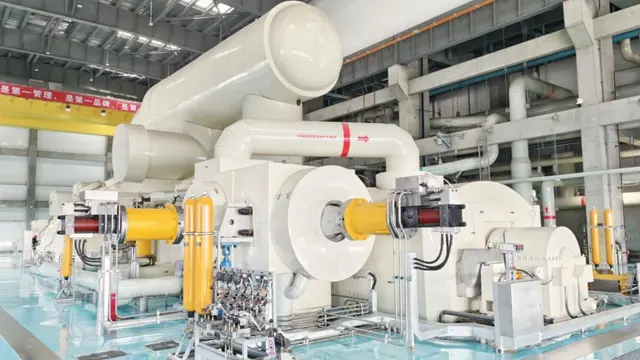
China Launched The First CFB Steam Power Unit Of 660 MW In The World, With Pressure Of 29.3 MPa And Temperature Of 605 °C, Establishing New Global Standards Of Efficiency And Performance.
China Has Just Set A New Standard In The Energy Generation Sector With The Successful Completion Of Tests For The First Ultra-Supercritical Circulating Fluidized Bed (CFB) Unit In The World, With A Capacity Of 660 MW.
The Project Is A Global Milestone And Reinforces China’s Leadership In Technological Innovation In The Energy Sector.
The Unit Was Developed By Harbin Electric Corporation (HEC) In Collaboration With The Binchang Project, Located In Shaanxi Province.
-
Helicopter Drops 180 Tons of Sand and Gravel on Swedish River to Revive Ecosystem Damaged by Decades of Exploitation

-
Brazilian Company Launches Retro Smartphone with 48 MP Camera, T9 Keyboard, and Privacy Features for Social Media-Free Use

-
Self-Taught Chinese Farmer Builds 5-Ton Submarine from Scrap, Launches It in Anhui River
-
Invisible Induction Technology Enables Wireless Power for Blenders, Coffee Makers, and Air Fryers, Reducing Countertop Cables




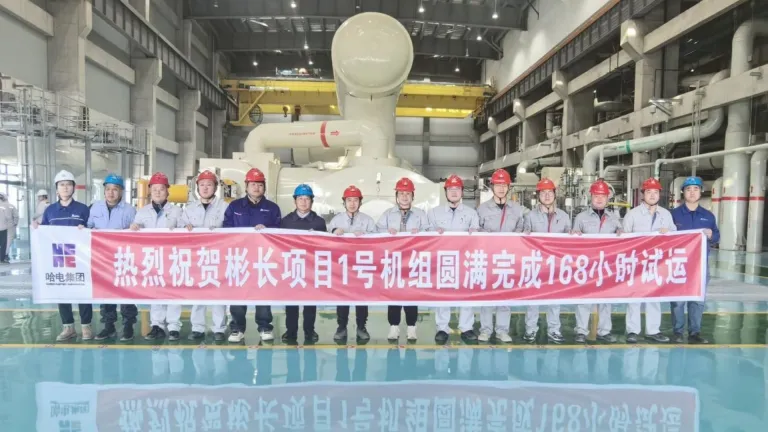
The Initiative Has The Endorsement Of The Ministry Of Science And Technology And The National Energy Administration Of China, Consolidating The Country As A Global Pioneer In Efficiency And Sustainability In The Sector.
Clean And Efficient Technology
The Project Features An Ultra-Parameters CFB Boiler, A Technology That Is Becoming Increasingly Relevant Due To Its Advanced Performance. Unlike Traditional Pulverized Coal Boilers, CFB Boilers Use Fluidized Bed Materials, Creating A Dense And Highly Efficient Thermal Environment.
The Materials Are Constantly Recirculated Between Cyclone Separators And External Heat Exchangers, Ensuring Optimal Combustion And Significantly Reduced Emissions.
According To Studies, This Process Is More Adaptable To Various Fuel Types, Such As Low-Calorific Coal, Sludge, And Gangue.
Researchers Have Also Enhanced Computational Fluid Dynamics (CFD) Models To Analyze The Performance Of CFB Boilers. This Allowed For Identifying How Particle Distribution And Fuel Types Impact Temperature And Thermal Efficiency.
Unmatched Thermal Efficiency
The Project’s Turbine Is Another Highlight. Air-Cooled And Reverse Flow, It Is A Single-Shaft Type, With Three Cylinders And Two Exhausters.
With A Main Steam Temperature Of 605°C And Reheat Steam At 623°C, The Turbine Achieves Thermal Efficiency At Levels Never Seen Before In CFB Boilers.
The Generator Also Deserves Mention. Designed By HEC, It Offers High Efficiency Over A Wide Load Range, Minimal Vibration, And Exceptional Performance Even Under Challenging Conditions, Such As Peak Shaving Operations And Lead Phases.
The Boiler Operates At A Main Steam Pressure Of 29.3 MPa, A Feat Equivalent To The Pressure Exerted By Four Adults On A Single Section Of Pipe. This Demonstrates Not Only The Robustness Of The Project But Also The Technological Precision Achieved.
Commitment To Sustainability
The Technological Advancement Also Has A Direct Impact On China’s Commitment To The Goals Of “Carbon Peak” And “Carbon Neutrality”.
Even With The Rapid Rise Of Renewable Sources, Fossil Fuels Will Continue To Play A Strategic Role In The Chinese Energy Matrix. Therefore, Cleaner And More Efficient Technologies, Such As CFB Boilers, Are Essential For Reducing Emissions Without Compromising Energy Generation.
The Unit Achieved A Desulfurization Rate Of 95%, Ensuring Ultra-Low Emissions And Contributing To A Cleaner Future.
Regional Impact And Industrial Advancement
The Completion Of The First Phase Of The Binchang Project Also Has A Direct Socioeconomic Impact. It Is Estimated That The Unit Will Annually Convert About Two Million Tons Of Low-Quality Coal, Sludge, And Gangue. Additionally, It Will Use Two Million Tons Of Mine Water, Turning Waste Into An Efficient Source Of Heat And Electricity.
This Will Allow The Plant To Provide Six Million GJ Of Heat, Meeting The Industrial Steam And Heating Needs Of The City Of Binzhou. This Supply Alleviates Energy Scarcity In The Region And Strengthens The Stability Of The Local Electric Grid.
The Project Also Boosts Regional Industrial Development And Improves The Quality Of Life For The Local Population.
Consolidated Global Leadership
Harbin Electric Corporation Is Responsible For The Complete Project — From The Boiler To The Turbine And The Generator. The Boiler, Developed By Harbin Boiler Company, Reflects A Notable Advancement In Terms Of Emissions, Energy Consumption, And Operational Efficiency.
According To HEC, This Is The Best CFB Boiler Technology In The World, With Its Own Intellectual Property Rights And Fully Manufactured In China.
“The Successful Operation Of The 660 MW Ultra-Supercritical CFB Boiler Fills A Significant Gap In Global Technology And Paves The Way For New Advances In Energy Generation“, The Company Highlighted In A Statement.
This Milestone Represents A Significant Leap For The Sector, Not Only In China But On The International Scene. The Success Of The Binchang Project Solidifies The Country’s Position As A Global Leader In Advanced Energy Technologies And Marks The Beginning Of A New Era For Large-Scale CFB Boilers.





-

-

2 people reacted to this.