Portuguese
  Spanish


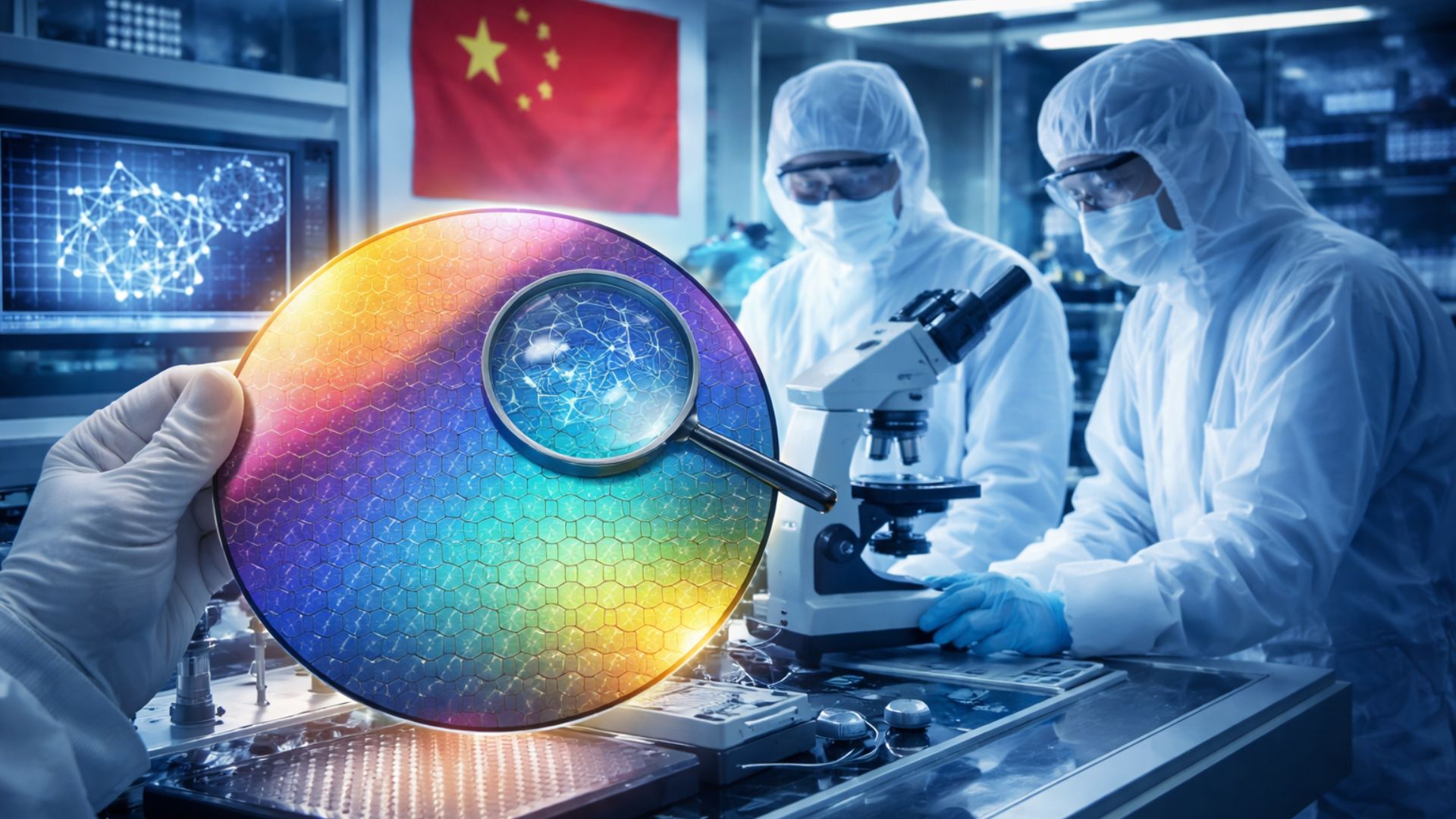


China advances in 2D semiconductor production with new technique that overcomes silicon limits, accelerates manufacturing, and could revolutionize chips, artificial intelligence, and the global tech industry.
The China announced an advancement that could redefine the future of global technology. According to a publication by the South China Morning Post, researchers have developed a new technique capable of multiplying the growth speed of 2D semiconductors by a thousand, overcoming historical limitations of silicon.
This progress is not just theoretical. It already demonstrates viability on a full wafer scale, with a high level of uniformity — one of the main challenges in the field. In practice, this means that faster, smaller, and more efficient chips can reach the market more quickly.
The direct impact falls on strategic sectors such as artificial intelligence, consumer electronics, and telecommunications. By accelerating production and reducing technical bottlenecks, China positions itself strongly in the global race for technological leadership.
-
Brazilian Researcher Develops Protein Supplement from Tilapia Waste, Combining Innovation and Sustainability with Economic Potential

-
Women in São Paulo Unknowingly Tracked by Coin-Sized Tags Hidden in Cars and Belongings, Raising Stalking Concerns
-
Near a $750 million AI data center in Brazil, a resident’s well runs dry, leaving her unable to afford the $25,000 needed for repairs.

-
16-Year-Old from Brazil’s Sertão Wins Young Scientist Award for AI Predicting Rainfall with 94.5% Accuracy to Aid Farmers


New Chinese technique solves critical bottleneck of 2D semiconductors
For years, one of the biggest challenges of 2D semiconductors has been the difficulty in producing p-type materials with consistent quality. Without this, it was impossible to create complete circuits comparable to current ones based on silicon.
The new technique developed by scientists in China addresses this issue by allowing controlled doping on a large scale. Monolayers of niobium-doped molybdenum disulfide have been produced that exhibit stable p-type behavior.
This advancement helps overcome one of the main obstacles to the commercial use of 2D semiconductors, making it possible to build complete CMOS circuits with ultrathin materials.

Physical limits of silicon drive race for new materials
The silicon has sustained the digital revolution for decades, but it faces increasingly evident physical limitations. At scales below 5 nanometers, maintaining performance and efficiency becomes extremely complex.
This scenario has led researchers from China and other countries to seek alternatives. 2D semiconductors emerge as a promising solution, mainly due to their atomic thickness and better electronic control.
Among the main factors driving this transition are:
- Reduction of energy consumption in advanced devices
- Greater efficiency in artificial intelligence applications
- Possibility of miniaturization beyond the limits of silicon
- Better thermal performance in high-density chips
The new technique accelerates this process by making the production of these materials faster and more viable.


Wafer-scale production gives China a strategic advantage
One of the most relevant points of this advancement is the ability to produce 2D semiconductors at full wafer scale. This represents a significant shift from previous methods, which were slow and inconsistent.
China, by mastering this new technique, demonstrates the ability to take innovation from the lab to the industry. The growth speed a thousand times greater can reduce costs and increase yield, essential factors for commercial adoption.
Furthermore, the uniformity of materials across the entire wafer surface improves the reliability of devices. This is a fundamental requirement for large-scale applications.
This advancement also strengthens the technological independence of China, especially in a global scenario marked by restrictions on access to advanced equipment.

2D Semiconductors Gain Strength with New Materials and Superior Performance
Recent research indicates that materials such as MoSi₂N₄ exhibit high performance in both n-type and p-type transistors. This further expands the potential of 2D semiconductors.
The new technique allows for the exploration of these properties with greater efficiency, maintaining stability and performance even at dimensions below 5 nanometers.
Among the observed benefits are:
- Higher processing speed
- Significant reduction in energy consumption
- Better performance in high-demand applications
- Compatibility with existing industrial processes
With this, China is advancing in the gradual replacement of silicon, paving the way for a new generation of electronic devices.

Direct Impacts on Artificial Intelligence and the Digital Economy
The advancement of 2D semiconductors has profound implications for the digital economy. With the new technique, China can accelerate the development of essential technologies for the future.
Artificial intelligence is one of the most benefited sectors. More efficient chips allow for greater processing capacity with lower energy consumption, which is crucial for data centers and advanced systems.
Other sectors are also expected to feel the effects:
- Mobile devices with greater autonomy
- More precise sensors for industrial applications
- Faster and more stable communication systems
- Medical equipment with greater technological efficiency
Overcoming the limitations of silicon expands possibilities and creates new opportunities for innovation.
Technical Challenges Still Require Industry Attention
Despite significant progress, some challenges still need to be overcome. The stability of p-type materials under real operating conditions remains a point of concern.
In addition, large-scale production requires strict control of microscopic defects, which can impact the final performance of devices.
Another relevant factor is access to advanced manufacturing technologies. Restrictions on the use of extreme ultraviolet lithography equipment still pose a hurdle for China.
Nevertheless, the new technique demonstrates that these challenges are being gradually overcome, bringing 2D semiconductors closer to commercial adoption.
Global technology race gains new protagonist
The advancement of China intensifies international competition in the semiconductor sector. Countries like the United States, South Korea, and Taiwan continue to invest in alternatives to silicon, but recent results highlight China’s prominence.
The ability to produce 2D semiconductors with high efficiency and speed can alter global supply chains. This also reduces dependence on traditional technologies and strengthens technological autonomy.
The new technique emerges as a strategic differentiator in a highly competitive market that is essential for the global economy.
What this advancement really means for the future of technology
The development announced by China represents more than a technical advancement. It signals a concrete transition to a new era of electronics.
With the new technique, 2D semiconductors cease to be just a promise and begin to approach industrial reality. The ability to overcome the limitations of silicon redefines the boundaries of what is possible in technology.
This movement can accelerate innovation in various areas, from artificial intelligence to everyday devices. At the same time, it reinforces the strategic importance of semiconductors in the global landscape.
The message is clear: the next generation of chips has already begun to be built — and China is among the key protagonists of this transformation.