






 Portuguese
  Spanish
  5 min of reading
  27 comments


China Establishes Unprecedented Partnership with Brazil to Initiate Soybean and Corn Cultivation on Brazilian Soil. Historic Agreement Promises to Revolutionize the National Agribusiness, Bringing Billion-Dollar Investments and Cutting-Edge Technology, While Strengthening Trade Ties Between the Two Emerging Powers.
In recent years, the relationship between Brazil and China has strengthened, especially in the agricultural sector.
The Asian country, the largest global importer of soybeans and one of the main consumers of corn, is seeking new strategies to ensure the supply of these essential grains for its economy.
In the midst of this scenario, a new chapter of this commercial partnership is being written: China does not want only to import from Brazil but also to produce directly on Brazilian soil.
-
Brazilian Joins Homeownership Consortium, Faces Decade of Dual Payments Totaling $141,000, Surpassing Traditional Mortgage

-
Low-Demand Brazilian Beef Offal Gains Popularity Abroad: Indonesia Purchases $19.5 Million, Boosting Revenue and Reducing Waste
-
Soy Expansion in Former Brazilian Savanna Sparks Water and Land Conflicts in Major Agricultural Frontier
-
Land Rover to Halt Production in July, Putting 371 Jobs at Risk, as Chinese Automaker Negotiates to Convert Factory to 100,000 Vehicles Annually by 2027


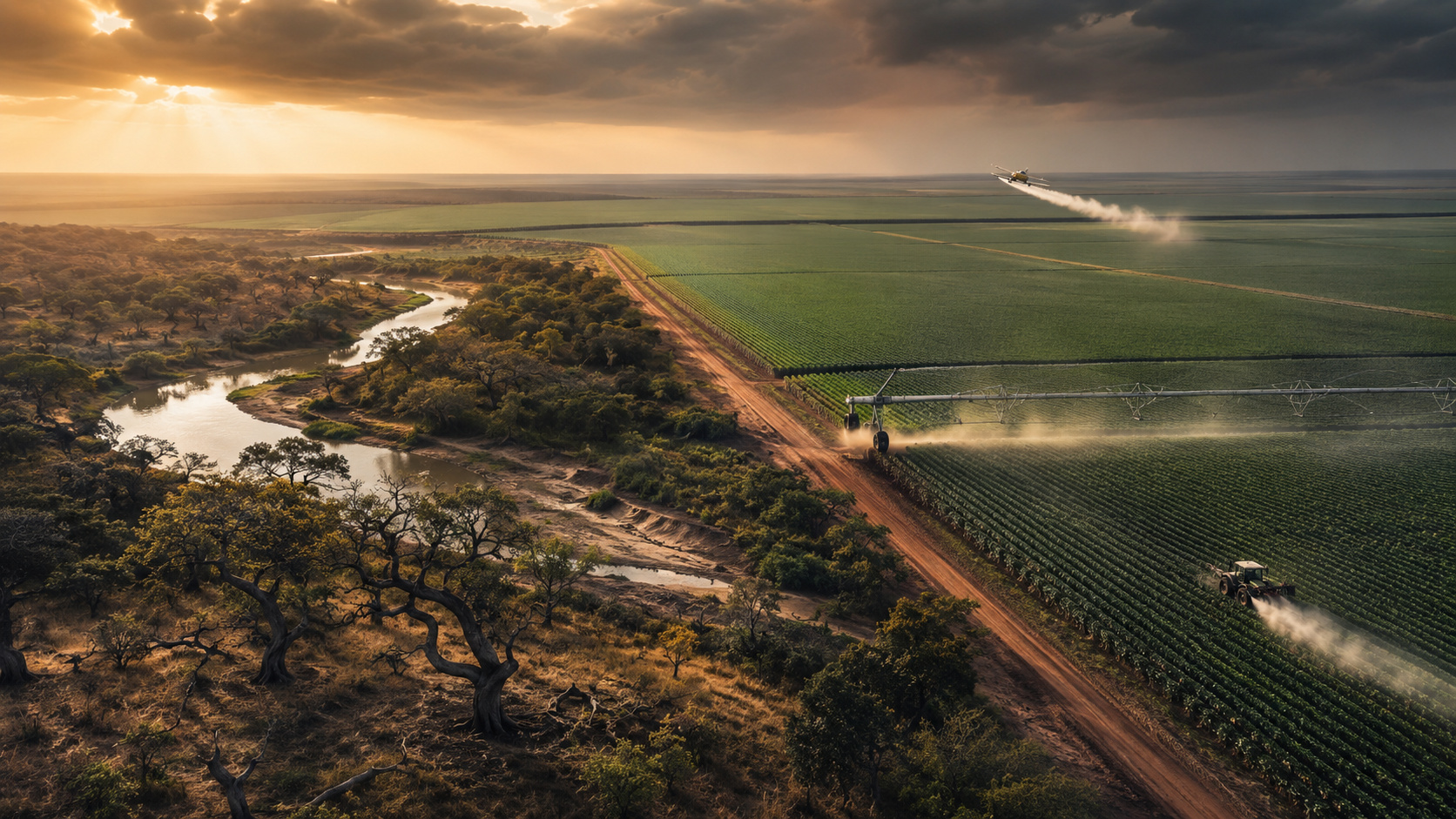

At the beginning of February 2025, the National Agriculture Society (SNA) signed a strategic agreement with the Chinese state-owned giant Hulunbuir State Farm Group.
The partnership focuses on developing soybean and corn production in Brazil, leveraging Brazilian agricultural technology and the vast availability of arable land.
The agreement was sealed during the Commercial and Investment Cooperation Promotion Seminar between China (Inner Mongolia) and Brazil, held at the Renaissance Hotel in São Paulo.
Strategic Partnership to Strengthen Agribusiness
The signing of the agreement represents a significant advance in the relationship between the two countries in the agricultural sector.
The document establishes guidelines for a long-term cooperation model, promoting mutual benefits through technological exchange, resource sharing, and joint development.
Hélio Sirimarco, vice president of the SNA, highlighted that the Chinese state-owned company, one of the largest grain producers in the Asian country, is interested in adopting Brazilian technologies to strengthen its production.
According to him, the Chinese have shown interest not only in purchasing but in direct production on Brazilian soil, a strategy that can ensure greater control over the quality and supply of products.
“Our technological advancements have caught the attention of the Chinese, leading to this partnership. Currently, Brazil is the world’s largest exporter of soybeans, and China is the largest importer of this product. They have expressed interest not only in buying but also in starting to produce in Brazil. Here, we have about 30 million hectares of degraded pastures that can be converted to agriculture, without the need for deforestation. They are very aware of this”, said Sirimarco.
How Cooperation Between Brazil and China Will Work
The partnership model adopted foresees a joint action between Chinese companies and Brazilian producers.
On one side, the Hulunbuir State Farm Group will bring investments and expertise on an industrial scale, while the SNA will provide technical, regulatory, and market support.
The Chinese state-owned company will play an active role in collaborating with local farms and businesses to enhance agricultural productivity.
Additionally, there will be a strong technological exchange between the countries, which may generate significant advancements for Brazilian agribusiness.
Meanwhile, the SNA will be responsible for providing strategic consulting on agricultural policies, economic viability, and application of new technologies, ensuring that the adopted production model is efficient and sustainable.
Brazil and China: A Consolidated Relationship in Agribusiness
China is Brazil’s largest trading partner, especially in the agricultural sector.
In recent years, soybean and corn exports to the Asian country have grown considerably, becoming one of the main drivers of Brazil’s trade balance.
Even with this established relationship, the scenario presents challenges.
In 2023, China accounted for 27% of Brazilian corn exports, generating revenue of US$ 3.6 billion.
However, in 2024, this share fell to 5.8%, with revenue of only US$ 478 million, falling behind markets such as Egypt, Vietnam, Iran, South Korea, and Japan.
Moreover, in January 2025, China suspended soybean imports from at least five units of Brazilian companies, reinforcing the need for diversification of trade strategies.
This decision can be interpreted as an encouragement for Chinese production to advance within Brazil, minimizing dependence on imports and reducing potential logistical bottlenecks.
Impacts on Brazilian Agribusiness
The entry of China into direct soybean and corn production in Brazil raises a series of questions for the national agribusiness.
On one hand, Chinese investments can boost the adoption of new technologies, create jobs, and increase sector productivity.
On the other hand, there are concerns about the impact of this movement on Brazilian agricultural sovereignty.
The control of land and production by foreign companies raises debates about regulation and limits for external investments in the sector.
Experts point out that Brazil needs to balance the economic benefits of this partnership with measures that ensure food security and strategic control of national agricultural production.
In this sense, the role of regulatory bodies and sector entities will be crucial to ensure that Brazilian interests are preserved.
Sustainability as a Priority
One of the most highlighted aspects of the agreement between SNA and Hulunbuir State Farm Group is the commitment to sustainable practices.
China has shown greater concern with the origin of the agricultural products it consumes, especially in light of international pressures to reduce the environmental impact of its production chain.
In February 2025, Cofco International, in partnership with China Mengniu Dairy and Sheng Mu Organic Dairy, signed an agreement to supply 1.5 million tons of certified sustainable soybeans from Brazil to China.
This soy is produced in deforestation-free areas and follows strict standards of traceability and sustainability.
This movement indicates that the partnership between Brazil and China in the agricultural sector is likely to evolve towards models more aligned with global environmental demands, which may bring long-term benefits to the sector.
The Future of the Brazil-China Agricultural Partnership
With the advancement of cooperation between Brazil and China in the production of soybeans and corn, the national agribusiness enters a new phase.
The Chinese presence in the cultivation of these grains can bring investments and modernization, while also requiring a deeper debate on the strategic impacts of this movement.
The challenge now will be to ensure that this relationship continues to be beneficial for both parties, ensuring that Brazil maintains its leading position in global grain production, without compromising its agricultural sovereignty.
The partnership between the SNA and Hulunbuir State Farm Group reinforces the importance of international collaboration for the growth of the sector, but also highlights the need for careful planning to balance economic, environmental, and strategic interests.





Lamentável o PRESIDENTE DA DANDO NOSSO PAÍS PARA OS CHINESES .
Investimento para nossos trabalhadores que carregaram o NOSSO Brasil até hoje,nas costas, nada. (Investimento mínimo)Acorda Brasil VAMOS FICAR SEM TERRA ….
Em que terra vão plantar? Tem alguma terra sem dono ?
Fazer parceria com o povo brasileiro, incentivar o agro, baixar a taxa de juros , etc , não faz para o povo brasileiro. Agora fazer parceria com a China aí o 9 dedo faz. Isso é lamentável…. Aí eles produzem a soja aki e evitam de comprar.. Governo sem noção