






 Portuguese
  Spanish


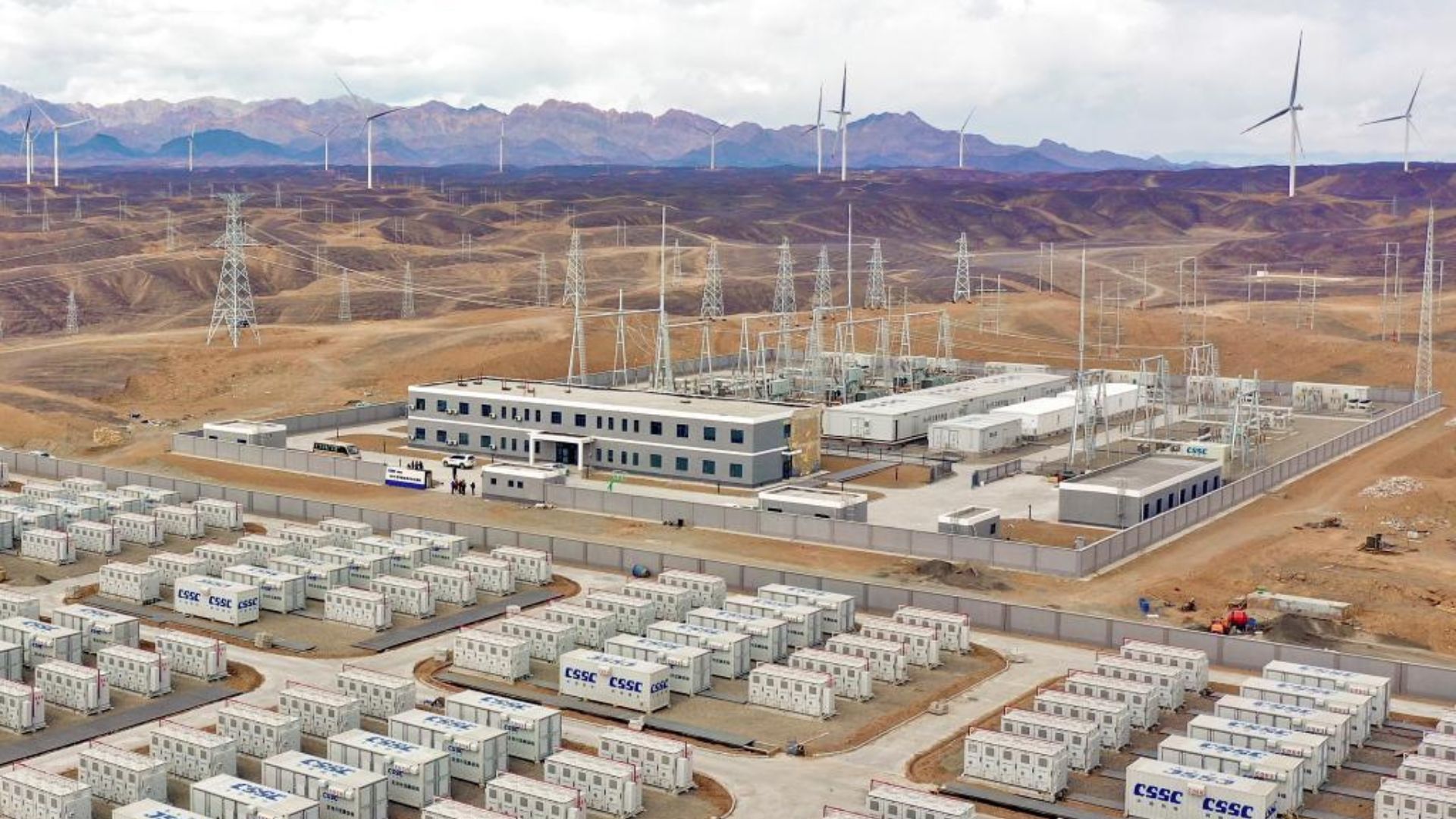

High-altitude project combines wind power generation and batteries to reduce fluctuations and enhance the stability of electricity supply in Xinjiang, bringing together industrial scale, extreme operational challenges, and China’s strategy of internalizing renewable energy in remote areas with great natural potential.
China has connected the first turbines of a 300-megawatt wind farm to the grid in Aheqi, Xinjiang, in the country’s northwest, in an area that reaches an altitude of 3,700 meters and requires operation adapted to severe natural conditions.
The undertaking, reported by CGTN based on data from China Huaneng Group, combines large-scale wind power generation with an electrochemical storage station, designed to reduce fluctuations from the renewable source and provide more predictability to the regional electricity supply.
When completed, the farm will have 45 turbines of 6.7 megawatts each, in addition to a storage system with 30 megawatts of power and a capacity of 60 megawatt-hours, a structure that allows energy to be stored and released according to demand.
-
Creative Uses for Toilet Paper Rolls That Will Change Your Perspective

-
Crab Trapped in Plastic Bottle for 62 Days Near Okinawa Highlights Little-Known Impact of Marine Pollution on Small Animals
-
Esperanza’s Bamboo Barrier in Oaxaca Redirects River and Reduces Erosion by 85% in Five Years

-
Family Builds Homemade Wind Turbine to Power Off-Grid Home, Video Reaches 555,000 Views on Ngô Thị Huyền’s Channel



Xinjiang wind farm operates at extreme altitude
Located in Aheqi County, Kizilsu Kyrgyz Autonomous Prefecture, the project has been described as the highest-altitude operational wind farm in northwest China, a factor that increases the technical complexity of equipment installation and maintenance.
The first grid connection marks the entry of the undertaking into an operational phase, where turbines, substations, and batteries begin to operate in an integrated manner, following an implementation stage marked by logistical challenges in a mountainous region.
High altitude poses specific obstacles to such projects, as thinner air, low temperatures, and meteorological variations can affect component transport, tower assembly, crane operation, and the performance of auxiliary systems.
Nevertheless, the choice of Aheqi indicates China’s attempt to expand the utilization of remote areas with good wind potential, provided that grid connection and industrial scale make investment in renewable infrastructure viable.
Energy storage improves wind power generation stability

According to CGTN, the projected average annual output is 610 million kilowatt-hours, a volume sufficient to meet the annual demand of approximately 20,000 households, according to an estimate attributed to Dong Guoqiang, project manager at China Huaneng Group.
The same assessment indicates that the plant could avoid more than 500,000 tons of carbon dioxide per year, if it operates as planned, by replacing part of the electricity that could be generated by more carbon-intensive sources.
Energy storage is one of the central points of the project because wind generation depends on the intensity and regularity of winds, which can create differences between the time of highest production and the period of highest consumption.
With integrated batteries, part of the generated electricity can be temporarily retained and delivered to the grid in a more controlled manner, an important resource in regions rapidly increasing the share of intermittent renewable sources.
This configuration does not eliminate the variability of wind energy but helps smooth out dispatch variations, improves electricity absorption by the system, and reduces losses associated with times when generation exceeds consumption or transmission capacity.
Large-scale turbines and expansion into remote areas


The use of 6.7-megawatt turbines also shows a trend of concentrating more capacity per equipment, a strategy that can reduce the number of machines needed to achieve the total power planned for the project.
In hard-to-reach areas, this choice gains relevance because each component requires specialized transport, ground preparation, high-altitude assembly, and maintenance compatible with an environment less favorable than plains and coastal zones.
Xinjiang has been one of the strategic regions for renewable energy expansion in China, especially in wind and solar projects installed in desert areas, plateaus, and zones far from major consumer centers.
In this scenario, transmission infrastructure and storage become as important as the construction of new power plants, as electricity needs to reach the system stably and under safe operating conditions.
The connection of the first turbines in Aheqi, therefore, represents not only an increase in installed capacity but also a practical test for renewable generation models in extreme environments, with integration between large wind turbines and batteries.
The project also reinforces the internalization of China’s clean infrastructure, a movement in which renewable energy bases advance into more remote areas, provided they have sufficient natural resources and technical support to operate on an industrial scale.
Although CGTN has not detailed all the engineering solutions used to deal with altitude, cold, and logistics, the released data indicates that the park was planned to combine high capacity, storage, and greater supply stability.
The initial operating phase should allow for the evaluation of equipment performance in the field, especially in the integration between generation, electrical control, and the battery system, before the full delivery of the planned 300 megawatts capacity.
For the energy sector, the Aheqi case illustrates how renewable expansion increasingly involves hybrid projects, where clean generation is accompanied by mechanisms capable of reducing instability and improving the use of produced electricity.


