Portuguese
  Spanish


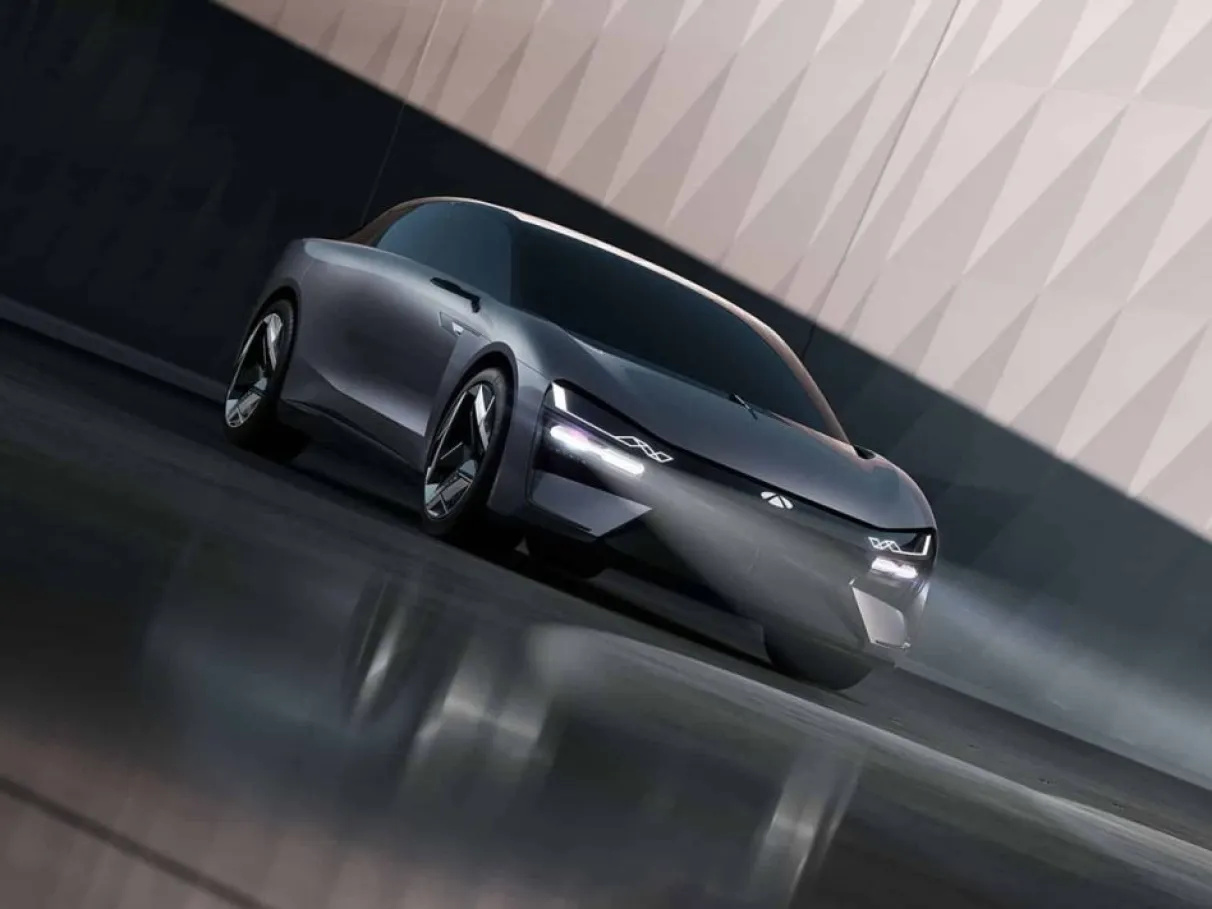


Announced by Chery, a new electric car with solid-state battery promises a range of up to 1,500 kilometers and becomes part of the Chinese strategy for real-world testing before mass production in the automotive sector.
The Chinese automaker Chery announced plans to roll out an electric car equipped with a solid-state battery and a claimed range of up to 1,500 kilometers on a single charge.
The model, named Liefeng and associated with the Exeed brand, integrates the company’s strategy to test this technology in real conditions before advancing to larger-scale production.
According to the Diário da Região, this range would allow the vehicle to make long successive trips without the need for intermediate recharging.
-
Renault Kwid Outsider 2023: Affordable Used Hatchback with 1.0L Engine, 15.7 km/l Efficiency, and Ample Cargo Space for Around $11,000

-
Chevrolet SUV Offers 153 hp Engine, 620 km Range, and ADAS Features at a Lower Price Than a New Kwid

-
London buses run on biofuel made from coffee grounds, turning café waste into sustainable public transport fuel without engine modifications.

-
Major Automaker Considers Closing 4 Factories, Putting 45,000 Jobs at Risk Amid Chinese Competition in Brazil



In Brazil, the most common comparison is the distance between São Paulo and Rio de Janeiro, estimated at around 435 kilometers by highway, depending on the route taken, which helps gauge the number released by the company.
The announcement was covered by specialized publications because it involves the practical application of solid-state batteries, a technology that has been mentioned by the automotive industry for years as a possible evolution beyond the currently predominant lithium-ion batteries.

Solid-State Battery Is the Main Differential of the Project
The main element presented by Chery is the adoption of a solid-state battery, which replaces the traditional liquid electrolyte with a solid material.
According to information released by the company and reproduced by the specialized press, the development would be linked to an internal research institute for batteries.
Furthermore, the manufacturer states that the battery used in the project would have an energy density of 600 Wh/kg, a value higher than that of lithium-ion batteries currently used in commercial electric vehicles.
In practice, this means the possibility of storing more energy in a smaller or lighter package, although the numbers released are still associated with technical goals and not a product that has already been independently validated.
Experts cited in industry reports indicate that gains in energy density are considered essential for increasing range without compromising weight, cost, or safety.
These same analysts often highlight that the transition from the laboratory to large-scale production occurs gradually and depends on successive validations.
1,500 Km Range Draws Attention, but Depends on Testing
The range of 1,500 kilometers mentioned by Chery was presented as an estimate based on testing cycles used in China.
According to the company, the battery would maintain stable operation in temperatures of up to -30 °C, indicating consistent performance in cold environments.
Specialized publications, however, emphasize that Chinese measurement cycles tend to present more optimistic results compared to standards used in other markets.
The actual range of an electric car also varies according to factors such as average speed, terrain, outside temperature, use of auxiliary systems, and driving style.
In this context, the comparison with Brazilian routes serves as an illustrative reference and not as a guarantee of identical performance on highways.
To date, Chery has not publicly detailed the total capacity of the battery in kilowatt-hours nor provided independent tests confirming the claimed range under everyday use conditions.
800 Volt Electric System and Performance Disclosed by the Manufacturer
In addition to the battery, the company released technical characteristics of the electrical system of the Liefeng.
Among them is the architecture of 800 volts, already used by some new generation electric models and associated with greater energy efficiency and faster charging potential.
According to data released by Chery itself, the electric motor of the model would be capable of reaching up to 30,000 revolutions per minute.
With this setup, the manufacturer states that the car can accelerate from 0 to 100 km/h in less than three seconds and reach an estimated top speed of 260 km/h.
These figures position the model in a high-performance tier, according to the parameters presented by the company.
Still, complete details about final power, torque, or anticipated production versions have not been disclosed.
So far, the available information is based on manufacturer statements and project presentation materials, without external validation of track tests with the vehicle in its final configuration.
Launch Will Be Gradual and Mass Production Remains Undefined
Chery’s plan envisions a gradual introduction of the Liefeng to the market.
As informed by the company, the first units are to be allocated to fleets and mobility services.
The goal of this stage is to collect real-world usage data on performance, durability, and battery behavior over time.
The expectation is to use this information to refine the project before moving on to wider production.
This type of strategy is common in the automotive industry when it comes to technologies still in the consolidation process.
Regarding the timeline, there are differences in the dates mentioned by publications that covered the announcement.
Some news outlets point to 2026 as the initial year for practical application of the solid-state battery.
Other sources indicate that larger-scale production may occur only at a later time, depending on the results obtained in the testing phase.
With the Chinese industry accelerating investments in new solutions to increase the range of electric vehicles, the anticipation remains regarding how these figures released by the manufacturer will behave when the model begins to circulate under real-world conditions.