






 Portuguese
  Spanish
  5 min of reading
  0 comments


Integrated Agricultural System Transforms Rice Fields into Productive Ecosystems by Combining Rice Cultivation and Crab Farming on a Large Scale in Northeast China, with Direct Impacts on Reducing Chemicals, Pest Management, Soil Fertility, and Rural Income.
In Northeast China, an agricultural model that combines rice and crabs in the same environment has been used at a scale of tens of thousands of hectares to reduce dependence on pesticides and synthetic fertilizers.
In Panjin, a city in Liaoning province, local data reported by the Chinese press indicate that in 2019, the rice planting area reached 106,533 hectares, while the area linked to crab farming reached 106,666 hectares, with production of 1.03 million tons of rice and 72,000 tons of crabs.
The co-cultivation system, known as rice–crab, is associated with the regional strategy to increase productivity and rural income with less chemical use.
-
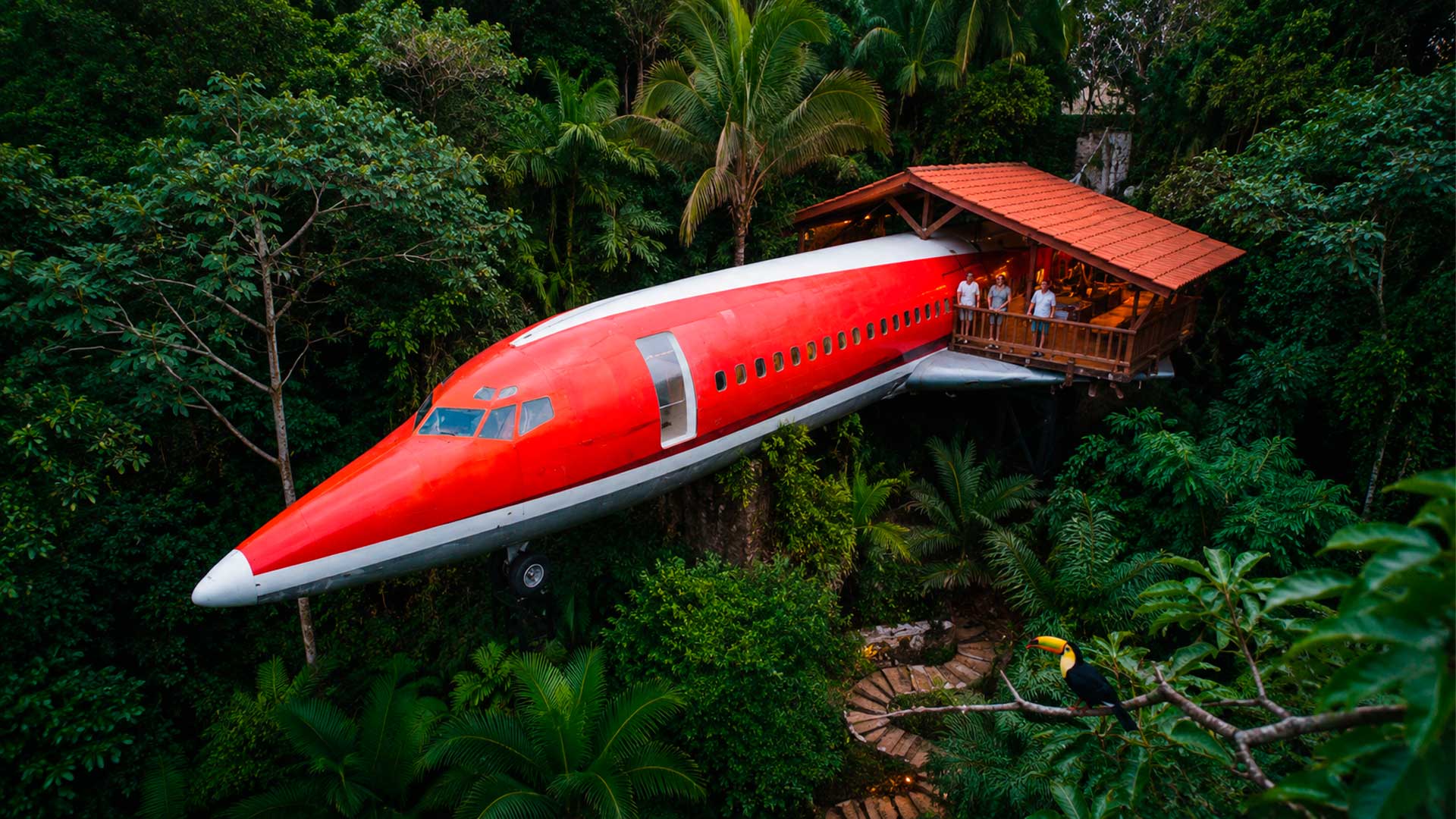
It was neither a crash nor abandonment; this retired plane left the airport in parts, crossed Costa Rica on trucks, and ended up becoming a suite in the heights with daily rates exceeding R$ 2,000.

-
She panicked when she saw her daughter fall from the crib; years later, she turned the experience into a factory generating R$ 9 million per year.

-
At 75 years old, João José de Carvalho, known as Mr. Janjão, was accepted for the second time by Sisu after overcoming distance, physical limitations, and years away from school, to fulfill his dream of studying Biological Sciences at UFPI.
-
A thrift store that started with children’s clothes and a loan from grandma turned into a network worth R$ 300 million per year: Peça Rara grew to 130 stores, sold 4 million items, and transformed used items into a national circular economy business.




How the Rice–Crab System Works in Flooded Fields
The logic of the method is to transform the flooded rice field into an environment where the crab participates in management.
Instead of treating the field solely as a crop, producers build channels and refuge areas with deeper water for the animals to circulate and survive during the rice cycle.

The crabs are released when the plants are well-established enough to withstand movement in the water layer.
From that point on, they begin to act as part of the biological control.
They feed on organisms present in the rice field, disturb the silt, and help reduce the growth of unwanted plants.
Their waste returns nutrients to the environment, contributing to soil fertility.
Cultivated Species and Sensitivity to Pesticide Use
The crab most cited in scientific works on the subject is the Chinese mitten crab, a species registered in the country’s aquaculture and described by international organizations as one of the main species cultivated in freshwater in China.
In areas such as the delta of the Liaohe River, where Panjin and Panshan County are located, rice production occurs in coastal plains that require strict water control.
The management of the rice field directly influences the health of the animals.
This interdependence is one of the factors that lead producers to restrict the use of highly toxic products, since the crab is sensitive to contamination and abrupt changes in water quality.
Impacts on Pest and Invasive Plant Control
Recent research has focused on describing how the system is organized in the field and what measured effects appear when compared to conventional planting.

In studies conducted in Panjin, technicians report that the transition from monoculture to rice–crab has been occurring since the 1980s.
This process included adapting planting designs and opening ditches that function as aquatic corridors.
Academic works indicate that the presence of crabs can reduce the pressure from pests and invasive plants, while also altering soil indicators such as organic matter and microbial activity.
Pesticide-Free Management and Ecosystem Balance
The dynamics of pest control in this type of cultivation depend on management practices.
In areas where no pesticides are used during rice growth, producers resort to physical methods and light attraction to reduce the insect population.
The indirect effect of the crab on rice field organisms is also considered relevant.
Researchers analyze what the animal consumes in the system, noting that the diet varies according to food availability in the field.
In observations in rice fields, the crab utilizes different food sources, including organic remains and small invertebrates.
This behavior helps explain why the system is described as a more diverse ecosystem than monoculture.
Soil Recovery and Microbial Activity

The impact on soil fertility is another recurring point in the publications.
In flooded rice fields, lack of oxygen in deeper layers can limit biological processes.
The movement of the crab creates micro disturbances that improve the aeration of the silt and redistribute organic matter.
This process can favor microbial activity associated with the nitrogen cycle.
Some studies investigate how microbial genes linked to nitrogen fixation behave in areas with a constant presence of the animals.
Agricultural Income and Valuation of Panjin Rice
Beyond the environmental aspect, the system is treated by local governments and researchers as a strategy for income.
The harvest starts to include two products: rice and crab.
This does not imply that the rice is automatically organic or free of any inputs.
The management varies and may include base fertilization or feed for the animals.
Still, the model is presented as a way to reduce costs with pesticides and some fertilizers, while also increasing revenue per hectare.
In Panjin, official disclosures associate the growth of the crab chain with the strengthening of the regional rice brand.
Standardization, Market, and Measurement Challenges

The expansion of rice–crab brought demand for standardization.
The market began to differentiate what is called “crab field rice” from conventional rice.
Recent studies compare the chemical characteristics of rice produced in this system with common rice, seeking ways to authenticate the origin.
This type of research arises in response to the valuation of the product and the need to prove provenance.
Despite the association of the model with lower chemical use, researchers highlight that the system depends on good practices and local conditions.
The rice field remains a managed environment, with control of water level, stocking density of animals, and, in some variations, use of feed.
Changes in these factors can affect both rice performance and crab growth.
In the case of Panjin, the area and production numbers help to size the scale of the system.
However, there is not always detailed information on how much of the area corresponds strictly to co-cultivation in rice fields and how much involves connected structures.
This variation depends on the criteria adopted by municipal reports, sector associations, and academic studies.
If a model with live animals already operates above 100,000 hectares in a single agricultural hub, which other similar practices have yet to be fully mapped globally?







-

-

-

-

-

-

88 people reacted to this.