Portuguese
  Spanish


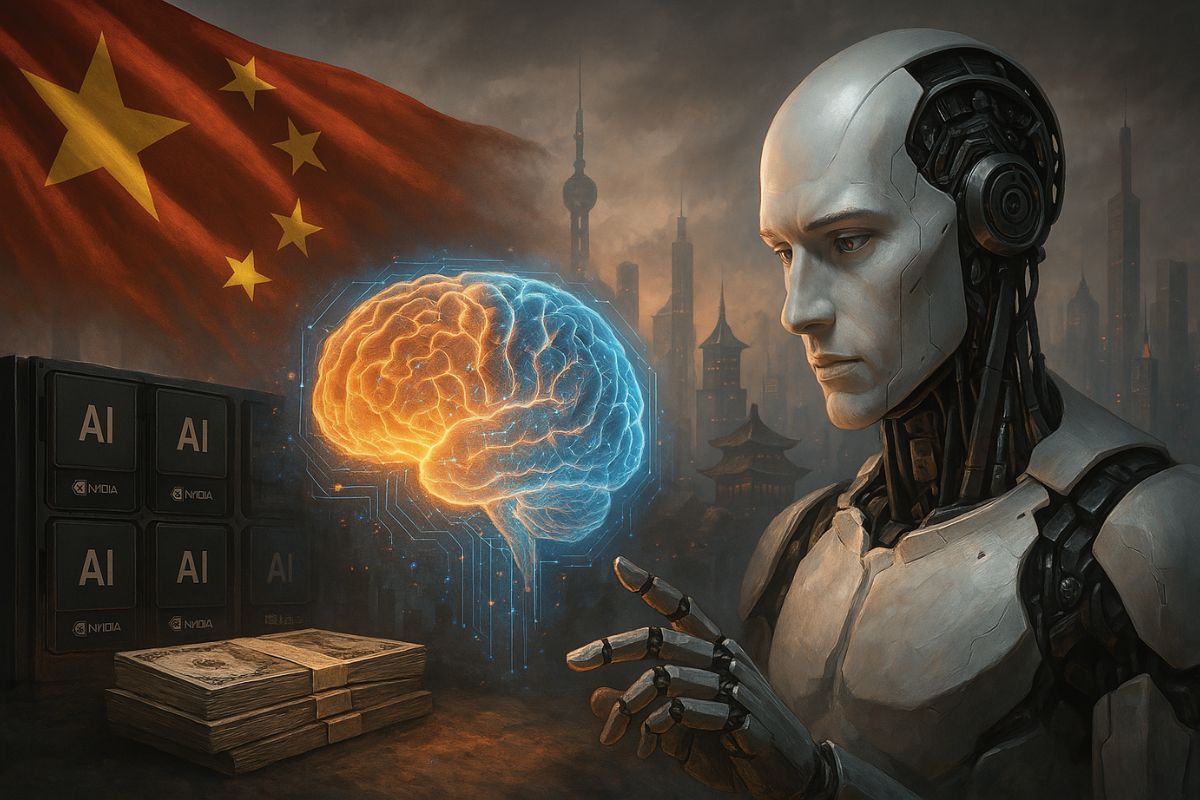

The Launch of DeepSeek by China Shook Wall Street, Destroyed Trillions in Market Value, and Put Silicon Valley on the Defensive, Understand How the Chinese Took the Lead in the Artificial Intelligence Revolution
In less than 30 days, China did what no one imagined: it shook the foundations of Silicon Valley with the launch of DeepSeek, its new artificial intelligence model. The impact was brutal. More than $1 trillion evaporated from NASDAQ, with Nvidia alone losing that same amount in market value.
Meanwhile, the Hong Kong stock exchange, which houses Chinese big tech companies, surged 20%. The technological revolution changed addresses, and now the world is about to speak Mandarin with a digital accent.
When China Decided Not to Get Left Behind
It all started with a modern Sputnik moment. In 2016, when AlphaGo defeated the world Go champion, an ancient game more complex than chess, China realized it was falling behind in the race for artificial intelligence.
-
Brazilian Researcher Develops Protein Supplement from Tilapia Waste, Combining Innovation and Sustainability with Economic Potential

-
Women in São Paulo Unknowingly Tracked by Coin-Sized Tags Hidden in Cars and Belongings, Raising Stalking Concerns
-
Near a $750 million AI data center in Brazil, a resident’s well runs dry, leaving her unable to afford the $25,000 needed for repairs.

-
16-Year-Old from Brazil’s Sertão Wins Young Scientist Award for AI Predicting Rainfall with 94.5% Accuracy to Aid Farmers


Since then, the country has plunged into heavy investments in universities, basic research, and technological innovation. Public universities like Zheijang, the birthplace of DeepSeek engineers, have climbed global rankings and begun collaborating with the private sector at a rapid pace.
DeepSeek: The New “McIntosh” of Artificial Intelligence
The launch of the R1 model, with performance comparable to OpenAI’s GPT-4, but operating at just 2% of the cost, was not just a technical feat, it was a masterstroke. China delivered the world an open-source AI model, more efficient, with nearly zero operational costs, and that runs on laptops. Yes, while American big techs struggle to maintain energy-hungry monsters, the Chinese are putting powerful AI within anyone’s reach.
Silicon Valley Didn’t See This Coming
And the response was desperation. Microsoft cut investments in data centers, Google lost billions in stocks, and OpenAI… cried. It accused China of misusing data, even after years building its own growth on the “creative freedom” to copy content without authorization.
The hypocrisy became evident. What the Valley celebrated as disruptive innovation has now turned into “intellectual property theft.”
Meanwhile, in Beijing…
DeepSeek also launched Janus Pro, a competitor to DALL-E, capable of generating complex images directly on personal computers, without relying on superstructures. The model was built under U.S. embargoes that prohibited the sale of the most advanced chips to China.
Result? Chinese engineers were forced to innovate in efficiency. And they succeeded. What was a limitation became a global strategic advantage.
Interestingly, China’s trajectory now mirrors that of Silicon Valley itself in the 80s and 90s: small teams, open, disruptive, accessible models. And meanwhile, the U.S. government is cutting education funding, stifling research, and trying to criminalize the use of Chinese technology with proposals for up to 20 years in prison for anyone using AI made in China. It’s dystopia knocking on the door of the former leaders of global innovation.