Portuguese
  Spanish


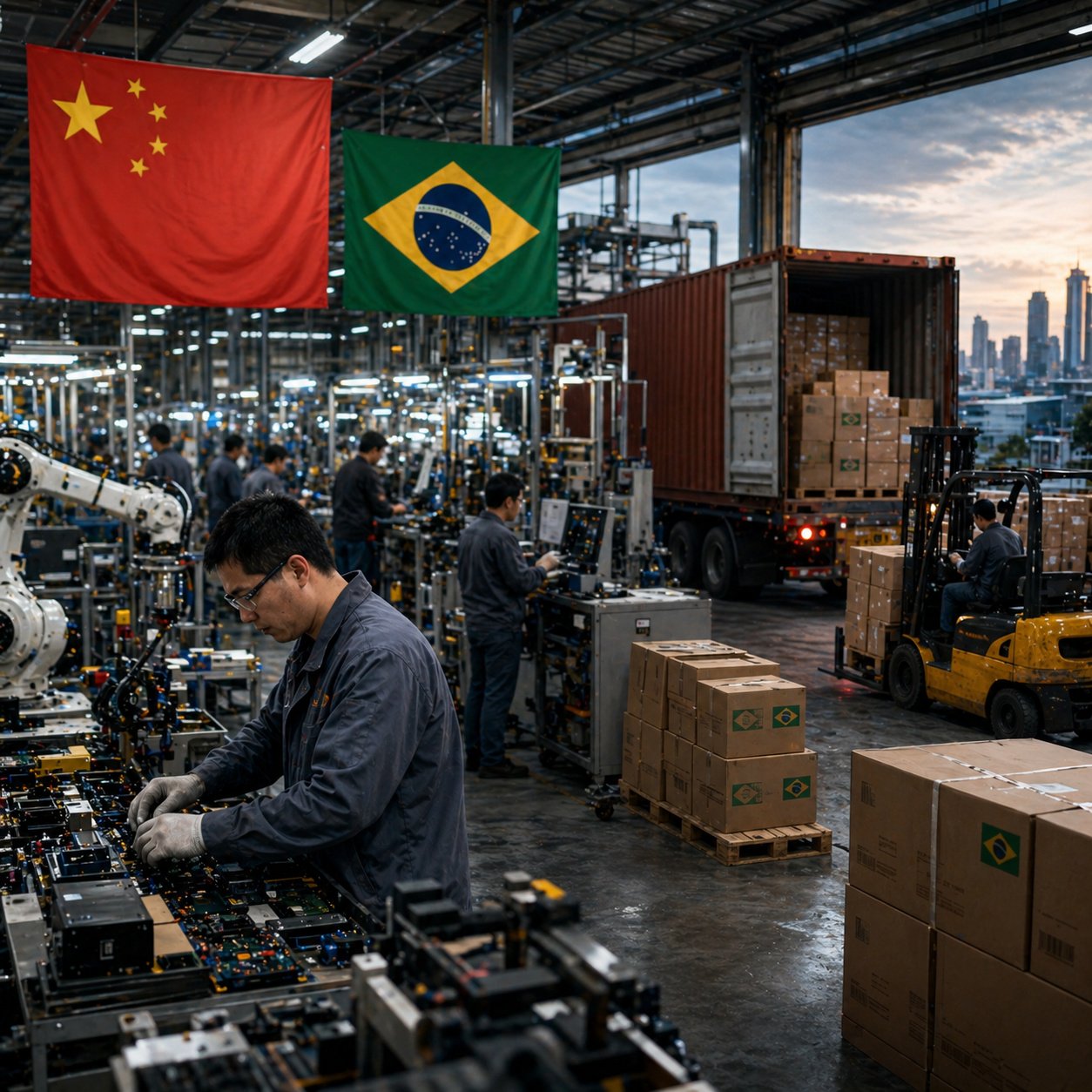

Chinese automakers start sharing factories in Brazil to escape taxes and reduce costs, transforming the country into a strategic industrial base.
In 2026, Chinese companies intensified a strategy that has been gaining strength since 2022: using Brazil as a production base to avoid import taxes and maintain competitive prices. According to recent automotive sector reports, brands such as BYD, GWM, Changan, GAC, Geely, and Leapmotor began installing or sharing factories in different Brazilian states. The move is directly linked to the country’s tariff policy. Brazil has gradually reinstated the import tax for electrified vehicles, which could reach 35% starting in 2026.
Given this scenario, producing within Brazil ceased to be just an option and became a central strategy to maintain competitiveness.
Shared factories and industrial partnerships become dominant model
Instead of building factories from scratch, many Chinese companies opted to use existing structures or form partnerships with local groups.
-
Helsinki Residents Receive Water That Travels 120 Kilometers Through a Hidden Rock Tunnel from a Lake Before Treatment

-
SENAI Launches $36 Million Innovation Round to Boost Brazilian Manufacturing Productivity and Reduce Business Risks with R&D Projects by 2026
-
Indonesia Plans to Build 5,000 Suspension Bridges by 2026 to Connect Rural Communities to Schools, Health Centers, and Markets
-
U.S. Invests $75 Million in Projects to Extract Rare Earths, Gallium, Germanium, and Aluminum from Coal Waste

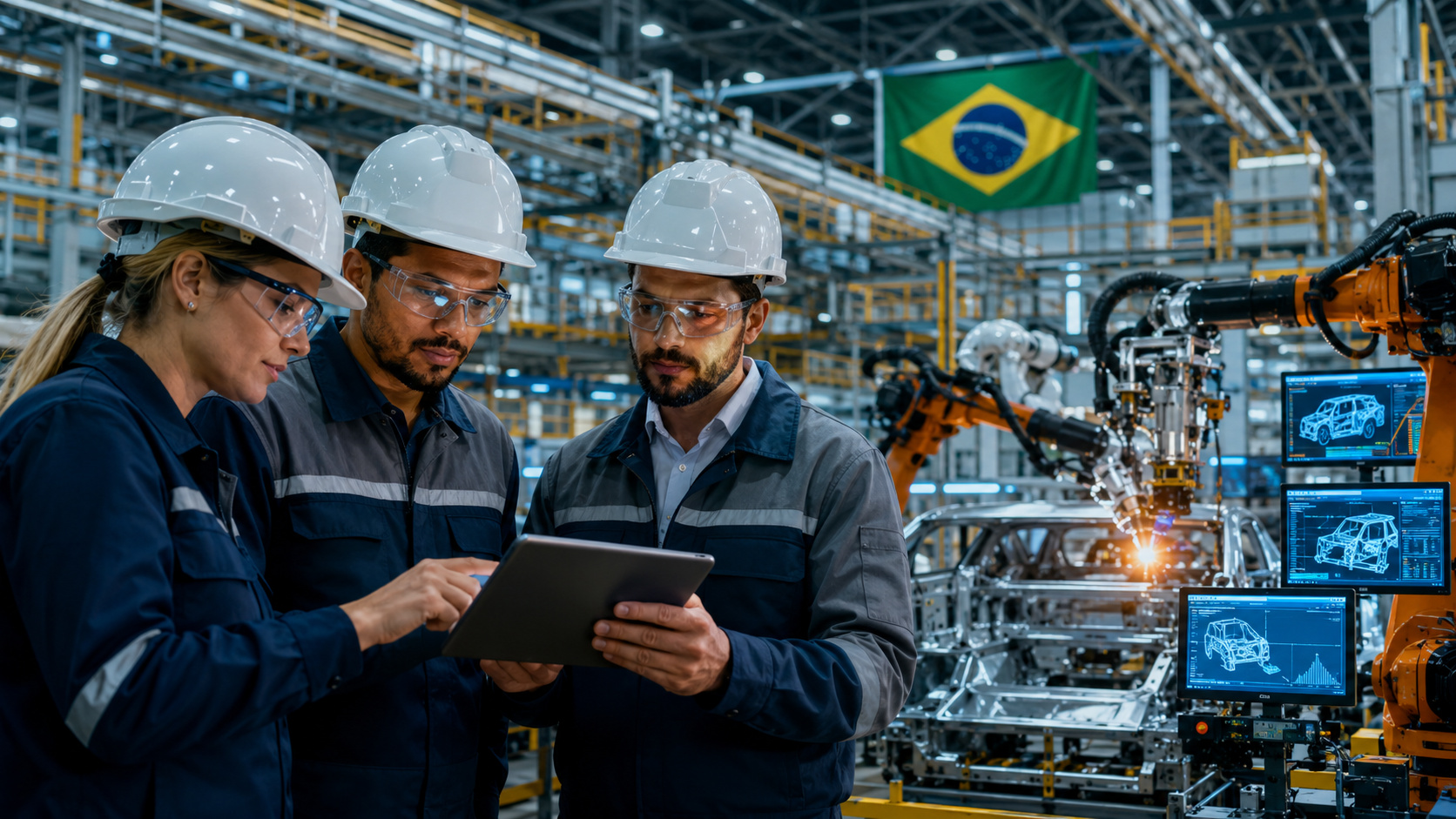


This model includes:
- Use of former factories of global automakers
- Partnerships with already established Brazilian companies
- Production under CKD or SKD regime (disassembled or semi-assembled vehicles)
Examples include the use of industrial plants that belonged to companies like Ford and Mercedes-Benz, in addition to agreements with national groups. In practice, this reduces initial investment and accelerates entry into the Brazilian market.
Strategy allows circumventing up to 35% tax on imported vehicles
The main incentive behind this move is tax-related. When a vehicle is imported ready, it can be subject to high tariffs. However, when produced locally, even with imported parts, the tax burden can be significantly lower.
This creates a clear advantage for companies that can assemble vehicles within the country. Producing in Brazil does not eliminate costs, but it avoids the main entry barrier: the import tax. Even with local production, a large part of the components continues to be imported. Items such as:
- Batteries
- Semiconductors
- Electronic systems
- Embedded technologies
are still mostly produced in China and sent to Brazil.
This model allows companies to maintain a competitive advantage based on scale and industrial cost. In practice, companies “import from themselves,” reducing costs and maintaining control over the production chain.
Brazil becomes a strategic base for the global expansion of Chinese automakers
The movement goes beyond the domestic market. By establishing production in Brazil, Chinese companies achieve:
- Avoid local tariffs
- Gain access to the South American market
- Reduce logistics costs
- Increase global presence
This model has already been used in other countries, such as Mexico, and is now starting to gain scale in Brazil. The country begins to function as a regional industrial hub within China’s global strategy.
Growth of Chinese exports pressures global markets
The advancement of Chinese automakers is linked to a larger phenomenon: the global expansion of China’s automotive industry. In 2025, the country exported approximately 8.3 million vehicles, consolidating its position as the world’s largest exporter.


This growth generates pressure on local markets, which respond with tariffs and protectionist measures. The establishment of factories abroad emerges precisely as a response to these trade barriers.
Producing in Brazil is not necessarily cheaper. The country presents challenges such as:
- High tax burden
- Higher logistics costs
- Higher interest rates
- Smaller industrial scale
Even so, the strategy remains viable because it avoids import tariffs and maintains price competitiveness. The balance between local cost and tax savings defines the model’s viability.
Partnerships with Brazilian companies facilitate entry and expansion
Another important element is collaboration with local companies. Partnerships with Brazilian groups allow for:
- Access to already installed infrastructure
- Knowledge of the domestic market
- Reduction of regulatory barriers
- Acceleration of production
Cases like joint ventures and industrial agreements show that the model is not just disguised import, but a productive integration.
This type of collaboration can strengthen local production chains, but also increase external technological dependence.
Movement may impact Brazilian automotive industry
The massive entry of Chinese companies generates effects on the national automotive sector. On one hand, it can:
- Generate jobs
- Attract investments
- Stimulate industrial modernization
On the other hand, it increases competition for traditional automakers established in the country. The dispute over price and technology tends to intensify in the coming years.
The Brazilian case is part of a global trend. With increasing tariffs and trade tensions, companies are looking for new ways to maintain market access.
Local production emerges as one of the main solutions. Instead of exporting finished products, companies start exporting their own production capacity.
Given this scenario, can Brazil become one of the main industrial hubs of the new global industry?
The advance of Chinese companies in Brazil shows that the country is entering a new phase of global industry, where production, trade, and geopolitical strategy intertwine.
With factories being shared, integrated production chains, and costs being adjusted on an international scale, the traditional import model is beginning to be replaced by something more complex.
The direct question remains: is Brazil merely receiving factories, or is it becoming a central piece in the new global dispute for production, technology, and market?