Portuguese
  Spanish


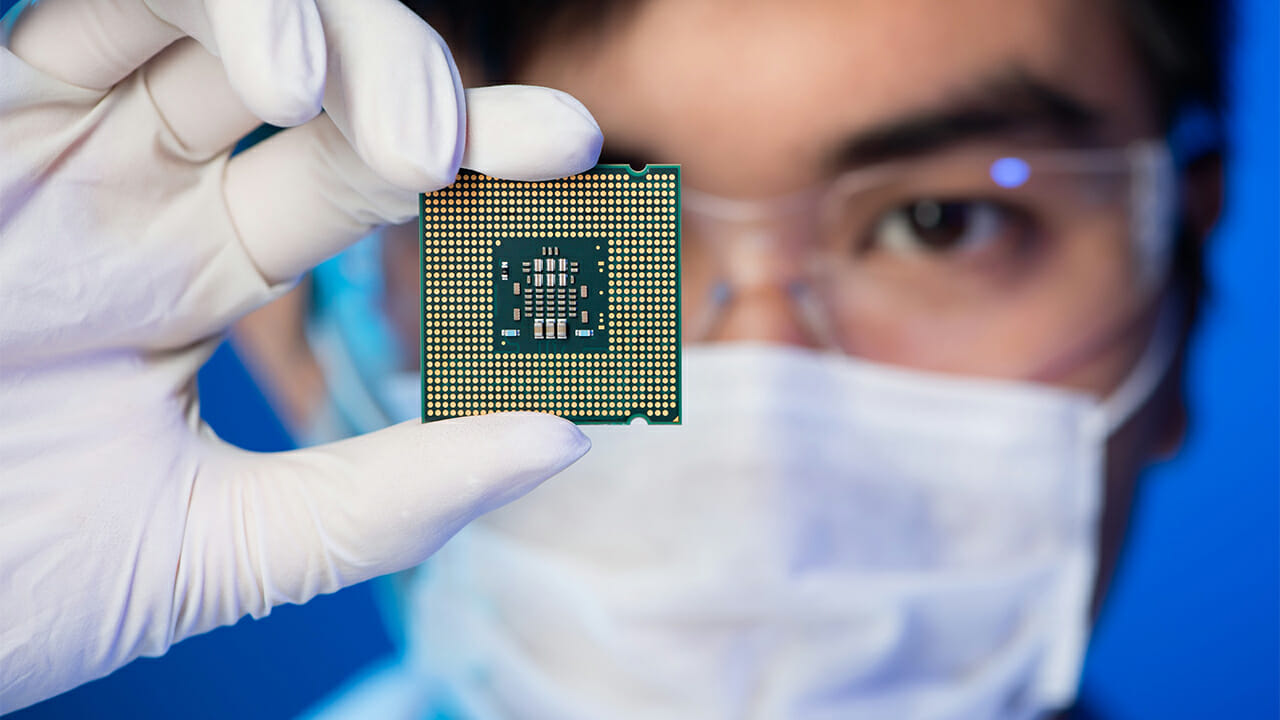

Semi-Biological Chip Could Give Rise to a New Era of Machine Learning, with Implications for Autonomous Vehicles, Drones, and Robots.
In exploring the limits of scientific innovation, we are constantly challenged to push the boundaries of our understanding. One of these frontiers is the hybrid between computer science and neuroscience. The incorporation of human brain cells into a computer chip, known as “DishBrain“, is a fascinating example of this intersection.
Semi-Biological Chip Contains Approximately 800,000 Human Brain Cells
Developed by researchers from the renowned Monash University and the emerging startup Cortical Labs, DishBrain is a semi-biological chip equipped with a colony of approximately 800,000 human and mouse brain cells, meticulously cultivated in the lab. This remarkable advancement was enough for it to learn to master the game Pong in just five minutes, suggesting a form of self-awareness.
Understanding the Mechanics Behind DishBrain
At the core of this chip lies a network of microelectrodes, capable of decoding neural activity and stimulating it with electrical impulses. The research team developed a version of Pong in which the brain cells were stimulated by a dynamic electrical impulse, reflecting the position of the ball on the playing field and its proximity to the paddle. They then allowed these cells to control the paddle’s movement.
-
16-Year-Old from Brazil’s Sertão Wins Young Scientist Award for AI Predicting Rainfall with 94.5% Accuracy to Aid Farmers

-
Netherlands Reports First Child Euthanasia Case Since Rule Expansion for Minors

-
Brazilian Innovator Survives Homemade Submarine Dive in Paraty Despite Hatch Leak and False Oxygen Alarm
-
China Develops Custom 140-Ton Electric Mining Truck with 770 kWh Swappable Battery, Deploys 290 Units in Xinjiang’s Largest Zinc Mine



The researchers then established a rudimentary reward system. By adhering to the brain cell clusters’ natural tendency to minimize unpredictability in their environment, they provided predictable stimuli when the paddle hit the ball, and random stimuli when it missed.
This unprecedented use of lab-grown brain cells, allowing them not only to perceive the environment but also to interact with it, resulted in significant discoveries.
The Research Received an Investment of US$ 407,000
Given DishBrain’s promise to surpass the performance of silicon-based hardware, the research received an investment of US$ 407,000 from the National Intelligence and Security Discovery Research Grants in Australia.
An advocate of the idea that this technology could transform various fields, from advanced planning and automation to brain-machine interfaces and drug development, Adeel Razi, the project lead, envisions a significant strategic advantage for Australia.
He believes that DishBrain’s advanced learning capabilities could herald a new era of machine learning, with implications for autonomous vehicles, drones, and robots. Such technology could create “a new kind of machine intelligence capable of learning throughout its lifetime”, in Razi’s words.
Advances in studies of chips with human brain cells promise machines capable of continuing to learn new skills without compromising old ones, which adapt well to changes, map old knowledge in new contexts, and optimize the use of computational resources, memory, and energy.
After all, the future of artificial intelligence and biological computing is just beginning to unfold. DishBrain, with its learning capability similar to biological neural networks, is just a glimpse of what is to come.