Portuguese
  Spanish




In A Surprising Move, The USA Plans To Sink A Historic Transatlantic Ship And Make Millions Of Dollars. See How And Why This Decision Could Change Everything You Know About Preservation And Business!
One of the most iconic symbols of American pride and luxury, the transatlantic ship SS United States, may soon find its fate at the bottom of the Gulf of Mexico. Okaloosa County, Florida, has signed a preliminary agreement aimed at sinking the ship.
This strategy promises to generate millions of dollars annually for the local economy. Let’s better understand this story. This measure, seen by many as controversial, is presented as an innovative solution to preserve the ship’s legacy in an unexpected way.
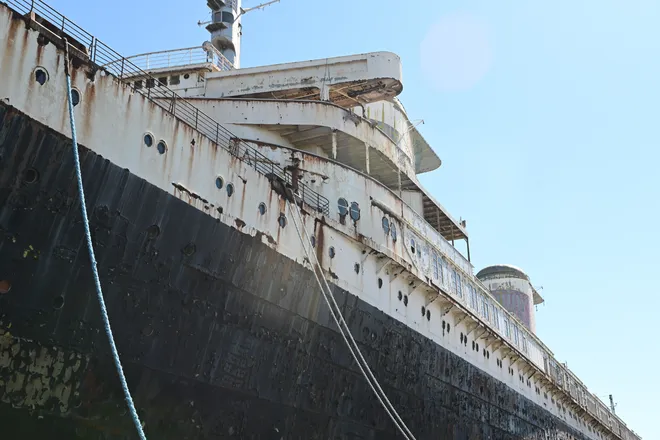
The SS United States, a masterpiece of naval engineering, was built in 1952 and, at the time, was the largest passenger ship ever made in the United States.
-
The FLIP: A 108-Meter Ocean Laboratory That Stood Vertically for 60 Years, Dismantled in 2023

-
North Korean Fiasco: Launch of the Largest Warship Ends in Sinking

-
While giant ships still burn heavy fuel and the maritime sector races against climate targets, Maersk and Vale are starting to bet on ethanol as a new route to reduce emissions at sea.

-
China begins construction of the world’s largest LNG ship, a 344-meter giant capable of supplying 4.7 million homes for a month, carrying 271,000 m³ of gas, and placing QatarEnergy in the largest naval order ever recorded in world history.


With over 100 feet longer than the Titanic, it stood out for its speed and cutting-edge technology. Its inaugural transatlantic crossing still holds records today.
However, after just 17 years of service, the ship was retired due to the rise of air travel, which dominated the international transport sector.
Over the decades, the ship changed hands several times with various owners attempting to convert it into a museum or tourist attraction, but all efforts failed. The SS United States remained anchored and unused for years, while the future of this historical relic remained uncertain.
A New Submerged Purpose For The Transatlantic Ship
Now, with the new agreement underway, the proposal is to intentionally sink it so that it becomes a vibrant artificial reef.
This transformation, besides honoring its historical significance, is seen as an opportunity to benefit both the environment and the local economy in Florida.
Designed by famous naval architect William Francis Gibbs, the transatlantic ship SS United States was conceived to serve not only as a luxury passenger ship but also as a potential troop transport in times of war.
Its construction involved a hefty investment from the U.S. government, which equipped it with the most advanced technology of the time.
Its impressive speed and safety features made it one of the fastest and safest ships of its generation. Interestingly, no wood was used in passenger areas, a decision made by Gibbs to minimize the risk of fires.
Now, decades after its last voyage, the destiny of the SS United States is about to take a completely different turn.
The plan to turn it into an artificial reef aims to not only preserve its legacy but also give it a new purpose, this time in the depths of the ocean.
Mel Ponder, commissioner of Okaloosa County, highlighted the cultural and environmental impact of this decision: “Having the opportunity to have the SS United States here on our coast is a heritage and a legacy that is generational. I’m very excited not only about what it does for the diving community but also for the fishing community and the community at large.”
Economic And Environmental Impact
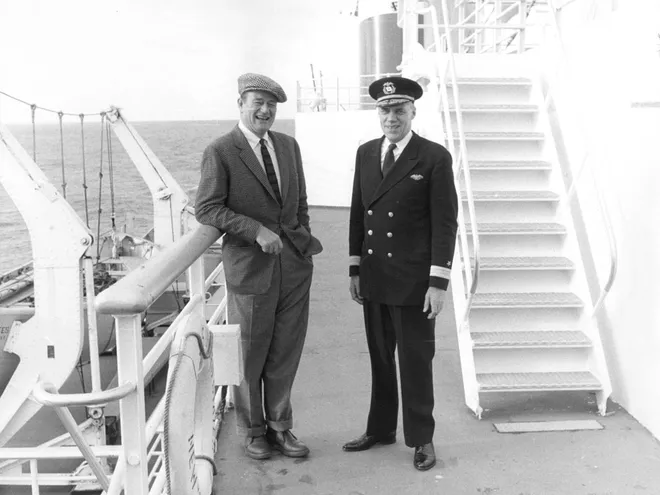
The proposal to sink the SS United States also has a strong economic appeal. Transforming the ship into an underwater attraction for divers and fishermen can generate millions of dollars annually for the local tourism sector.
Diving shops, charter boats, hotels, and other businesses are expected to benefit from the influx of tourists interested in exploring the historic ship in its new habitat.
Additionally, the environmental impact is also significant. Artificial reefs play a crucial role in preserving marine life, providing shelter and breeding grounds for various species.
The creation of a new reef with the massive structure of the SS United States is expected to attract a wide range of fish, corals, and other marine life, contributing to the region’s biodiversity.
The area around the Florida coast already has a network of over 500 artificial reefs, and the SS United States will be an imposing addition to this network. Its large structure has the potential to create a thriving marine ecosystem, benefiting the health of the oceans and promoting sustainability.
The Legacy Lives On
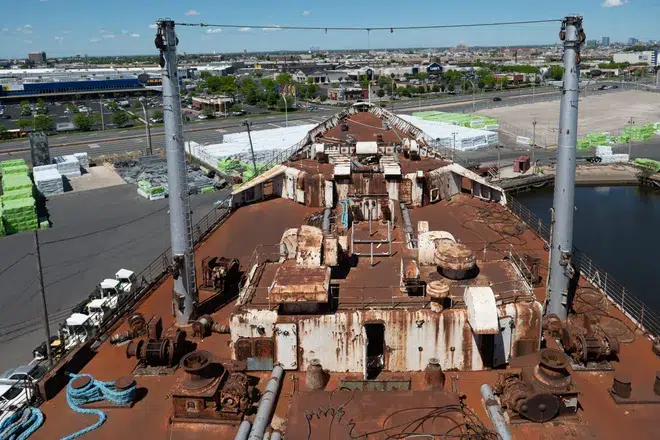
Susan Gibbs, president of the SS United States Conservancy and granddaughter of architect William Francis Gibbs, expressed her support for the project: “The SS United States inspired millions around the world as a symbol of American pride and excellence. If the ship is converted into an artificial reef, it will become a unique historical attraction above and below the waterline.”
Although the idea of sinking a historic icon may seem shocking to some, the plan offers an innovative solution to ensure that the SS United States continues to inspire future generations, even in an unexpected way.
What could be the definitive end of an era actually marks the beginning of a new chapter, where history, economy, and environment converge in the depths of the ocean.