






 Portuguese
  Spanish
  2 min of reading
  0 comments


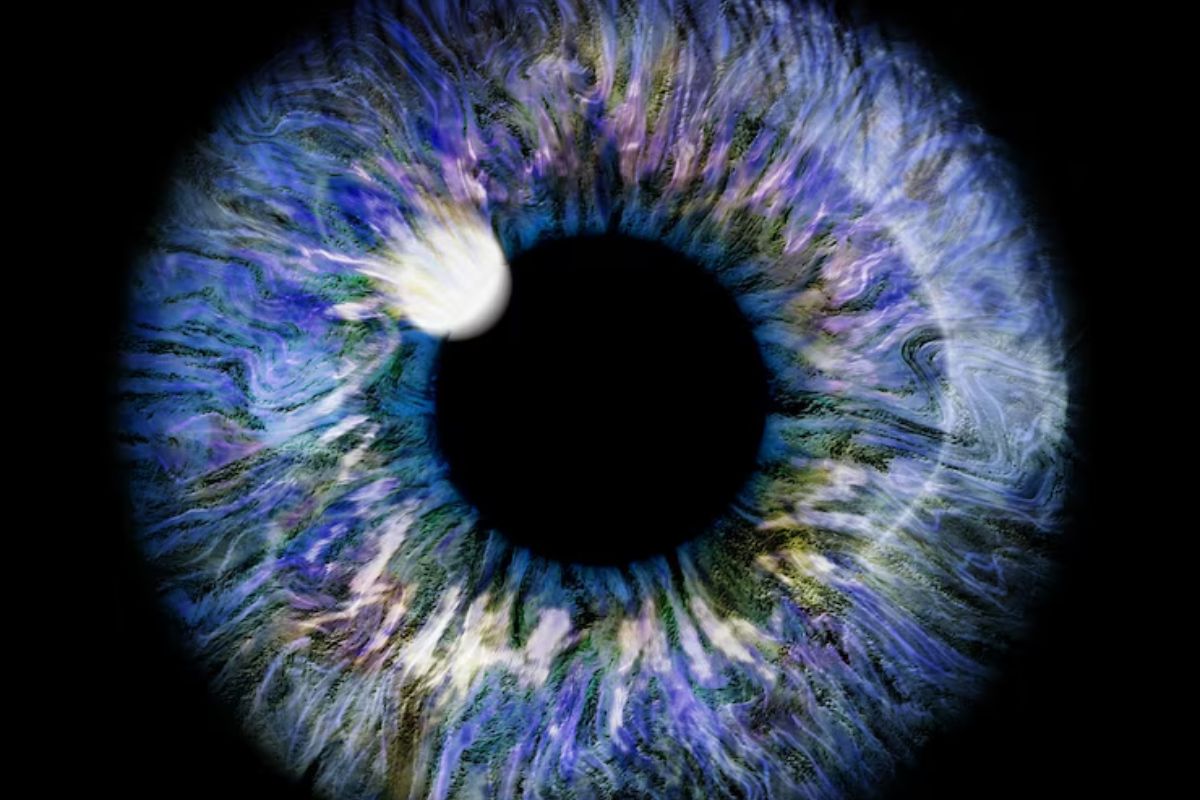
Experience with Lasers Stimulated Retina Cells of 5 Participants; Understand the Technology and the Controversies.
A team from the University of California created the color olo, a bluish-green never before perceived by the human eye. Using lasers, five volunteers witnessed the hue in the laboratory. Learn how the technique works and why “olo” divides opinions.
How the “olo” Was Produced in the Laboratory
The olo was generated by a device with lasers and mirrors that stimulated specific cells in the retina. Scientists fired light pulses directly into the M (green) cones of the participants’ eyes, without affecting the L (red) or S (blue) cones.
This isolated stimulation, impossible in natural vision, sent an unprecedented signal to the brain, recorded as a color “more saturated than any other in the real world,” according to the researchers.
-
The future of computers may change sooner than expected: Amazon bets on commercial quantum computing within seven years, while qubits, the Ocelot chip, AI, and scientific simulations take center stage in the new race among big techs.

-
What does a Covid-19 vaccine have to do with heart attack and stroke? A study with over 1 million veterans reveals an unexpected link between immunization, the heart, and seniors over 75 years old.

-
Helicopters drop 6,000 logs into 38 km of remote rivers in Washington to reverse decades in which biologists removed wood from the water thinking they were doing the right thing.

-
WhatsApp prepares messages that disappear after a single reading and tests on iPhone a feature that could change the way users send private, temporary texts that are harder to keep saved in conversations.




The Functioning of the Retina in the Experiment

In the retina, the M (green) cones are normally activated along with other photoreceptors. In the study, the lasers controlling the light cell by cell allowed the isolation of the M cone response.
This created a pattern of activation never experienced naturally, resulting in the perception of the olo. The participants confirmed the color on a display designed for the test.
Criticism of the “New Color” Olo
Scientists such as John Barbur from City St George’s challenge the olo as a truly new color. For him, it is simply a more intense green, generated only by the artificial stimulation of the M cones in people with normal vision.
Barbur argues that if the L (red) cones were isolated, the brain would perceive a “deep red,” following the same logic. In other words, the olo would be an extreme variation, not a novel color.
Practical Applications of the Technology
Despite the controversies, the creators of olo argue that the technique may help colorblind individuals. By controlling the stimulation of specific cones, it would be possible to compensate for deficiencies in color perception.
Ren Ng, the leader of the study, admits that replicating the olo outside the laboratory is difficult, but the research paves the way for advances in optics and treatment for color blindness.
The olo challenges our understanding of how we see colors. While some see a revolution, others see only an overstimulated green. And you: do you believe it is possible to create colors never seen before?





Be the first to react!