





 Portuguese
  English
  Spanish
  4 min of reading
  0 comments


Discovery on the Far Side of the Moon Reveals Mysterious Structures in the Depths, Raising Questions About the Formation of the Satellite
The Moon, our closest celestial neighbor, has been a constant source of fascination for humanity, inspiring art, literature, and science. Throughout the centuries, it has been shrouded in mystery, and recently, thanks to advancements in space exploration, we have begun to uncover some of the secrets of its complex geological history, which dates back billions of years.
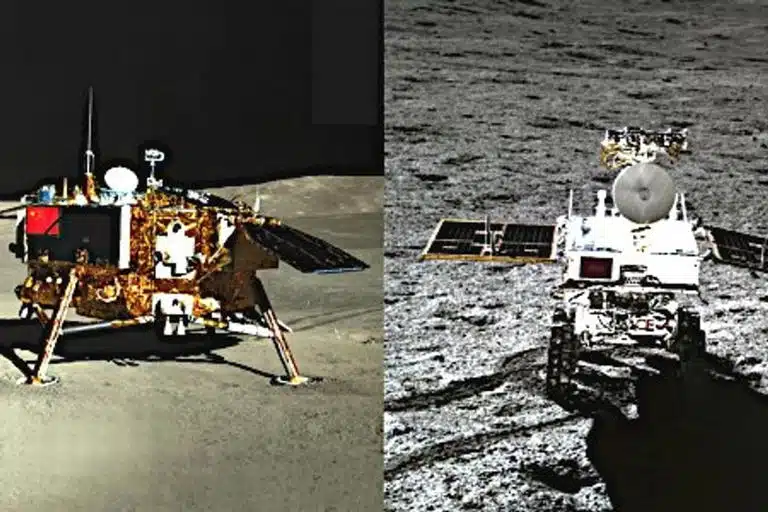
In 2018, the China National Space Administration (CNSA) launched the Chang’e-4 mission, marking a historic moment: the first spacecraft to land on the far side of the Moon, often referred to as the “dark side”.
Contrary to popular belief, this side is not permanently dark, but rather the side that is never visible from Earth due to the synchronized motion of the Moon in relation to our planet.
-
Thousands of circular craters on the seafloor have always been attributed to methane leaks, but recent studies show that many have very different origins, from dolphins hunting fish to sediment slides and the melting of ice ages.

-
Informally nicknamed the Death Star due to its size and firepower, the Russian nuclear cruiser Admiral Nakhimov has entered the final phase of sea trials and is nearing its return to service, after more than a decade of modernization that could make it one of the most heavily armed warships in the world.
-
Couple leaves the city to live in the countryside, cultivates a pesticide-free garden and sees cabbages, kale, and broccoli destroyed by an unexpected attack, but decides to uproot everything, replant seedlings, and start over with the help of the rain in their new rural dream.

-
Billion-year-old rocks underground may hide one of the largest sources of clean energy on Earth, natural hydrogen, a gas that forms when water reacts with iron-rich minerals and that, according to the US Geological Survey, could supply the world’s demand for up to 200 years.



Revealing Geological Discoveries
Since the landing of Chang’e-4, the lander has been collecting important data, including planned images and mineral samples.
These analyses have shed light on the geological structure of the first 40 meters of the lunar surface, revealing layers of dust, soil, and fractured rocks, each with stories of catastrophic events and a constantly changing transformation.
In early November, the scientific community eagerly awaited the new discoveries from Chang’e-4. Documented in the scientific journal Journal of Geophysical Research: Planets, these discoveries provide a detailed insight into the formation and evolution of the far side of the Moon.
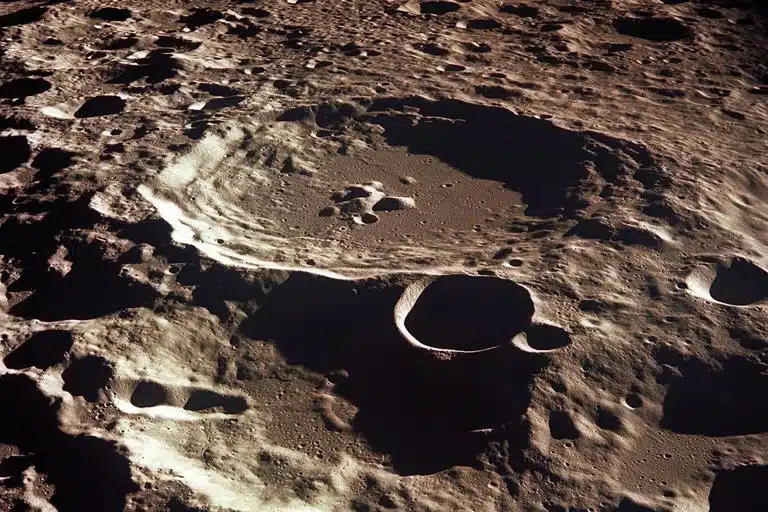
One of the highlights was the identification of a crater formed by the impact of a large object, underscoring the violence of cosmic events that have shaped the lunar surface.
The Origin of the Moon: Giant Impact Theory
The origin of the Moon is attributed to a colossal event that occurred about 4.51 billion years ago. According to the most accepted theory, an object the size of Mars collided with Earth, ripping away a mass of material that eventually coalesced and solidified to form the Moon.
In the first 200 million years after its formation, the Moon experienced intense volcanic activity, while space debris continuously collided with its surface, creating numerous craters and cracks.
Researcher Jianqing Feng from the Planetary Science Institute explains that, just like Earth’s mantle, the lunar mantle harbored molten magma that, upon encountering cracks in the crust, resulted in volcanic eruptions.
This activity left layers of lava on the surface, which are now recorded in the scientific rock formations examined by Chang’e-4.
The Evolution of Lunar Volcanic Activity
An intriguing pattern observed in the layers of volcanic rock suggests that as these layers approach the surface, they become thinner. This observation led Feng to infer that the Moon was slowly losing its internal energy, reducing its capacity to produce volcanic eruptions.
Currently, scientists believe that the Moon’s volcanic activity ceased between one billion and 100 million years ago, rendering it geologically “dead” on the surface.
However, recent data raised the possibility that there may still be magma reservoirs deep within the lunar interior. Although the surface shows no signs of activity, the lunar subsurface may harbor remnants of this magma, waiting for the right conditions to emerge.
Curious Facts About the Far Side of the Moon
- It’s Not Really Dark: The far side of the Moon receives the same amount of sunlight as the visible side.
- Intense Craterization: Without the protection of Earth’s magnetic field, the far side is more exposed to meteors, which explains the greater number of craters.
- The South Pole-Aitken Basin: This is the largest impact crater in the Solar System, located on the far side.
- Ancient Lava Flows: The far side also has dark plains, like the Ocean of Storms, resulting from ancient volcanic eruptions.
Exploration Continues
Despite all the knowledge gained, the journey of Chang’e-4 is far from over. Feng and his team believe we are only at the beginning of an innovative exploration era of the Moon.
They envision future missions mapping the lunar surface in detail and deepening our understanding of its formation and evolution.
The Enduring Fascination with the Far Side
As we look up at the night sky and see the Moon, we can now contemplate its history in a deeper way.
Not just the glow of a mysterious celestial body, but also the narratives of an ancient world, marked by cosmic collisions and volcanoes, unveiled by our innate curiosity and technological advancements.
The far side of the Moon has been the subject of much speculation and even conspiracy theories, such as the idea of secret base establishments. Although there is no scientific evidence to support these ideas, the mystery still persists and captivates popular imagination.
The Legacy of Chang’e-4 Discoveries
The revelations from the Chang’e-4 mission significantly enhance our understanding of the Moon and its history.
This monumental effort by the CNSA is a testament to human curiosity, perseverance, and relentless pursuit of knowledge. And so, the glow of the Moon appears a little brighter, illuminated by the stories we now share with it, reinforcing our connection to the cosmos.








Be the first to react!