





 Portuguese
  English
  Spanish
  3 min of reading
  5 comments


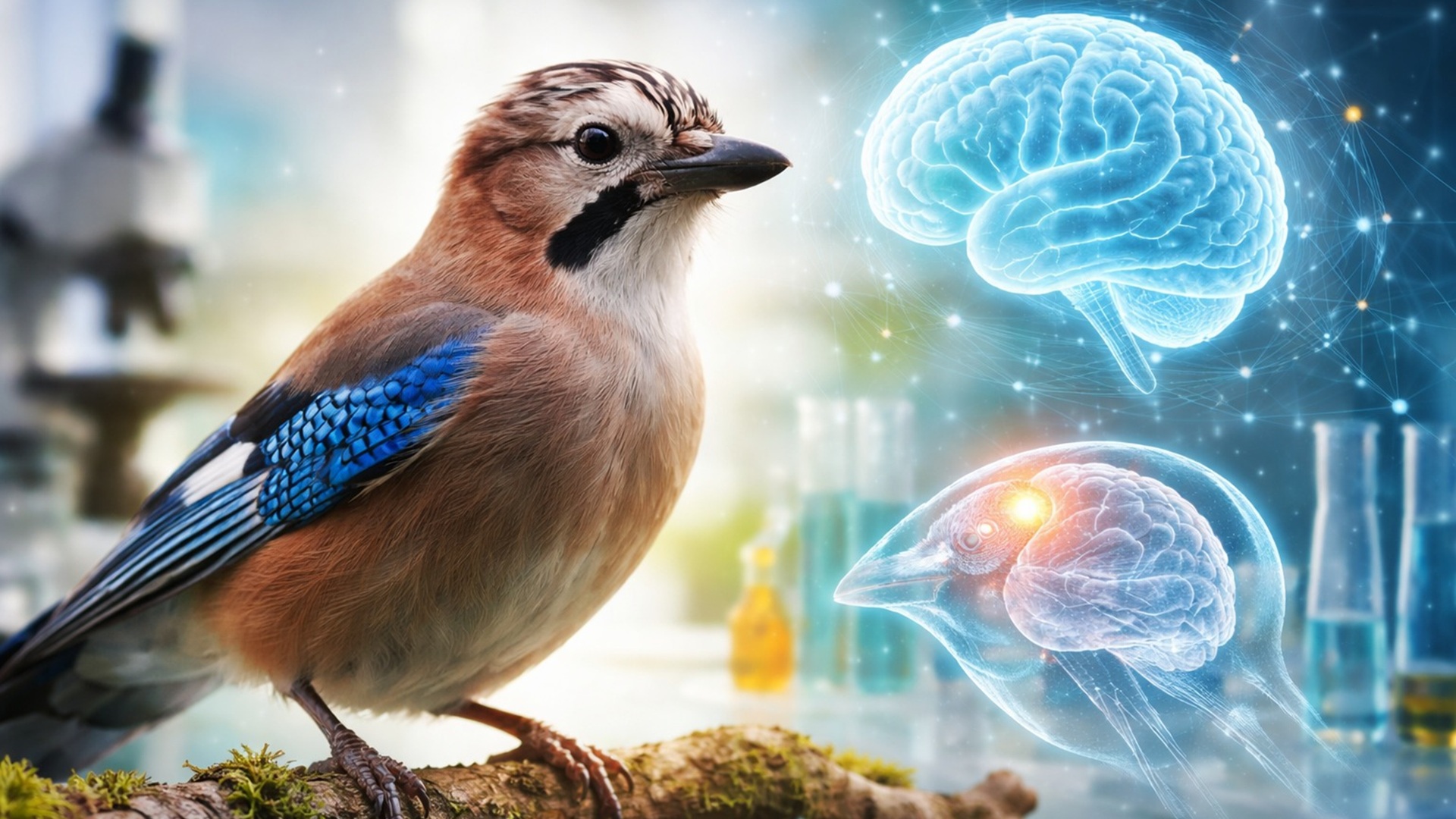


Study Published in 2025 by Researchers from Ruhr University Bochum Gather Behavioral and Neurobiological Evidence Indicating That Birds Exhibit Subjective Perception, Conscious Processing of Stimuli, and Basic Forms of Self-Awareness, with Functional Parallels to Those Observed in Mammals, Despite the Absence of a Cerebral Cortex
Researchers from Ruhr University Bochum analyzed behavioral and neurobiological evidence indicating that birds exhibit fundamental forms of conscious perception, with results published in 2025 in the journal Philosophical Transactions of the Royal Society B, suggesting broad evolutionary implications for the understanding of animal consciousness.
Sensory Awareness Observed in Behavioral Responses
Studies gathered in the article indicate that birds not only process stimuli automatically but also experience them subjectively.
In tests with ambiguous visual stimuli, pigeons alternate between distinct interpretations, behavior comparable to what is observed in humans when faced with ambiguous images.
-
Brazilian scientists indicate that urban pollution recorded in São Paulo reached 65 μg/m³ and may be linked to a higher risk of kidney hospitalizations, reinforcing an unexpected effect that could accelerate silent damage to the human body.

-
A rare plant from the Caatinga and unprecedented in the world, Isabelcristinia aromatica had its chemical composition analyzed for the first time and surprised the researchers at Univasf.

-
Lunar samples collected by the Chang’e 6 mission reveal changes in the asteroids that hit Earth and the satellite billions of years ago and challenge the hypothesis about the arrival of water on our planet.
-
Trump announces that China agreed to buy 200 Boeing jets during a visit to Beijing




In crows, neural recordings show activity that does not correspond solely to the physical presence of the stimulus.
Certain cells react according to the animal’s subjective perception, activating when the stimulus is consciously perceived and remaining inactive when there is no internal experience.
Brain Structures and Neurobiological Foundations
Despite lacking a cerebral cortex, birds exhibit functional structures compatible with theoretical requirements for conscious processing. The nidopallium caudolaterale, considered the avian equivalent of the prefrontal cortex, is described as highly connected and capable of flexibly integrating information.
According to the authors, the connectome of the avian forebrain shares relevant similarities with that of mammals, especially in the organization of information flows. These findings indicate that different brain architectures can support comparable cognitive functions.
Compatibility with Established Theories of Consciousness
The study indicates that birds meet the criteria of established theories about consciousness, such as the Global Workspace Theory.
The presence of broad integration of information and neural signals associated with subjective experience reinforces this theoretical compatibility.
These elements suggest that conscious processing does not depend exclusively on a cerebral cortex, expanding the scope of possible biological bases for consciousness in different animal groups.
Evidence of Self-Perception in Different Species
Recent experiments indicate that birds may exhibit distinct types of self-perception. Some species of corvids passed the traditional mirror test, while ecologically relevant adaptations of the test revealed alternative forms of self-awareness in other birds.
Pigeons and chickens demonstrated the ability to differentiate their reflection from a real individual of the same species, reacting according to context. The authors interpret this behavior as a sign of basic and situational self-awareness.
Evolutionary Implications of the Findings
The results suggest that consciousness is an evolutionary phenomenon more ancient and widespread than previously thought. Birds demonstrate that similar functional solutions can emerge from different brain structures, expanding the understanding of the evolutionary diversity of conscious cognition.
This article was prepared based on scientific study published in the journal Philosophical Transactions of the Royal Society B by Gianmarco Maldarelli and Onur Güntürkün from Ruhr University Bochum, 2025 edition, DOI: 10.1098/rstb.2024.0308.








Tenho um Ring Neck que quando em situação difícil e sem saída, ele apela por minha filha, chamando-a pelo nome e ela tem pouco relacionamento com ele, mas é a única opção restante, afinal.
Eu tive um papagaio que amava todos da família, mas tinha restrições com minha mãe. Isso só pode ser consciência, porque ele sabia quem e porque e não esquecia.
Todos animais são inteligentes
Não se pode confiar em alguém que tem o prazer em prender uma Ave numa gaiola. Quem tira a liberdade de um passarinho que tem asas merecia ser preso também
Concordo plenamente.