






 Portuguese
  Spanish


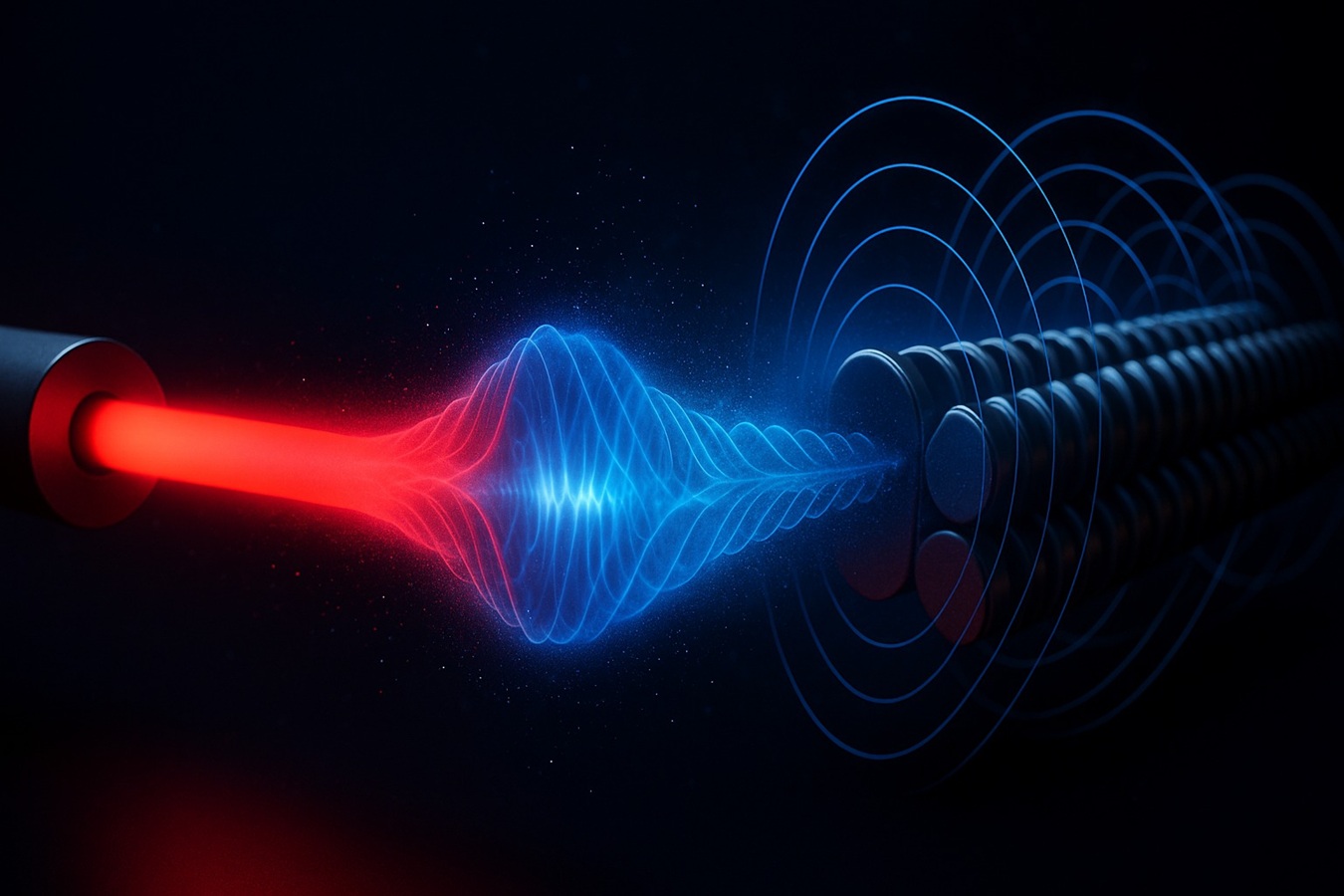


A New Advancement In The United States Promises To Transform The Enormous And Complex X-Ray Lasers Into Much Smaller Equipment. Scientists Have Managed To Accelerate Electrons 1,000 Times Faster Than Normal, Using An Innovative Technique That Could Bring This Technology To Laboratories And Research Centers Around The World.
Researchers From The Lawrence Berkeley National Laboratory In The United States Have Demonstrated A New Method For Generating Electron Beams. This Process Is Essential For The Operation Of X-Ray Lasers. The Most Important Thing Is That The Technique Drastically Reduces The Size Of The Equipment.
The Work Uses Compact Laser Plasma Accelerators, Known As LPAs. These Devices Can Accelerate Electrons By Up To 1,000 Times Compared To Conventional Accelerators.
This Means That A Structure That Previously Required Kilometers, Can Now Fit Into Just A Few Meters.
-
Workers Discover 18th-Century Wooden Shipwreck During Routine Pipeline Work in Croatia

-
Scientists Uncover Why Gold Retains Its Shine So Well

-
Japan Allocates Nearly $6 Billion for AI Development, Aims to Deploy 10 Million Robots Across Industries by 2040
-
Nigerian Startup Converts Discarded Laptop Batteries and Broken TV Screens into Solar Lanterns for Off-Grid Areas


Furthermore, The New Method Showed An Exponential Increase In Radiation. This Is Critical For The Proper Functioning Of The So-Called Free Electron Lasers (XFELs).
More Power In Less Space
XFELs Are Valuable Tools In Science. They Allow Researchers To Investigate The Structure Of Matter At Atomic Levels.
They Are Used In Fields Such As Biology, Physics, Medicine, And Materials Engineering.
The Problem Has Always Been The Size. These Giant Facilities Only Exist In A Few Places Around The World Due To Cost And The Need For Large Spaces.
Therefore, The New Approach From Berkeley Lab Could Change This Scenario. Using The Berkeley Lab Laser Accelerator (BELLA), The Scientists Created A High-Quality Electron Beam Using Just A Laser Beam.
This Laser Generates Density Waves Within A Plasma, Accelerating The Electrons Without The Need For Traditional Structures Based On Radiofrequency.
“We Are Applying Our Long Experience With Plasma Accelerators To Shrink The XFELs,” Explained Researcher Sam Barber, The Study’s Lead Author.
Consistent Results In Several Campaigns
Reliability Was Another Highlight Of The Study. According To Barber, The Tests Showed Positive Results In Dozens Of Experimental Campaigns. This Demonstrates That The Technique Is Robust And Repeatable.
The LPAs Used Achieved Acceleration Gradients Of Up To 100 Gigavolts Per Meter. For Comparison, Conventional Accelerators Only Reach 50 Megavolts Per Meter. This Difference Allows Electrons To Gain Speed Much Faster, Drastically Reducing The Size Of The Required Equipment.
“It’s A Great Result,” Said Barber. “The FEL Gain Of Two To Three Orders Of Magnitude Shows We Are On The Right Track.”
Partnership With The Private Sector And New Uses
The Research Was Supported By TAU Systems Inc., Which Helped Connect The Beams Generated In The Plasma To The Undulators. These Undulators Are The Devices That Generate The X-Rays Themselves.
For Stephen Milton, Chief Scientist At TAU Systems, The Project Represents A Paradigm Shift. “These FEL Results Confirm The Premise That The LPA Has Opened A Revolutionary Change In The Way We View Accelerators,” He Commented.
In Addition To Allowing New Compact Installations, This Technology Can Also Be Used To Enhance Existing XFELs.
The Most Important Thing Is That It Can Improve The Performance Of Current Systems By Adding More Powerful Electron Beams.
Promising Applications In Several Areas
With The Possibility Of Reducing Size And Cost, Compact XFELs Can Be Used In Locations That Previously Did Not Have Access To This Technology. This Includes Direct Use In University Laboratories, Research Centers, And Even Medical Facilities.
Applications Include Analyzing Complex Proteins In Biology, Studying Nanostructures In New Materials, And Even Producing Semiconductor Chips With Greater Precision.
Carl Schroeder, A Scientist At The BELLA Center, Believes This Advancement Goes Beyond Current Applications. “The Development Of Free Electron Lasers Based On LPA Is A Springboard For Other Applications, Such As Linear Accelerators For High-Energy Physics,” He Stated.
Thus, The Berkeley Lab Project Not Only Shortens Physical Distances But Also Opens Pathways For New Scientific Discoveries Across Various Fields.


