Portuguese
  Spanish


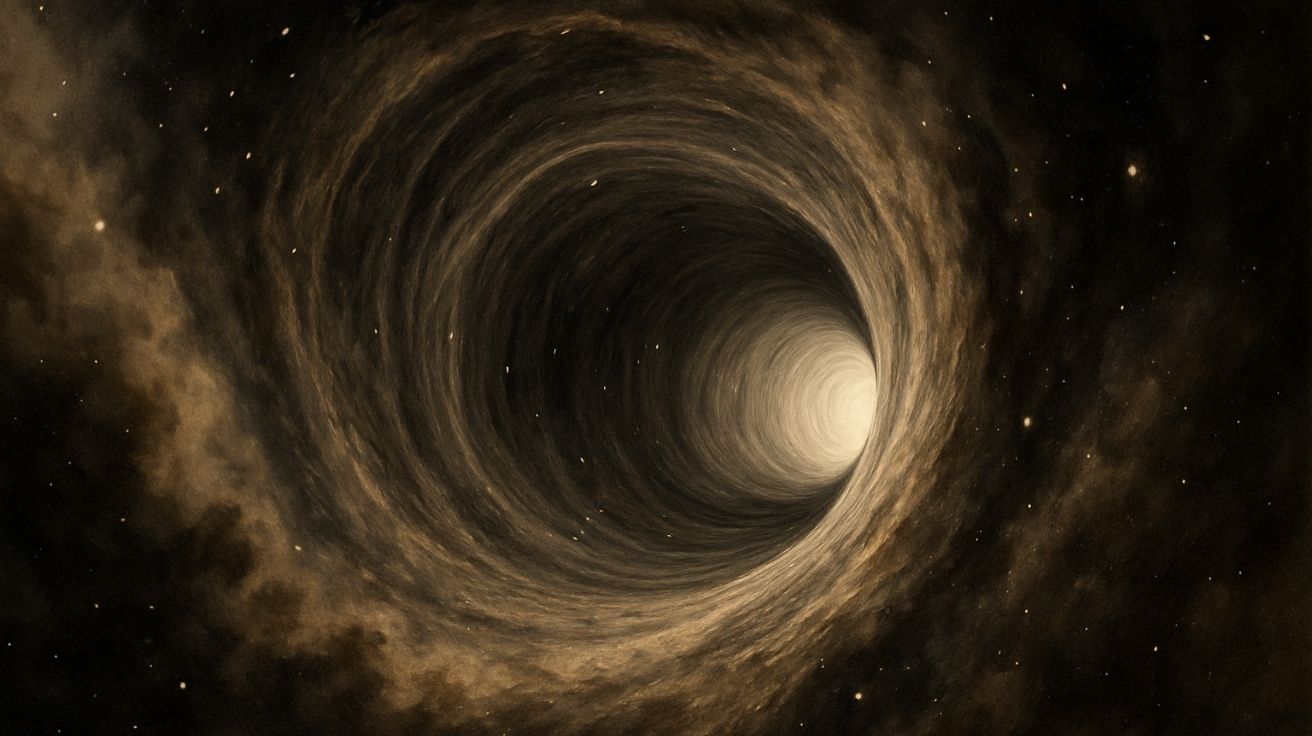


The Event GW190521 Surprised Astronomers by Not Showing the Typical “Inspiral” Signal of Black Hole Mergers, Raising Hypotheses Ranging from Rare Astrophysical Phenomena to the Possibility of a Gravitational Echo Coming from a Theoretical Cosmic Tunnel.

When the LIGO (Laser Interferometer Gravitational-Wave Observatory) first detected a gravitational wave in 2015, a new era for astronomy began.
Since then, hundreds of events have been observed, most coming from the merger of black holes or neutron stars. But on May 21, 2019, a specific signal called GW190521 intrigued the scientific community for not following the expected pattern.
Typically, these detections show what is known as an “inspiral”, a progressive increase in the frequency of the gravitational wave as the objects approach before merging. However, GW190521 showed only a short “ringdown,” without the characteristic initial “chirp.” This information was published by Popular Mechanics.
-
Brazilian Innovator Survives Homemade Submarine Dive in Paraty Despite Hatch Leak and False Oxygen Alarm

-
China Develops Custom 140-Ton Electric Mining Truck with 770 kWh Swappable Battery, Deploys 290 Units in Xinjiang’s Largest Zinc Mine
-
Meta to Launch Arena, a New Prediction App Targeting 3.56 Billion Users, Competing with Polymarket and Kalshi

-
Scientist Challenges Famous Human Evolution Theory, Argues Homo Sapiens Evolved Gradually Over Thousands of Years




The Enigma Behind the Merger
This detail is intriguing because the event resulted in a medium-mass black hole, with 142 times the mass of the Sun. In such a situation, scientists expected to capture the inspiral clearly. Several hypotheses were raised: perhaps the black holes merged within an active galactic nucleus (AGN) or in a mutual gravitational well, which would have shortened the approach phase.
However, a team of Chinese scientists recently published on arXiv an even bolder hypothesis: what if the signal was actually a gravitational echo passing through a wormhole?
Wormholes and Cosmic Echoes
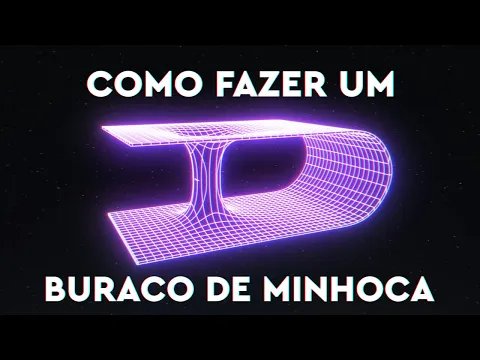
According to the researchers, the ringdown signal could have originated from the merger of black holes in another universe, with the gravitational wave passing through the “throat” of a wormhole, a structure predicted by general relativity but so far purely theoretical.
Although binary black hole merger models are still considered the most likely explanation, statistical analysis showed very close results, not entirely ruling out the possibility of a passage through an Einstein-Rosen bridge, as physicists mathematically refer to this type of cosmic tunnel.
The authors themselves emphasize that improvements in gravitational echo models may in the future increase the statistical strength of the wormhole hypothesis.
The Future of Gravitational Wave Astrophysics
GW190521 is not the only strange case. In November 2023, another short-duration event was also recorded, indicating that science still has much to discover about the cosmic mechanisms that generate these ripples in spacetime.
Be that as it may, each new detection expands the horizon of astrophysics. And if one day wormholes are confirmed, GW190521 may enter history as the first clue of a cosmic shortcut between universes.