






 Portuguese
  Spanish
  3 min of reading
  0 comments


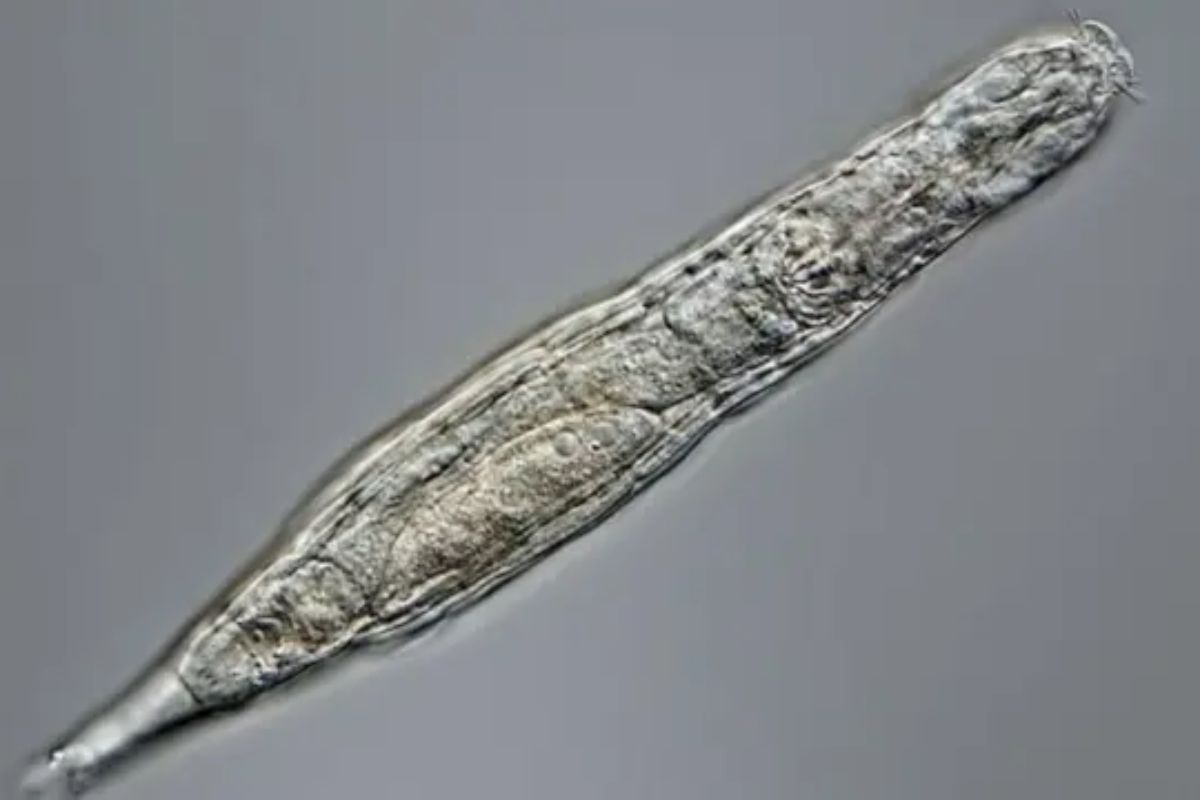
Scientists Revived a 24,000-Year-Old Bdelloid Rotifer Preserved in Ice in Siberia
In 2021, a team of researchers was drilling into the permanently frozen soil in northeastern Russia when they found a microscopic organism preserved in ice at a depth of more than three meters. After being carefully thawed in the laboratory, the bdelloid rotifer came back to life and began reproducing without a partner, surprising the scientific community.
This finding reinforces the ability of these beings to survive in extreme conditions, expanding debates about the resilience of life on Earth and even its possibility on other planets.
What Are Bdelloid Rotifers
Bdelloid rotifers are microscopic animals, smaller than a grain of sand, but with complex systems like a brain, intestines, and muscles.
-
A doctor from Minas Gerais warns that sleeping with the fan pointed at the body all night is not as harmless as you think; it dries out the respiratory tract, causes mucus buildup, spreads dust mites, and can even irritate the cornea of the eyes.

-
Ecuadorian volcano at 6,268 meters is more than 2,000 meters closer to space than Everest, which is 8,848 meters, because the Earth is wider at the equator.
-
Public school students in the hinterlands of Maranhão create a bioinsecticide with neem and castor to protect corn crops, transform rural waste into biogas and biofertilizer, and bring sustainable technology to producers at ExpoSertão.

-
Ötzi, the 5,300-year-old mummy found in the Alps, reveals a still active microbiome, and the Iceman’s yeast points to an energy-saving fermentation.


Their distinguishing feature is cryptobiosis, a state in which metabolism virtually shuts down, allowing them to survive a lack of water, freezing, radiation, and even vacuum.
When the environment becomes favorable again, the organism “thaws” and resumes life as if nothing happened.
Another notable trait is reproduction without mating, called parthenogenesis, in which descendants form from unfertilized eggs.
To maintain genetic diversity, bdelloids can incorporate DNA from bacteria, plants, and fungi from their environment through what is called horizontal gene transfer, functioning as a permanent “biological update.”
The Experiment in Permafrost
According to Canal Top10, the specimen found in the Siberian permafrost had been frozen for about 24,000 years.
After controlled thawing in the laboratory, it not only moved but also began to reproduce again.
This result adds to other cases, such as nematodes revived from ice and tardigrades exposed to space.
This case is impressive because it demonstrates that life can go into pause for thousands of years and still return fully functional.
This resilience reinforces the hypothesis of panspermia, which suggests that forms of life could travel between planets in meteorites or cosmic particles.
Scientific and Medical Implications
The rediscovery of the rotifer sparks interest in practical areas. Research from NASA, ESA, and universities like Harvard and MIT studies similar states of cryptobiosis for preservation of organs intended for transplants and even induced hibernation for long-duration space travel.
In medicine, there are experimental tests to reduce body temperature and metabolism in patients in critical situations, such as severe trauma or cardiac arrest.
If techniques inspired by organisms like the rotifer are developed, science could literally “pause time” in risky situations.
The fact that scientists revived a 24,000-year-old bdelloid rotifer in Siberia shows the extent of life’s resilience in extreme environments.
In addition to challenging concepts about biological limits, the discovery opens doors for advances in medicine, biotechnology, and space exploration.
And you, do you believe that such research might one day allow humans to be placed in hibernation for space missions or even for medical treatments?
Leave your opinion in the comments — your perspective could enrich the debate about the future of science.





-

1 person reacted to this.