






 Portuguese
  Spanish
  3 min of reading
  0 comments


Between Mars And Jupiter, A Belt Of 1.9 Million Asteroids Is Slowly Shrinking. Study Reveals That The Belt Has Already Lost A Third Of Its Mass And Is Continuing To Disintegrate For Billions Of Years.
Orbiting Between Mars And Jupiter, There Is A Vast Belt Of Space Rocks That Makes Up The Asteroid Belt, One Of The Oldest And Most Intriguing Regions Of The Solar System.
It Is Estimated That It Contains About 1.9 Million Asteroids Over 1 Kilometer In Diameter, Representing The Largest Concentration Of Known Space Rocks. This Band Marks The Boundary Between Rocky Planets — Such As Earth And Mars — And Gas Giants Like Jupiter And Saturn.
Formed From The Remaining Material From The Creation Of The Planets, The Belt Is A True Record Of The Primordial History Of The Solar System. But New Discoveries Indicate That It Is Slowly Disintegrating.
-
System created to save lives in disasters turned ‘against’ Brazilians overnight: a hacker attack sent out a false alert from Civil Defense with the word “misantropia” that went off on the phones of half the country, even in silent mode, and took down the Cell Broadcast.

-
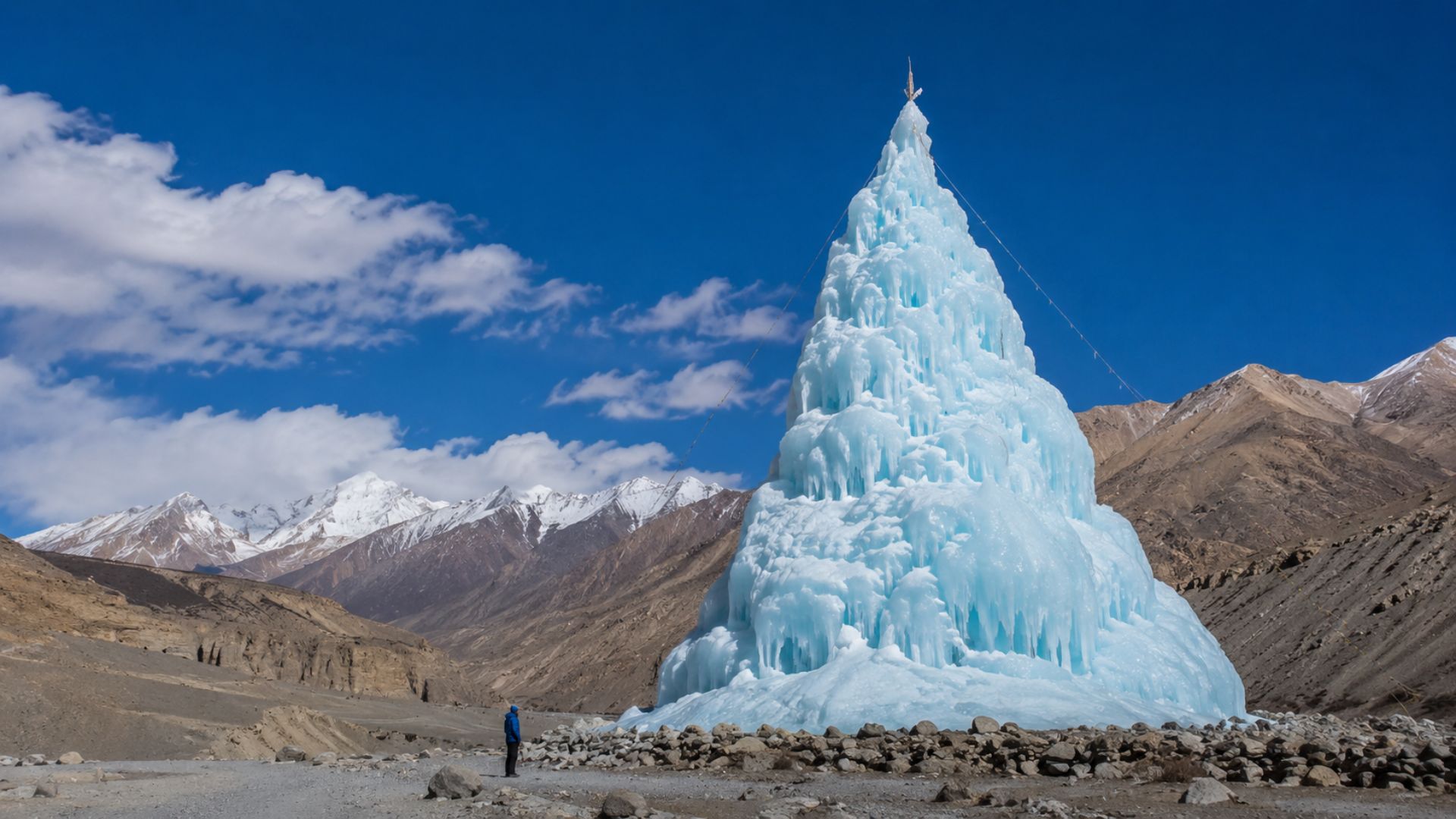
In the cold desert of Ladakh, where it hardly rains, engineer Sonam Wangchuk created the ice stupa, a tower that freezes winter water and stores it for irrigating crops in the spring, a simple engineering feat that mimics nature.
-
For the first time in history, solar and wind energy generated more electricity than natural gas worldwide in a single month, April 2026, a milestone in the energy transition that shows renewable sources taking the lead in the global electric system.
-
The Amaterasu particle, a cosmic ray with energy millions of times greater than that of the world’s largest accelerator, hit the Earth coming from the Local Void, a region of space that is practically empty where, in theory, there should be nothing capable of creating it.



The Gravitational Impact Of Jupiter
Among All The Planets, Jupiter Has The Greatest Impact On The Asteroid Belt. Its Colossal Gravitational Force Has A Double Effect: At Times, It Pulls Large Rocks Out Of The Belt; At Other Times, It Throws New Rocks Into It. This Constant Exchange Generates Collisions And Instabilities That Are Altering The Balance Of The Region.
A New Study Published On The arXiv Preprint Server Points Out That This Process Is Gradually Pulverizing The Asteroids.
As They Collide With Each Other, They Fragment Into Smaller And Smaller Pieces. Over Time, This Ongoing Destruction Could Lead To The Complete Disappearance Of The Asteroid Belt.
The Slow Disappearance
According To Calculations By The Team Led By Julio Fernández, A Planetary Scientist At The University Of The Republic In Uruguay, The Belt Loses About 0.0088% Of Its Mass Every Million Years. The Research Focused On The Most Active And Collision-Prone Portion, Where Smaller Asteroids Often Collide And Scatter.
According To Fernández And His Colleagues, The Belt Has Already Lost About A Third Of Its Mass Over The Last 3.5 Billion Years. They Estimate That 20% Of The Rocks Escape To The Inner Or Outer Solar System, While The Other 80% Are Reduced To Cosmic Dust.
This Dust Feeds The So-Called Zodiacal Cloud, A Thick Layer Of Particles Orbiting The Sun That Can Be Observed From Earth Under Specific Conditions.
Scientists Emphasize That Although The Belt Is Slowly Disappearing, Its Rate Of Loss Tends To Decrease Over Time, As Fewer Rocks Mean Fewer Collisions.
Implications For Planetary Defense
The Findings Also Bring Important Implications For Planetary Defense. Understanding The Rate At Which Asteroids Leave The Belt Helps Scientists Predict Which Ones Could Approach Earth.
A Striking Example Was NASA’s DART Mission, Which Intentionally Collided With The Asteroid Dimorphos In 2022. The Test Demonstrated That It Is Possible To Alter The Trajectory Of A Potentially Dangerous Celestial Body — A Milestone For Planet Protection.
Researchers Also Recall That Before The Belt Completely Disappears, The Death Of The Sun, Expected To Occur In About 5 Billion Years, Will Ultimately Destroy It.
Furthermore, The New Research Reinforces Old Hypotheses That Part Of Earth’s Water And Even The Fundamental Building Blocks Of Life May Have Come From Asteroids. The Data Expands Understanding Of The Role These Rocks Played In The Formation Of Our Planet And Illuminates A New Perspective On The Ancient History Of The Universe.




Be the first to react!