






 Portuguese
  Spanish
  5 min of reading
  0 comments


Since May 8, 2026, an underwater volcano erupted in the Bismarck Sea, north of Papua New Guinea, and NASA is monitoring everything by satellite. The steam plumes and floating pumice raise a rare question: are we witnessing a new island being born in real time?
There are things that humanity has almost never been able to see happen live, and one of them is the birth of an island. That is exactly what NASA may be witnessing now, in the Pacific Ocean. Since May 8, 2026, an underwater volcano erupted in the Bismarck Sea, north of Papua New Guinea, and the agency’s satellites captured the phenomenon from space, according to a report by Discover. The question driving scientists is direct and exciting: will solid land emerge where there is only sea today?
NASA itself admits the rarity of the moment. According to Jim Garvin, chief scientist at the agency’s Goddard Space Flight Center, the team is eager to see if a new island is about to be born, something that has rarely been observed by satellite as it happens. In other words, more than just another eruption, what’s at stake is the chance to witness, in almost real time, a geological process that usually takes a lifetime to appear.
How NASA spotted the volcano from space
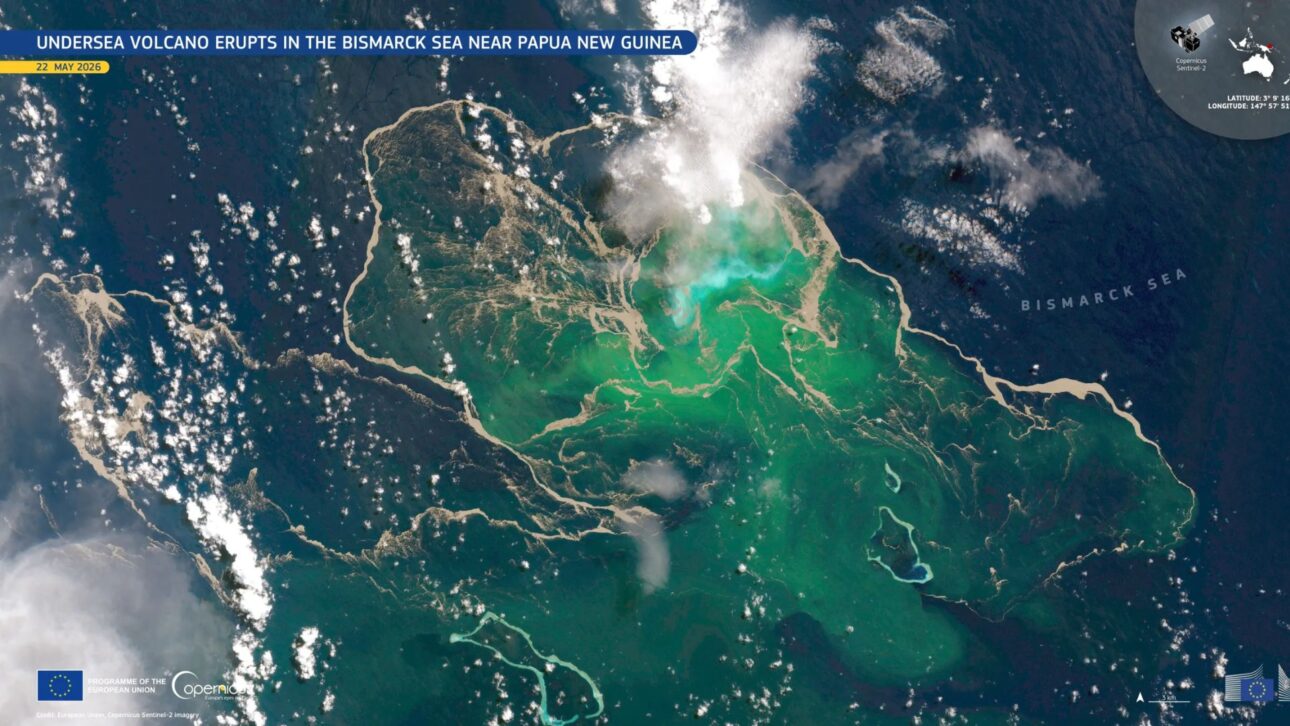
The discovery was almost a detective’s work. The first sign came on May 8, 2026, when seismometers recorded a small swarm of earthquakes in a remote region of the Bismarck Sea. A day later, NASA’s Aqua and Terra satellites captured images of white, vapor-rich plumes rising from the ocean into the atmosphere. It was the classic signature of an underwater volcano becoming active below, on the ocean floor.
-
The Atacama Desert, the driest place on Earth, was covered in flowers and turned into a colorful carpet with more than 200 species in the phenomenon called “desert bloom,” when atypical rains awaken seeds that had remained dormant in the soil for many years.

-
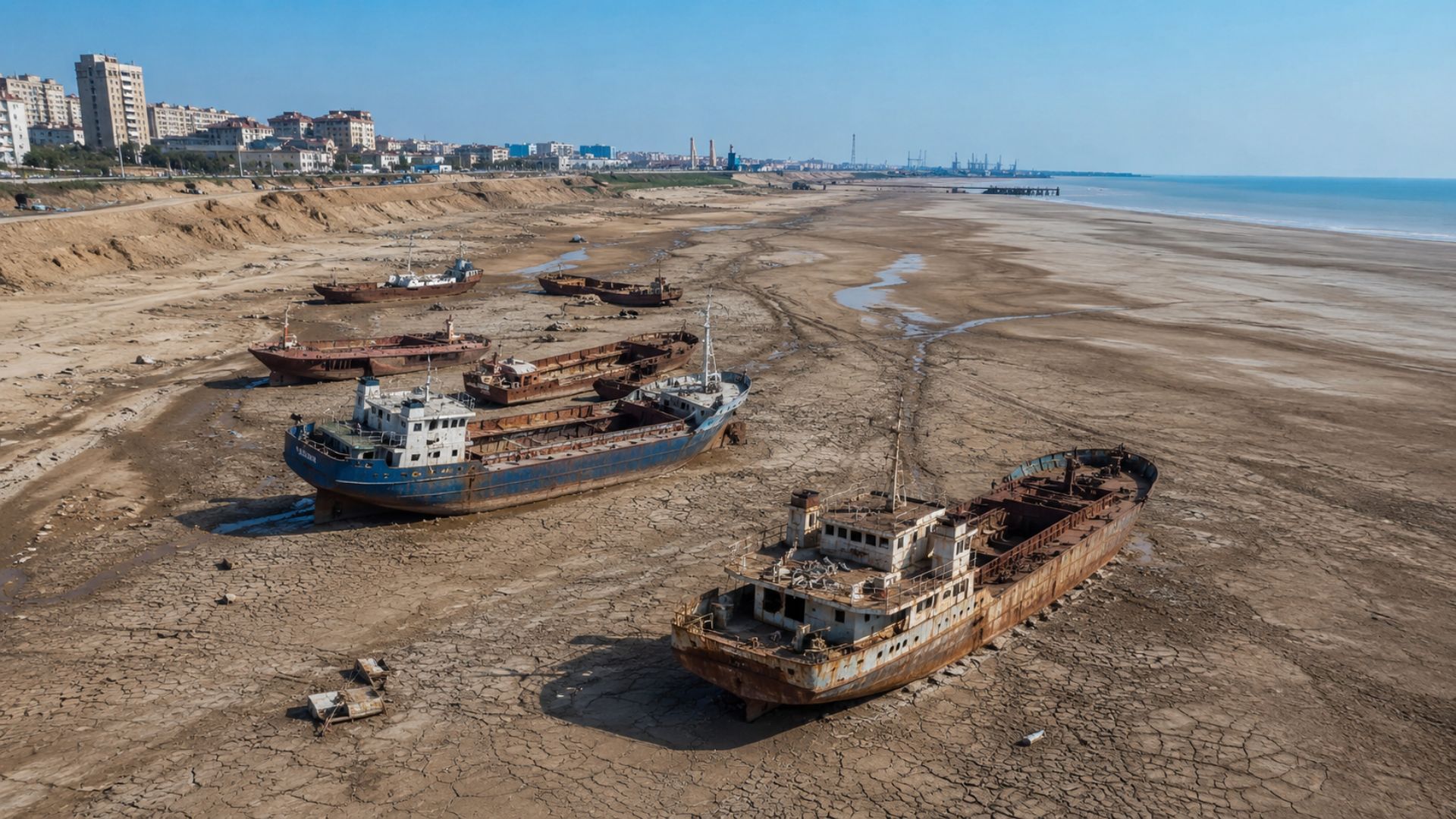
The Caspian Sea, the largest lake in the world, is drying up due to climate change and no one can stop the loss: evaporation could lower the level by up to 21 meters this century and turn ports in Kazakhstan, such as Aktau, into desert.
-
How Romania became Hitler’s “gas station,” supplying about half of the oil used by Nazi Germany, and surprised the world by abandoning the Axis in 1944, just when the fuel shortage was beginning to suffocate the Third Reich.

-
Adored by more than 1.5 million fans and famous for crossing deserts and mountains with its owner, a famous dog is stolen and ends up being served in a restaurant in China.



The clues were adding up. Another satellite, the Suomi NPP, operated by NASA along with the NOAA agency, detected thermal anomalies covering several square kilometers of ocean, indicating intense heat from the eruption. Shortly after, extensive bands of pumice, that volcanic rock so full of air bubbles that it floats, appeared, tracing paths in the surface currents. Combining earthquakes, plumes, heat, and floating rock, NASA pieced together the picture of an underwater volcano in full eruption, even without anyone having seen the explosion up close.
Where it is happening, the Bismarck Sea and the Titan Ridge
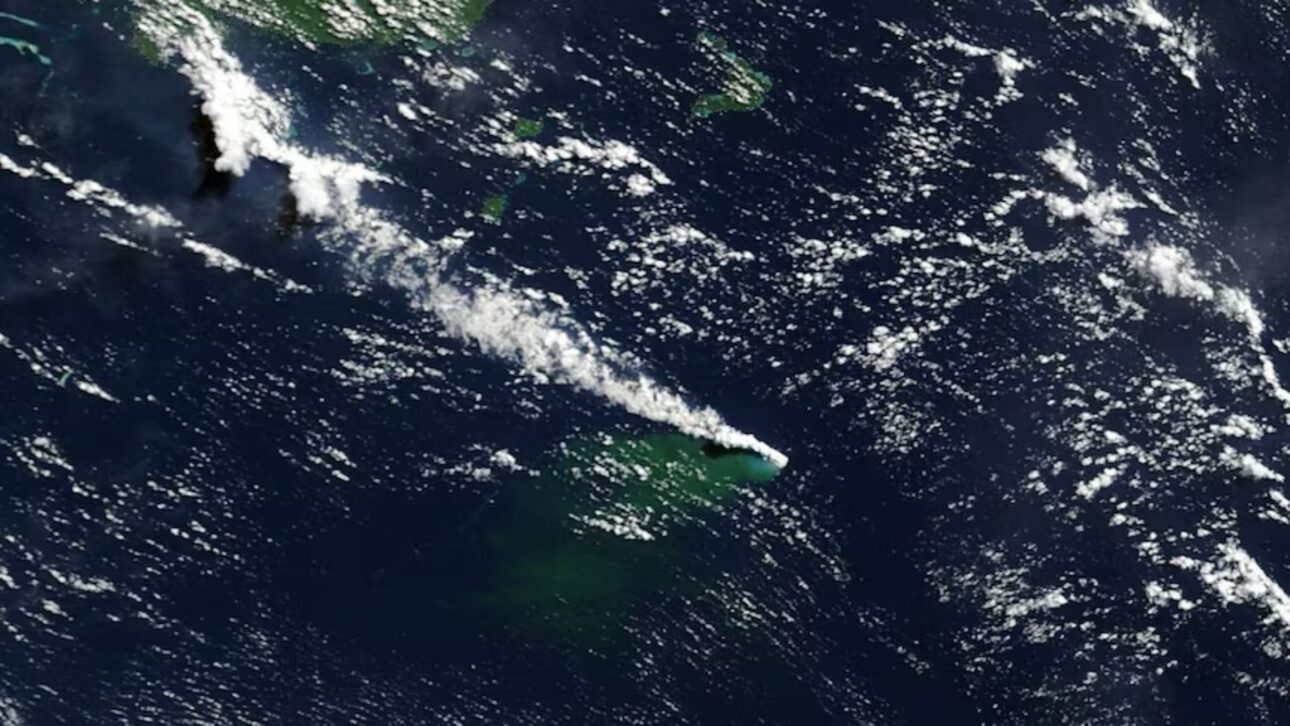
It’s worth setting the stage for the phenomenon. The Bismarck Sea is located in the southwest Pacific, north of Papua New Guinea, in an ocean basin marked by faults, tectonic activity, and eruptions. The current eruption is concentrated about 130 kilometers southeast of Manus Island, in a submerged structure known as the Titan Ridge, and curiously close to the site of another underwater eruption recorded in the same region in 1972.
This geographical detail helps explain part of the mystery. It is a poorly mapped area, where scientists still do not know with total certainty which exact structure is erupting underwater. The seabed remains one of the least known frontiers of the planet, and an active underwater volcano in a remote point of the Bismarck Sea shows how much there is still to discover just below the surface. NASA, with its satellites, has become the eyes that were missing for this forgotten region.
How a volcanic island is born and why it is so rare to see
The process behind a new island is grand and slow. An underwater volcano expels lava and material from the seabed, which accumulates layer upon layer until, in some cases, it breaks the water’s surface and forms solid land. When this occurs in front of modern instruments, it is gold for science, as it allows the study from scratch of how a piece of the world is born. It was this chance that NASA referred to when talking about something rarely observed by satellite as it happens.
What makes it even more special is the observation window. Most underwater eruptions happen far from eyes and sensors, in the dark of the deep ocean, and end without anyone noticing. Capturing one with visible plumes, thermal anomalies, and floating pumice, all at the same time and monitored by satellite, is uncommon. That’s why the case of the Bismarck Sea excited researchers so much: it’s the opportunity to watch, almost live, a chapter of Earth’s geological formation.
Will an island really be born? The honest asterisk


This is where the part that requires keeping your feet on the ground comes in. Detecting an underwater volcano eruption does not guarantee that a new island will actually emerge. For this to happen, the material needs to accumulate enough to overcome the water depth and rise above the surface, which doesn’t always happen. The eruption may lose strength before this and leave everything submerged, with no land in sight at the end of the story.
And there’s a second asterisk. Even if a new island does form, it may be ephemeral, as NASA itself suggests. Islands born from eruptions are usually made of loose and fragile material, and the sea, with its waves and currents, often dismantles the newborn in weeks or months, unless hardened lava protects it. That’s why scientists continue to monitor the Bismarck Sea closely, knowing that both the emergence and disappearance of this potential new island are part of the scenario.
A rare window to see the Earth being built
In the end, what NASA is monitoring in the Bismarck Sea is a rare window to see the Earth being built in real-time. An underwater volcano erupting, plumes rising from the ocean, floating pumice, and the expectation that a new island might be born before the satellites is the kind of geological spectacle that few generations have had the chance to witness. Even if no solid land lasts, the record of the process is already valuable for science.
And you, would you like to see for the first time in your life an island emerging from the sea, captured by satellite, or do you think nature will still hide this underwater volcano at the bottom of the Bismarck Sea without delivering solid land? Tell us in the comments what this phenomenon monitored by NASA has stirred in you.





Be the first to react!