






 Portuguese
  Spanish


Developed in India, the CoolAnt Beehive uses terracotta tubes and water evaporation to reduce temperatures without a compressor or refrigerant gases.
The increase in heat waves is driving the search for cooling systems that are less dependent on electricity and refrigerant gases. Amidst this scenario, an invention created in India has drawn attention for using one of humanity’s oldest materials to tackle one of the greatest climate challenges of the 21st century: terracotta. Named CoolAnt Beehive, the system developed by the Indian studio Ant Studio uses hundreds of clay tubes organized in a honeycomb-inspired structure to reduce air temperature through evaporative cooling, a technique known for thousands of years but reinterpreted with modern engineering and design tools.
Terracotta tubes organized like a beehive replace compressors and refrigerant gases
At first glance, the CoolAnt Beehive looks like an art installation. However, its function is quite practical.
According to the platform Sustainable Energy for All (SEforALL), the equipment is composed of terracotta cylinders stacked in a metal structure resembling a beehive.
-
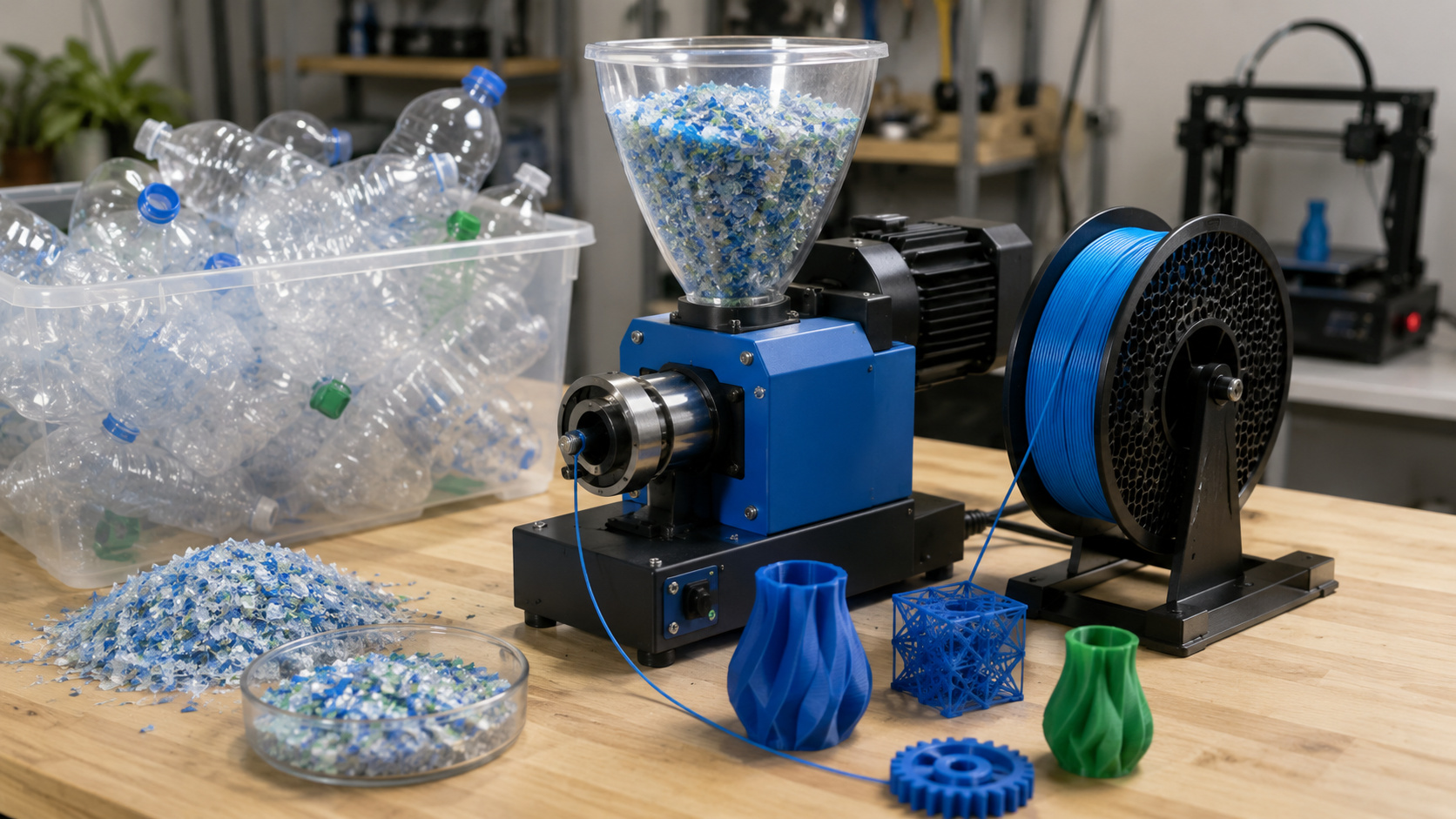
Polyformer Machine Converts PET Bottles into 3D Printer Filament, Reducing Costs and Expanding to Over 50 Countries

-
Realme C100x Launches in Brazil: Features 8,000 mAh Battery, Military Durability, 120 Hz Display, and Android 16

-
Cassini Discovers Fresh Organic Molecules Emanating from Enceladus’ Hidden Ocean, Making Saturn’s Icy Moon a Prime Target in the Search for Extraterrestrial Life
-
Scientists Discover Simple Fluids Can Shatter Like Solids Under Extreme Force, Challenging Our Understanding of Matter




Reused water continuously flows over the surface of these tubes while hot air passes through the ceramic elements. During this process, evaporation occurs, reducing the temperature of the airflow.

The inspiration came from an ancient practice still common in various Asian countries: storing water in clay containers to keep it cool even under high temperatures. Ant Studio decided to reverse the principle and use it to cool the air.
Project emerged to protect workers exposed to extreme heat in an Indian factory
The first test of the CoolAnt Beehive was conducted at the Deki Electronics factory in Noida, NCR, India. According to CoolAnt itself, the structure was installed in front of the unit’s diesel generator, which significantly heated the air in the work environment.
SEforALL reports that, after installation, the temperature around the system dropped from 42 °C to 36 °C, a reduction of 6 °C on a hot day.


Evaporative cooling is an ancient technology reinterpreted with contemporary design
The principle used by CoolAnt Beehive is known as evaporative cooling. When water evaporates, it absorbs heat from the environment, reducing the air temperature around it. According to Ant Studio, the conical shape of the terracotta tubes increases the contact area between water and air, enhancing the thermal exchange process.
To arrive at the final design, the team used Computational Fluid Dynamics (CFD) techniques, a tool used in engineering to simulate air flow behavior and optimize equipment performance.
In addition to thermal gain, the structure utilizes natural, recyclable materials that are widely available in local markets, reducing the need for complex industrial components.
System uses little energy and does not rely on gases with high global warming potential
Unlike conventional air conditioning units, the Beehive does not use compressors or refrigerant fluids.
According to Architecturaldigest, the technology was designed to operate with very low energy consumption, using only small water circulation pumps when necessary. It also does not release gases with high global warming potential, a problem associated with traditional air conditioning systems.
The platform also highlights that the solution can be applied to facades, public spaces, industrial areas, and semi-open environments, functioning as a complement to conventional cooling systems.
The invention has already received international recognition for combining architecture, sustainability, and engineering
The CoolAnt Beehive has gained international prominence for presenting a different approach to tackling rising urban temperatures.

According to the magazine Architectural Digest India, the project received support from the Asia-Pacific Low-Carbon Lifestyles Challenge program, an initiative linked to the United Nations Environment Programme (UNEP), which awarded innovative low-carbon solutions developed in the Asia-Pacific region.
For the founder of Ant Studio, Monish Siripurapu, the proposal demonstrates that traditional materials can gain new functions when combined with digital modeling, computational analysis, and contemporary sustainability principles.
A technology inspired by clay pots that can help cities face a hotter planet
The International Energy Agency projects significant growth in demand for cooling in the coming decades, especially in countries with hot climates.
In this context, passive and hybrid technologies may gain increasing importance in regions where access to electricity is limited or where energy consumption already pressures electrical grids.
The CoolAnt Beehive shows that, in some cases, solutions capable of tackling modern challenges can arise precisely from the updating of knowledge used for centuries, transforming simple terracotta pieces into an alternative to alleviate the heat of an increasingly warming planet.


