






 Portuguese
  Spanish


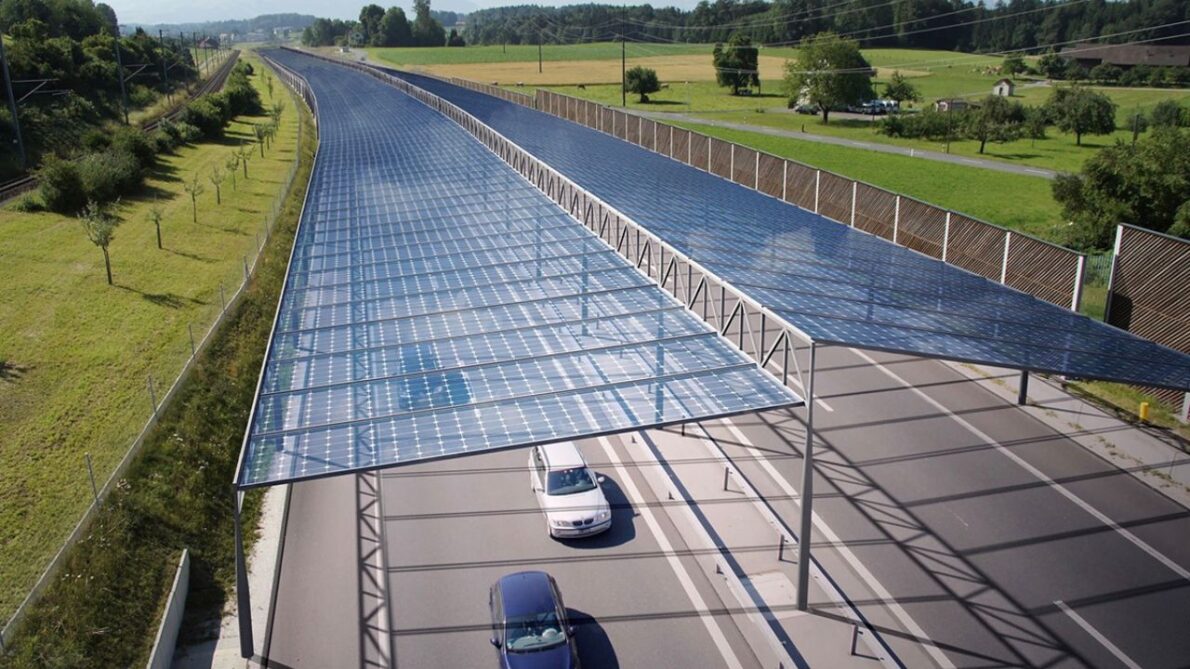

Scientists Suggest A Revolution On Roads, Turning Them Into Sources Of Clean Energy And Promoting More Safety For Drivers.
Imagine driving on a highway covered in solar panels, where every kilometer traveled helps generate electricity and also improves safety on the road? Well, this futuristic idea is getting closer to reality. Scientists from the Chinese Academy of Sciences presented a study that proposes covering highways with solar panels to increase energy production and, in the process, reduce accidents on the roads. It sounds like a science fiction movie, but it’s an innovative solution to two major current challenges: the demand for clean energy and road safety.
But What Is The Reason Behind Solar Highways?
The research published in the journal Earth’s Future explores how to transform the vast paved space of highways into a platform for renewable energy generation. The idea is simple: install solar panels on main roads and even on secondary ones. This way, in addition to utilizing underused space, solar-panelled highways could protect vehicles from the elements, such as rain and snow, while generating electricity.
The scientists calculated that if this technology were applied globally to about 3.2 million kilometers of highways, it would be possible to produce up to 17,578 TWh per year, with an installed capacity of 13,087 GW. That’s enough energy to power millions of homes around the world. And the best part: with the right tilt of the panels, the efficiency of this energy production would be maximized.
-
Island in Brazil Innovates by Installing 184 Solar Panels on Urban Lagoon to Generate Clean Energy

-
Japanese Island of 417 Residents to Test Living Half the Year Solely on Solar Power, Reducing Dependence on Diesel Brought by Ship
-
Brazilian Fishermen Use Solar Power to Produce Nearly One Ton of Ice Daily, Preventing Fish Spoilage Before Reaching Market
-
Brazil, known for its river-powered energy, installs solar plant in mountains to boost winter electricity production


Besides Increasing Energy Production…
In addition to increasing energy production, this project has a direct impact on driver safety. According to the study, covering roads with solar panels could reduce fatalities in traffic accidents by up to 10.8%. This is because the panels would act as a kind of protective barrier, especially in regions where the climate is harsher. More visibility, better traction, and fewer accidents: that’s the perfect combo the scientists are proposing.
Construction And Maintenance Costs
Of course, a project of this magnitude does not come cheap. The construction and maintenance costs, including cleaning and improvements in energy efficiency, are significant challenges. However, considering the long-term benefits, both in terms of energy production and accident reduction, many experts believe that the investment is worth it.
It Is Not New That Highways Are Being Analyzed For Energy Production
This is not the first time someone has tried to harness highways for energy production. In Europe, for example, Germany, Austria, and Switzerland are testing solar panels over the A81 highway in Baden-Württemberg. The project aims to assess the technical and economic feasibility of this solution. In California, Swedish architect Mans Tham came up with the idea of covering highways with solar panels in the project Solar Serpents in Paradise, although it was never implemented.
Another interesting case was the pilot project in Normandy, France, where, in 2016, 2,800 square meters of solar panels were installed along a road. Unfortunately, the project was deactivated in 2019 due to high costs and problems with the durability of the modules.
In The United States, The Project The Ray Has Been Active Since 2015 On A Stretch Of Interstate 85 In Georgia, Where Renewable Technologies Are Being Integrated Into Road Infrastructure
The idea of covering highways with solar panels is an ambitious proposal filled with challenges, but it holds the promise of transforming the way we produce energy and ensure safety on the roads. If well implemented, this solution could be a key piece in the transition to a more sustainable and safe future for all. The question remains whether governments and companies will have the courage to invest in this revolutionary idea.
This simple and practical approach could be the next big step in energy production and the safety of our highways. After all, who would have thought that the path to a greener future could literally be under our feet?


