






 Portuguese
  Spanish




From Mushroom Mycelium on Ecovative Farms to Luxury Leather, to Plant-Based Bacon and Panels that Insulate Buildings, Biotechnology Shows How Mushrooms Can Replace Plastic, Concrete, and Even Electronic Sensors
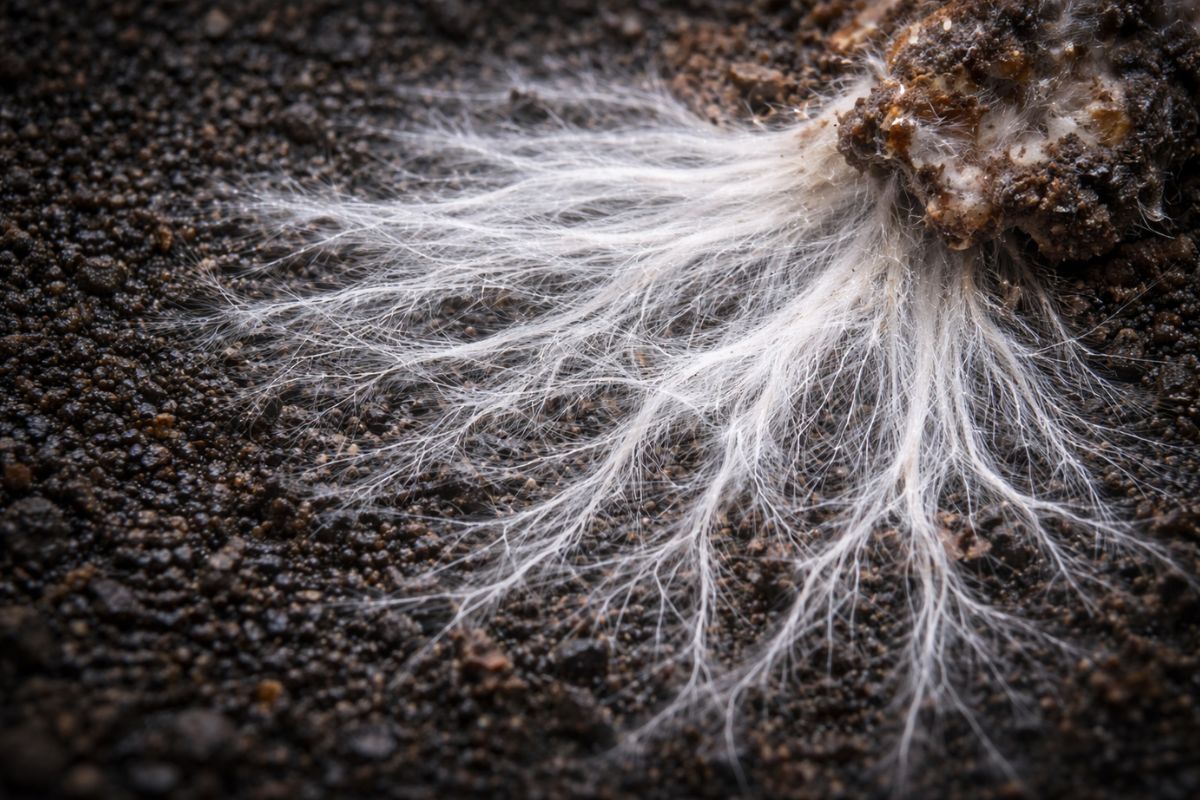
A mushroom is no longer just a recipe ingredient or a symbol of the forest. Away from the kitchen, it is at the center of a quiet revolution, where mycelium, the network of fungal “roots,” creates materials that can become packaging, leather, meatless bacon, bricks, acoustic insulation, and even biodegradable coffins. Instead of manufacturing everything from oil and steel, the bet is simple and radical: growing the future on agricultural waste.
Behind this transformation, mushroom mycelium has stopped being just an invisible part of the soil to become a “living biopolymer,” cultivated in giant plates, industrial molds, and low-energy closed farms. This lightweight, durable, and compostable fungal fabric is already entering housing projects, fashion lines, plant-based foods, acoustic protectors, and even NASA studies for habitats on other planets.
What Is So Special About Mushroom Mycelium

When we think of mushrooms, we often remember the fruiting bodies: portobellos on the grill, fungi in the forest, cartoon figures.
-
German Shepherd Fails Guide Dog Test Due to Attachment to Plush Elephant, Viral Moment Captured at Train Station

-
50,000 Satellites with Giant Mirrors: Solar Light Sold via App Sparks Controversy Among Startup, FCC, Astronomers, and Environmentalists in the US

-
Brazil’s Cost-Cutting Housing Design Leaves Southern Residents Vulnerable to Cold Winters

-
Entrepreneur Turns Sweaty Helmet Problem into Million-Dollar Business with National Cleaning Machine, Aiming for $12 Million and 300 Locations by 2026 Amid Growing Demand from Delivery Services and 35 Million Motorcycles in Brazil




However, in practice, most of the “engineering” of the fungus is hidden. Below the surface, a white network of mycelium spreads through the earth and wood, functioning as roots and stomach at the same time.
These filaments, called hyphae, intertwine into a lightweight, porous structure that acts as a natural glue, “sticking” loose soil particles, plant fibers, and sawdust together.
It was this ability to bind and harden materials that caught the attention of two entrepreneurs: Eben Bayer and Gavin McIntyre.
They envisioned that mushroom mycelium could be cultivated as a self-assembling material, using only agricultural waste and time.
The logic is elegant: mix mushroom mycelium with leftovers from corn stalks, hemp, or sawdust, place this mass into a mold, and let the fungus do its work.
In just a few days, the mycelium grows, fills the gaps, forms a kind of rigid and fully compostable foam.
After a low-temperature cooking process to stop the growth, this block is ready to become packaging, building board, or base for other products.
Mushroom that Becomes Packaging: The Beginning of the “Mycelium Economy”
The first major product of this idea was the so-called Mushroom Packaging, which launched Ecovative into the green economy.
The company began licensing this mushroom technology to produce molded packaging that replaces Styrofoam and petroleum-derived foams.
Major brands have already used the material in boxes, internal protections, and transport solutions, helping to consolidate mycelium as a real alternative to disposable plastic.
This mycelium-based packaging market is already generating tens of millions of dollars and is growing rapidly, driven by the demand for more sustainable materials.
The advantage is clear: mushroom packaging is grown from agricultural waste, uses very little energy, does not rely on artificial light, and at the end of its life, returns to the soil as compost, leaving no trace of microplastics.
AirMycelium: How a Mushroom Becomes Fabric, Sheet, and Materials “Platform”
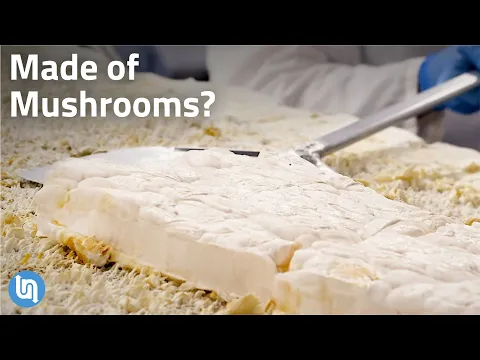
The most ambitious shift came when Ecovative began cultivating giant plates of oyster mushroom mycelium in indoor farms.
Instead of using only rigid molds, the company developed AirMycelium, a pure mycelium architecture grown on huge shelves in a controlled environment that mimics fog and forest breeze.
The mushroom, unlike plants, does not need light. It grows in the dark, over wood chips and moist sawdust, recycling waste into thick sheets of mycelium.
Water consumption is low because part of the moisture comes from the very digestion of the biomass. When the mycelium reaches the ideal point, entire shelves turn into belts, sliding the plates for automated harvesting.
In a single acre of land, this mushroom mycelium farm can produce millions of square feet of material per year.
The most interesting part is the versatility: the same AirMycelium sheet can be processed in different ways to become leather, food, or technical foam, depending on how it is cut, pressed, or seasoned.
Mushroom Leather: Fashion, Luxury, and Less Toxic Chemicals

One of the most notable applications is mushroom leather. The mycelium sheets can be compressed, rolled, and printed until they acquire texture, drape, and strength very similar to traditional bovine leather.
However, in this case, the “herd” is on indoor farm shelves, not in pastures.
The tanning process is much cleaner than animal leather, which relies on many chemicals and water.
Ecovative’s mycelium leather, for example, is grown in about nine days, reduces emissions by half compared to conventional leather, and costs less per square meter, in addition to being biodegradable and free of PVC or polyurethane.
Shoe and fashion brands have already partnered to develop sneakers, bags, and accessories made with mushroom leather, while other companies, like MycoWorks, turn species like Reishi into luxury pieces that have appeared in designer collections.
At the same time, major manufacturers are exploring the material for interior linings of electric cars, creating a supply chain where design, sustainability, and performance go hand in hand.
Mushroom Bacon: When Mycelium Hits the Pan

The same AirMycelium that becomes leather can also turn into food. Ecovative developed MyBacon, a “bacon” made from thick plates of mushroom mycelium, cut into strips and marinated in a mix of salt, sugar, natural smoke, and vegetable oil.
In the pan, this mushroom bacon fries, browns, and crackles like the traditional version, with a surprisingly similar texture to meat.
The difference lies in its origin: it comes from agricultural waste and water, in a low-energy system, with no pigs, no animal feed, and a much smaller environmental footprint.
The product is already sold in hundreds of stores and has become one of the fastest-growing plant-based meats in certain markets.
The company is also expanding its portfolio, testing shredded pork alternatives based on mycelium, focusing on flavor, texture, and convenience for everyday recipes.
Houses, Coffins, and Boards: Mushroom Enters Architecture and Design

The next step was to bring mushroom mycelium into construction and structural design. Bricks grown with oyster mushroom mycelium and local biomass have already been used to build a one-bedroom experimental house in Namibia, aiming to provide fire-resistant, affordable housing made from regional materials.
In Europe, companies cultivate biodegradable coffins made from mycelium and recycled hemp fibers, which decompose along with the body, returning nutrients to the soil.
Others use the material to fill surfboards with lighter and more sustainable cores or to create acoustic and decorative panels that serve as interior finishes.
A housing project of over 300 units in California will use prefabricated mycelium mushroom and hemp panels as external insulation.
These panels, covered with a protective layer, help keep the building cooler in the summer and warmer in the winter, as well as providing good sound absorption and naturally fire-resistant properties.
On top of that, the coating is carbon-negative, as it incorporates carbon from the biomass into its structure.
Mushroom in Space: Mycelium as Material for NASA Habitats

The ambition does not stop on Earth. NASA researchers are studying whether lightweight structures seeded with mushroom mycelium could be sent to the Moon or Mars.
The idea is to send a kind of “disassembled skeleton,” inoculated with dormant mycelium, and use water extracted from local ice to activate growth.
In this scenario, the mycelium would grow alongside algae that would provide oxygen and nutrients, forming a living habitat capable of protecting against radiation, providing thermal insulation, and being repaired from the inside out.
Tests in low orbit will assess whether mycelium can grow in microgravity and under space conditions, bringing the concept closer to real missions.
If successful, a mushroom that today grows on sawdust and wood scraps may, in the future, help construct walls on another planet, using local resources instead of tons of material transported from Earth.
Robots with Living Sensors: Mushrooms as Biological “Nerves”
In robotics, oyster mushroom mycelium has been used in research at Cornell University as a living sensor.
Scientists cultivated the mycelium around electrodes and observed how it responds to light, generating electrical pulses. These signals were picked up by an electronic interface and transformed into commands for a robot.
Different light intensities triggered different responses: speed up, slow down, change direction.
Since mycelium is sensitive not only to light but also to moisture, chemicals, and even nearby plants, the long-term vision is to use biohybrid robots to monitor soils, guide the precise application of fertilizers, and reduce waste in agriculture.
In this scenario, the mushroom stops being merely an ingredient in the human diet to become part of the nervous system of machines that interact with the environment in a more organic way.
Circular Economy in Practice: Everything Starts from Waste and Returns to the Soil
The common thread of all these applications is the circular economy based on mushrooms. Mycelium is grown on agricultural waste, assembled at room temperature, with low water and energy consumption.
Then, it spends years acting as packaging, leather, foam, insulation, or food. At the end of the cycle, instead of turning into permanent waste, it decomposes and returns nutrients to the soil, nourishing new plants and, potentially, new cycles of fungal production.
The gain is not only environmental. Mycelium materials compete in performance: they insulate, cushion impacts, endure, protect, decorate, and feed, without relying on fossil fuel-intensive supply chains.
A simple mushroom, when viewed as a living factory, challenges the way we think about plastic, concrete, processed meat, and even electronics.
If you could choose one of these applications to see spread across your city, which excites you the most: mushroom-insulated houses, mushroom leather in fashion, mushroom bacon in the kitchen, or mycelium sensors in robots and farms?





Gosto muito de cogumelos! Os fungos têm uma importância gigante para o ecossistema, para a sociedade humana e para a vida moderna! Do pão à penicilina… E agora ao Espaço!