Portuguese
  Spanish


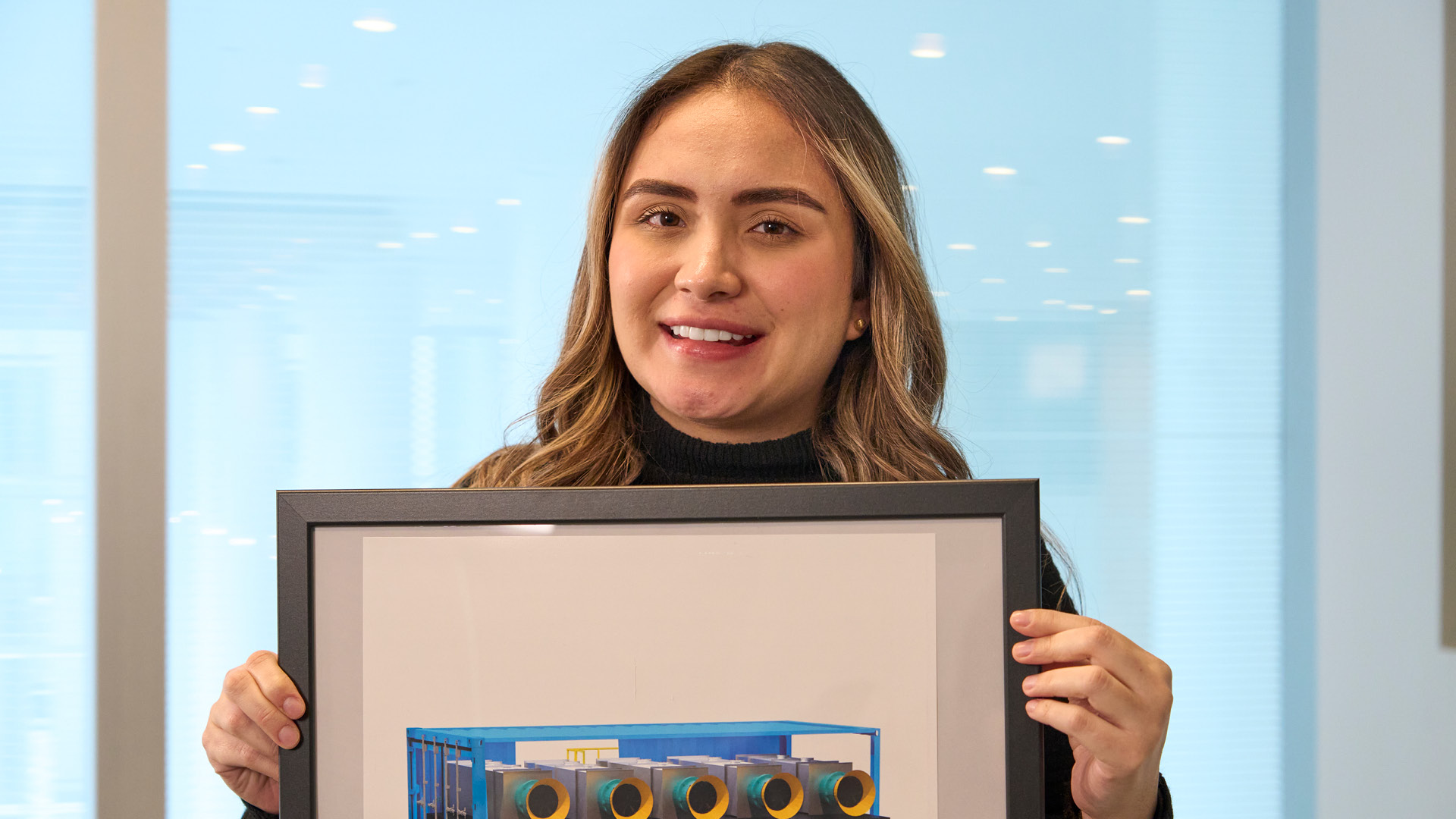

Inspired by human lungs, the technology created by Colombian Mariana Pérez captures different polluting gases and transforms them into biodegradable materials, placing the young inventor among the global highlights of sustainable innovation.
At a time when most carbon capture technologies focus only on carbon dioxide, a young Colombian entrepreneur decided to tackle several pollutants simultaneously. Engineer and entrepreneur Mariana Pérez, founder of the company Ecol-Air, developed a system that mimics the functioning of human lungs to capture contaminating gases present in the air and transform them into biodegradable raw materials. The innovation, highlighted by the European Patent Office, placed Mariana among the ten finalists of the Young Inventors Prize 2025, which recognizes young inventors with solutions of global impact.
The project draws attention because it is not limited to CO₂ capture. According to the EPO, the technology also removes nitrogen dioxide (NO₂) and sulfur dioxide (SO₂), gases associated with respiratory problems, cardiovascular diseases, and environmental degradation. After capture, these pollutants undergo a chemical process that allows their transformation into biodegradable polymers used in the manufacture of various products.
The idea arose when Mariana Pérez was only eight years old and observed the rain cleaning the dirt left by cars
The origin of the project began long before the creation of the company. According to Mariana Pérez, it all started when she observed the rain removing a dark layer of dirt accumulated on her father’s car. Upon discovering that the dirt came from pollution emitted by vehicles, a simple question arose: if rain can remove part of the contaminants, would it be possible to create a machine capable of doing something similar on a much larger scale?
-
Metal Detector Enthusiasts Uncover Largest Viking Coin Hoard in Norwegian History with 2,970 Silver Pieces Near Rena

-
5 km Lunar Pipeline Could Supply Oxygen to Astronaut Bases, Replace Transport Robots, and Become First Major Infrastructure Project Beyond Earth

-
U.S. Attempted to Tame Hurricanes with Silver Iodide and Aircraft for Nearly 20 Years
-
Teen Inventors Win $50,000 for Pen-Sized Device Using Ultrasound to Remove 94% of Microplastics from Water




The childhood curiosity eventually evolved into school experiments, science fairs, and increasingly sophisticated prototypes. Over the years, Mariana continued to perfect the idea until turning the concept into a commercial technology capable of being installed in industrial environments.
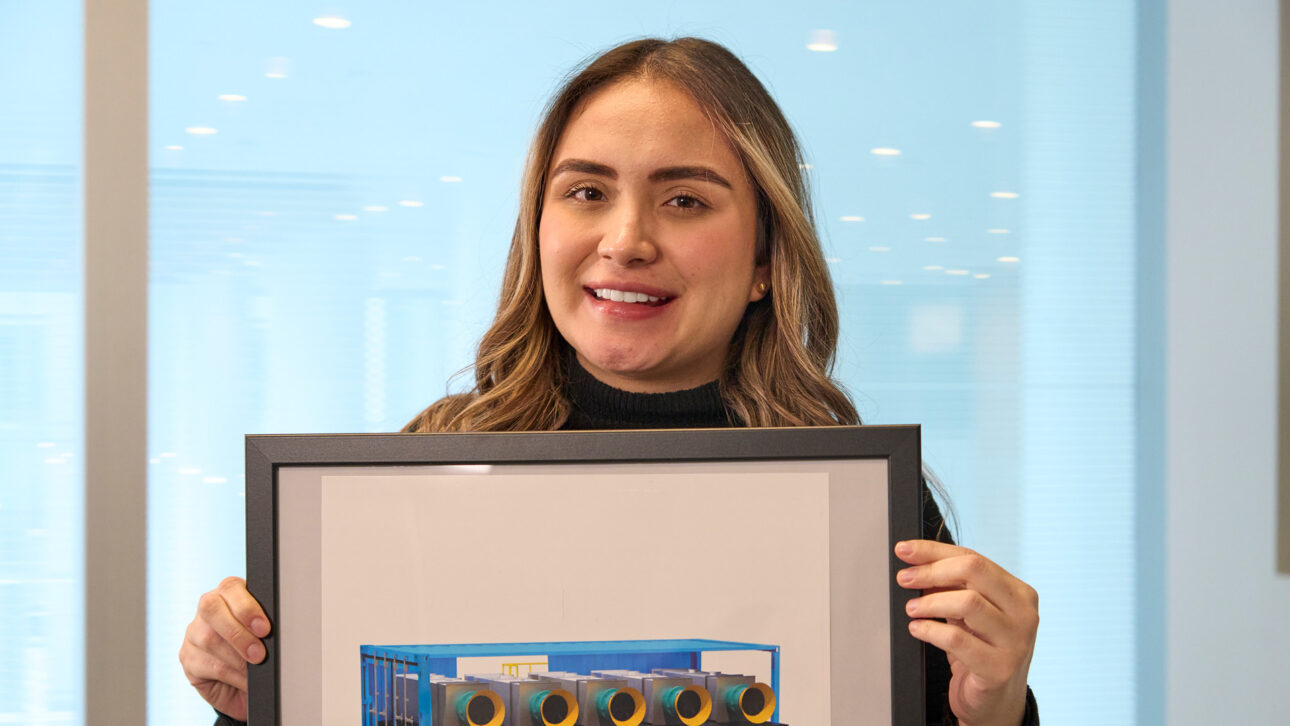
The system called FIVA was directly inspired by the anatomy of human lungs
The technology’s differential lies in its biomimetic design. According to the European Patent Office, the system called FIVA uses structures known as “mechanical bronchi” and “artificial alveoli,” designed to replicate part of the functioning of the human respiratory system.
When contaminated air enters the equipment, these components increase the contact area between the pollutant gases and the chemical solution used by the system. The result is more efficient capture of different atmospheric contaminants, not just carbon dioxide.
Mariana herself describes the equipment as a kind of “giant vacuum cleaner” capable of drawing in large volumes of air and separating the contaminants present in the gas stream.
Unlike many carbon capture systems, the technology also removes NO₂ and SO₂
A large part of the carbon capture projects currently developed focuses almost exclusively on CO₂. Ecol-Air’s proposal tries to broaden this scope. According to information from the EPO, the system simultaneously captures carbon dioxide, nitrogen dioxide, and sulfur dioxide, three of the gases most associated with air pollution in urban and industrial areas.
Nitrogen dioxide is often produced by the burning of fossil fuels in vehicles and industrial processes. Sulfur dioxide, on the other hand, is usually associated with the combustion of sulfur-containing fuels and certain industrial activities. Both can cause respiratory problems and contribute to the formation of acid rain. This ability to capture different gases is one of the main differentials presented by the company.
The pollutants are not discarded: they are transformed into new products
Perhaps the most surprising feature of the project is the fate given to the captured contaminants. Instead of simply storing the gases, Ecol-Air claims to process them to create biodegradable polymers that can be used in various industrial products.
Among the cited applications are sustainable packaging, biodegradable bags, coatings, and even materials used in civil construction. The proposal transforms pollution into raw material, creating a circular economy model where part of the atmospheric waste gains new utility. According to Mariana Pérez, the central idea is to prevent these contaminants from quickly returning to the environment after being captured.
The first industrial plant is already operating in Colombia
Technology ceased to be just a prototype a few years ago. According to information released by the EPO, the first air treatment plant using Ecol-Air technology began operations in Girardota, Colombia, in 2023. The facility was designed to process approximately 70 tons of air per day.
The company reports that the unit achieved an efficiency close to 82% in processing pollutants. This number is presented by the company itself and should not be interpreted as universal independent validation of the technology. The operation of the plant marked the transition of the project from an experimental invention to a real industrial application.
An even larger center aims to process almost 500 tons of air daily
The expansion of the technology is ongoing. According to the EPO, a new air quality innovation center has been planned for the city of Barbosa, also in Colombia. The expectation presented by the company is that the facility will be able to process approximately 497 tons of air per day.
In addition to air purification, the site was also designed to function as a research and environmental awareness center. The proposal is to expand the operational capacity of the technology while simultaneously encouraging new research on air quality and atmospheric pollutant capture.
Industrial companies have already started using Colombian technology
One of the biggest challenges faced by Mariana Pérez was convincing the industry that the solution worked. According to reports released by the EPO and Euronews, many companies initially showed skepticism towards the proposal. To prove the system’s efficiency, the entrepreneur decided to install units for free in some factories.


The strategy ended up working. After the initial tests, companies like Yamaha Colombia and Sumicol-Corona started using the technology. This movement helped transform Ecol-Air into a company with effective industrial operations.
The innovation placed the Colombian among the world’s leading young inventors
International recognition came in 2025. Mariana Pérez was selected among the ten names of the Young Inventors Prize 2025, an initiative of the European Patent Office aimed at young innovators developing solutions for global challenges related to the UN’s Sustainable Development Goals.
The selection placed the Colombian entrepreneur alongside inventors from different countries working with technologies related to health, sustainability, energy, and the environment. According to the EPO, Ecol-Air’s technology directly contributes to goals related to public health, sustainable cities, and climate action.
The lung-inspired machine shows a different approach to combating pollution
Most environmental initiatives seek to reduce emissions at the source. The technology created by Mariana Pérez follows a complementary path: capturing part of the pollution already present in the air and transforming it into new materials. By combining biomimicry, gas capture, and industrial reuse, the Colombian developed a solution that attempts to turn an environmental problem into a productive resource.
Whether the technology will achieve large-scale global reach will still depend on industrial expansion, operational costs, and adoption by more companies. What can already be stated is that the invention took an observation made by an eight-year-old girl during a rainstorm in Colombia to the group of the world’s most recognized young inventors.