Portuguese
  Spanish


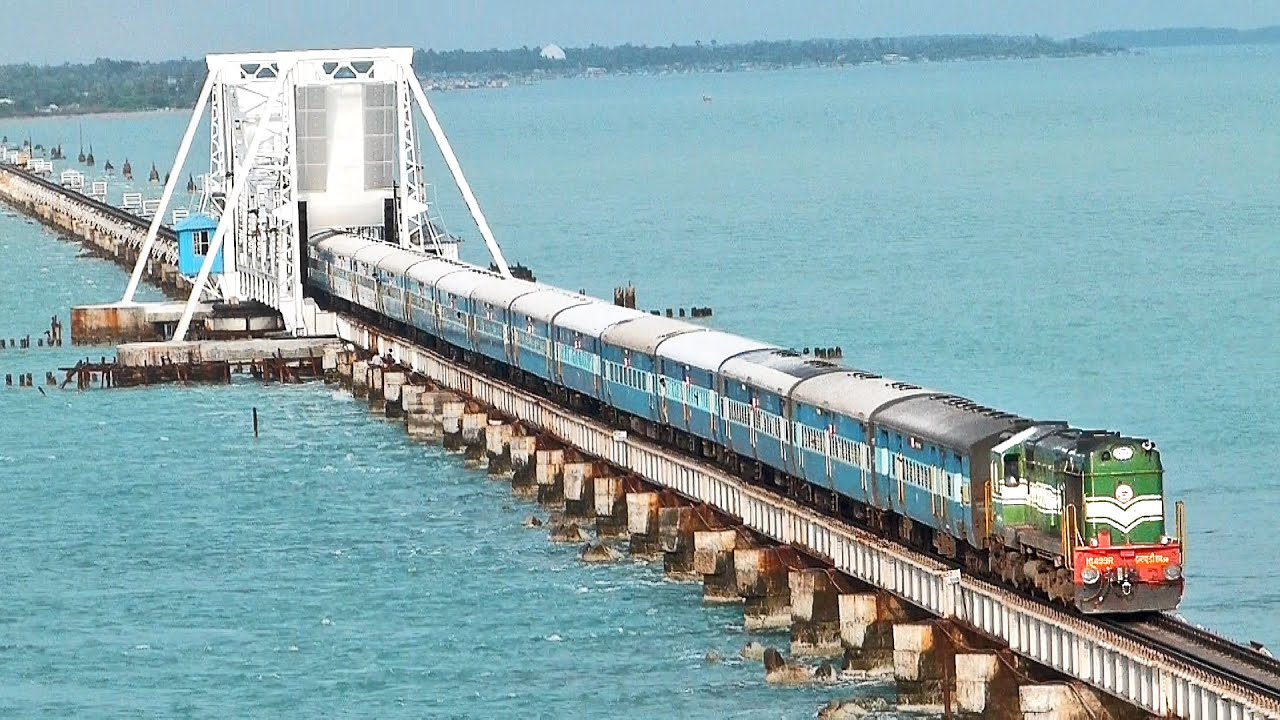


The Pamban Bridge in India Crosses The Sea For 2.3 Km And Withstands Salinity, Cyclones, And Extreme Winds For Over A Century.
Those who disembark at the southeastern tip of India and head towards the coast discover an unlikely scene: a railway line advancing towards the ocean, passing over slender pillars, and then seemingly disappearing over the shallow waters of the Palk Bay. This passage is not a mirage. It is the legendary Pamban Bridge, inaugurated in 1914, and considered one of the most challenging coastal railway constructions ever conceived in the country. For over a century, it has connected the mainland to the island of Rameswaram, spanning a stretch of 2.3 km fully exposed to the sea, facing a rare set of factors that daily test its structural limits: extreme salinity, ocean winds, tropical cyclones, and accelerated corrosion.
The Creativity of Constructing ‘Tracks Over The Sea’
Early 20th century India was experiencing a phase of railway expansion driven by both commercial and strategic demands. Rameswaram, besides having cultural and religious significance, was a transit port to ancient Sri Lanka.
The land alternative simply did not exist. The solution found by British engineers was to erect a railway over the sea, supported by pillars set on the sandy bed, with metal sections and special mechanisms to allow the passage of boats.
-
Key Infrastructure Projects for Brazil’s Next President: Expanding Railways to Cut Transport Costs, Reduce Truck Traffic, Create Jobs, and Boost Industries Nationwide

-
While China Builds Undersea Rail and Mexico Connects Two Oceans, Brazil Struggles with Grain Transport Due to Lack of Railways

-
Students Build Kansas’ First Hemp-Insulated Social House for a Needy Family: 85% Less Concrete, Solar Roof Returns Energy to Grid, Carbon Negative in Under 20 Years

-
China to Drill 90 Kilometers Under the Sea to Connect Two Cities Currently Linked Only by Ferry



Today, looking back, what is most impressive is the scale and context. In 1914, there was no structural computing, fatigue sensors, inspection drones, or advanced anti-corrosive coatings. The project had to be conceived based on analytical calculations, empirical testing, and a deep understanding of local winds and tides.
Salinity: The Silent Enemy
No structural material suffers as much in a coastal environment as carbon steel. Sea fog deposits chlorides on the metallic surface, breaking the protective film and initiating corrosion processes through pitting and cracking. In the case of the Pamban Bridge, the challenge is multiplied by three factors:
- High salinity seas in the Palk Bay, which accelerate chemical attack;
- Constant ocean winds, which carry micro-droplets to the metal components;
- Tide alternation, which causes immersion and drying, the perfect scenario for accelerated corrosion.

Therefore, since its inauguration, the bridge has required an intense routine of inspections, repainting, tightening connections, and replacing structural elements. Maintenance has ceased to be a simple procedure and has become the component that allows its continuous existence.
Extreme Winds And Tropical Cyclones
The bridge’s location places the structure on the route of tropical cyclones formed in the Bay of Bengal. These events are not occasional: they are part of the regional climate regime.
Gusts of over 140 km/h have been recorded in severe storms, generating considerable lateral forces on tracks, sleepers, and metal superstructure.
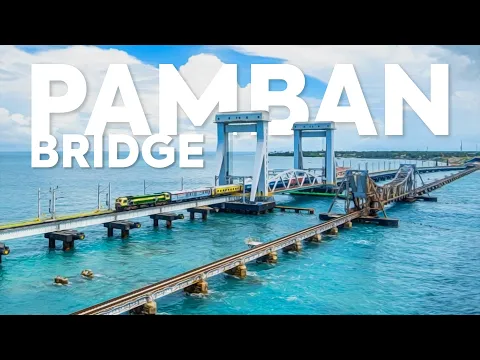
Unlike bridges over rivers or valleys, which primarily suffer vertical loads, the Pamban Bridge faces significant horizontal loads from wind and wave impact.
This type of solicitation can induce low frequency vibrations, fatigue in metal connections, and temporary deformations. The engineering of 1914 remarkably took this into account, with bracing systems and a solution of low structural mass to reduce wind loads.
It is worth noting that the bridge needed to be rebuilt and reinforced in sections throughout the 20th century due to historical cyclones, the most emblematic dated 1964, which devastated nearby railway infrastructure and brutally struck the Rameswaram region.
A Swing Bridge For Ships
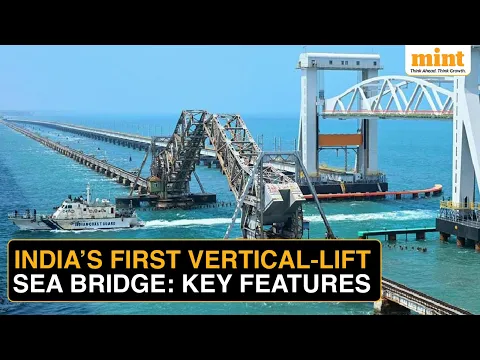
One of the lesser-known and most fascinating aspects is that a central segment of the bridge was designed as a swing section to allow ships’ passage. This mechanically operated mechanism causes two large arms to rise to clear the channel. This type of solution is rare in railway maritime bridges, as it requires:
• precise torque transmission;
• portico stability under wind;
• secure locking before the passage of trains.
The operation of this mechanism, in itself, is an exercise in simultaneous nautical and railway engineering.
Rameswaram: An Island That Justified The Impossible
The justification for the bridge is also geographical and human. Rameswaram is an island of cultural and religious significance in southern India, visited by thousands of pilgrims and tourists annually.

Before the bridge, transport relied on boats and was subject to weather conditions. The railway created a stable, predictable, and economically important link for the entire region.
Over time, railway transport complemented road transport, and a road bridge was inaugurated decades later. But the railway bridge has never lost its original function, nor its symbolic aura — surviving the sea.
The Engineering That Survives Through Care
Today, more than 100 years after its inauguration, the Pamban Bridge is a living proof that engineering does not always need to be monumental to be extraordinary. Sometimes, it just needs to be persistent, sustained by industrial processes and uninterrupted maintenance.
Technicians constantly inspect segments, replace parts affected by corrosion, and reinforce sections to withstand greater weights and winds.
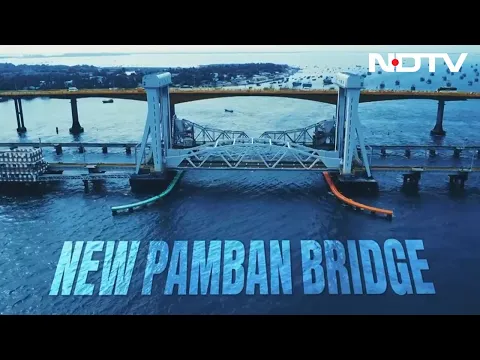
In addition, recent studies evaluate the gradual replacement of the original bridge with a more modern version, designed to withstand contemporary loads and more aggressive climate events — an increasingly real necessity in the context of climate change.
What This Bridge Reveals About The Future Of Coastal Infrastructures
The story of this railway shows that the coastline will be one of the biggest battlegrounds for engineering in the 21st century. With coastal erosion, rising sea levels, more intense storms, and strategic trade routes near the coast, structures like the Pamban Bridge cease to be century-old curiosities and become historical laboratories for the cities to come.
In the end, there is something profoundly human about this work: it was built not to stand out. It is not a postcard, it is not a skyscraper, it is not a cathedral. But it endures and that, in itself, is already monumental.
And the question that remains is simple: how many coastal infrastructures of the future will have the same resilience when the ocean decides to test its limits?