






 Portuguese
  Spanish




With $491 Billion Concentrated in a Single Mineral Corridor in South America, the Region Promises to Become the Epicenter of Global Demand for Gold, Copper, and Minerals Used in the Energy Transition
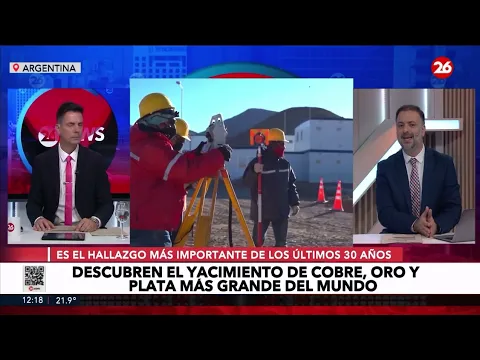
South America is back in the spotlight of the international market after a geological revelation caught the attention of industry giants and strategic mineral experts. In one of the most remote and challenging areas of the Andes mountain range, one of the most impressive discoveries of the past 30 years has emerged: a gigantic deposit of copper, gold, and silver that could reshape economic maps, boost billion-dollar investments, and reposition Chile and Argentina on the global stage.
The strength of this reserve, confirmed by the mining company Vicuña—a joint venture created by the Australian BHP and the Swedish-Canadian Lundin Mining—is stirring the appetite of industrial powers and reigniting the race for minerals essential to the energy transition.
The magnitude of this deposit has resonated throughout the international press. The specialized portal Mining Weekly highlights that the volume of copper, gold, and silver revealed by BHP and Lundin Mining at the border between Argentina and Chile is among the largest mineral discoveries of the last three decades, with real potential to reposition the economic axis of the Andean region.
-
Brazil to Issue “Panda Bonds” in China, Aiming to Raise Up to 5 Billion Yuan at Lower Interest Rates Than Dollar Debt
-
NATO Faces Internal Tensions as U.S. Pushes for Increased Defense Spending, Targeting 5% of GDP by 2035, with Warnings for Countries Near 2% Level

-
Brazil to Introduce B16 Diesel with Increased Soybean Oil Content for Trucks by 2026
-
Brazil’s July Bolsa Família Payments May Include Extra $150 and $50 for Families with Children, Pregnant Women, and Updated CadÚnico Registration


This statement is not isolated: in an official announcement published on the mining company’s own website, Lundin Mining classified the find as “one of the largest greenfield discoveries of the last three decades”, reinforcing the strategic importance of the project for the global market. The report can be consulted at Lundin Mining.

The Discovery That Shook the Mining Sector and the Global Market
Vicuña announced in May that it has completed detailed initial studies on the mineral potential of the region, revealing impactful figures. The surveys classified the resources as “measured” (confirmed by technical studies) and “inferred” (estimates based on preliminary analyses), with values so high that experts consider them to be among the most promising deposits in the modern world.
The new deposit revealed a volume of copper that already places the Andes region among the largest reserves on the planet. There are 12.8 million tons confirmed, with the potential to reach 25.1 million tons when inferred resources are included.
To understand the weight of this number: at the current average price of US$ 10,000 per ton of copper, this confirmed portion already represents around US$ 128 billion.
If the total estimates are confirmed, this value would double and easily exceed US$ 250 billion, consolidating South America as one of the most strategic centers in the global mineral market.
In the case of gold, the impact is equally impressive. Studies indicate 32.2 million measured ounces, equivalent to about 999 tons of pure gold.
When the 48.7 million estimated ounces are added, the deposit could reach approximately 1,514 tons of the most desired metal in the world.
Considering the average price of US$ 4,100 per ounce, this estimated portion represents a value close to US$ 200 billion, reinforcing the economic weight of the discovery.
Silver also appears with gigantic numbers. There are 659 million confirmed ounces, equivalent to about 19,478 tons, and projections of up to 808 million ounces, which represent approximately 23,871 tons.
With the average price of US$ 50 per ounce, just this higher estimate already sums to more than US$ 40 billion, further boosting the potential of local mining.
Summing all the estimated mineral resources, the deposit discovered between Argentina and Chile reaches a volume that few regions of the planet can match.
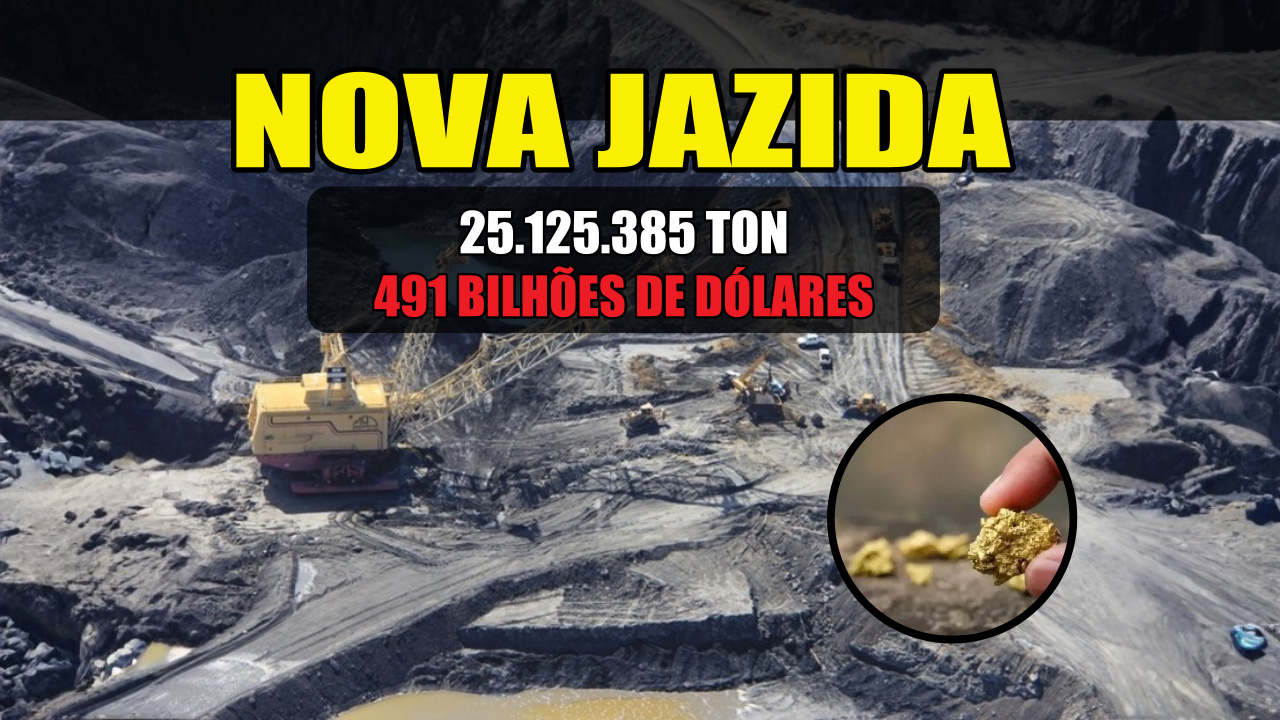
In total, there are 25,125,385 tons of minerals, considering copper, gold, and silver, a colossal number capable of supplying entire industrial chains for decades.
In total, the estimated total value of the reserve reaches approximately US$ 491 billion—practically half a trillion dollars concentrated in a single mineral corridor in South America.
It is this unprecedented combination of volume and value that puts the region on the radar of governments, mining companies, and high-tech industries around the world.
Deposit Located Exactly at the Border Region Between Argentina and Chile Promises to Generate Thousands of Jobs and Billion-Dollar Investments
The most intriguing point is that the deposit is located exactly at the border region between Argentina and Chile, which places both countries in a decisive position in the global arena for strategic minerals.
The construction phase will employ 5,000 workers, with 2,800 permanent positions during operation. Studies by the San Juan Mining Association project fiscal contributions of US$ 120 million/year for Argentina and US$ 85 million/year for Chile, including royalties and corporate taxes. BHP has committed to allocating 1% of annual EBITDA to community programs in education and health.
In addition to representing new job opportunities and attracting mining companies from around the world, the volume of copper found coincides with the moment when the metal becomes indispensable for sectors such as clean energy, electric vehicles, electrical cables, and technological infrastructure.
This high-demand scenario was highlighted by the Reuters, which reminds us that Argentina seeks to regain its prominence in the copper market and that the Vicuña project is a key piece in this movement.
In the geopolitical and industrial field, countries with reserves of copper, gold, and silver gain weight in international negotiations.
There is also a quiet race for minerals essential to the aerospace industry, such as those used in satellites, spacecraft, and electronic systems—another area that should benefit directly from the increased supply.
The New Economic Frontier of South America
Although the discovery has put South America in the spotlight, the path to definitive exploration is complex.
The region is embedded in a fragile ecosystem, at high altitude and extreme climate, requiring detailed environmental studies and large-scale infrastructure.
The Reuters reinforces that Argentina still faces significant logistical bottlenecks and that projects of this size depend on roads, robust electrical systems, and regulatory agreements.
Despite the challenges, investors see enormous potential. Vicuña itself stated that the resource analysis should serve as the basis for a more comprehensive technical report expected in 2026, a necessary step before the final phases of licensing and construction.
In other words, the newly discovered deposit may inaugurate a new economic cycle for the continent, energizing productive chains, expanding exports, and attracting billions in external investments.
Chile and Argentina, already recognized for their mining traditions, could become the epicenter of global demand for minerals used in the energy transition—and this is happening at a time when large economies are struggling to secure mineral autonomy.
A Future Shaped by Copper, Gold, and Silver
The discovery of this deposit creates a new perspective for South America. Copper, gold, and silver, which have always been pillars of the global economy, now assume an even more central role in technological and sustainable development. Mining remains a strategic sector, and the mining company Vicuña positions itself as a protagonist in this new phase.
The magnitude of this reserve, combined with the global urgency for essential minerals, opens up opportunities for the continent to redefine its role in the international market.
And, if the numbers are confirmed in the upcoming studies, the Andes region could go down in history as one of the most valuable sources of minerals in the 21st century.
If you have an opinion on this topic, leave your comment or share this article with someone interested in geopolitics and mining.







