Portuguese
  Spanish


The Minister of Finance, Dario Durigan, formalized in Beijing the intention of Brazil to issue panda bonds, the first Brazilian debt securities launched in yuan on the Chinese market. The operation could reach 5 billion yuan, with interest rates much lower than those paid in dollars, making the country the first in Latin America in this debut.
Brazil has taken an unprecedented step towards the Chinese financial market. The country is preparing to issue the so-called panda bonds, debt securities launched in yuan within China, and will be the first in Latin America to do so sovereignly, as shown by the Mundo China program on BandNews TV. The decision promises to shake up the country’s financing strategy.
The intention was formalized by the Ministry of Finance in a ceremony in Beijing at the end of June 2026, according to the Ministry of Finance. In practice, Brazil wants to borrow money in Chinese currency, taking advantage of interest rates much lower than those it currently pays to incur debt in dollars.
The operation could reach 5 billion yuan, around R$ 4 billion at the approximate exchange rate. It would be the largest debut of a country in this type of issuance, a message about the size of Brazil’s bet on diversifying the sources of its debt.
-
NATO Faces Internal Tensions as U.S. Pushes for Increased Defense Spending, Targeting 5% of GDP by 2035, with Warnings for Countries Near 2% Level

-
Brazil to Introduce B16 Diesel with Increased Soybean Oil Content for Trucks by 2026
-
Brazil’s July Bolsa Família Payments May Include Extra $150 and $50 for Families with Children, Pregnant Women, and Updated CadÚnico Registration
-
Brazilian Woman Buys €1 House in Sicily, Clears 50 Truckloads of Debris, and Transforms Ancient Ruin into Inspiring Life Project by 2026


Behind the curious acronym is a financial and geopolitical move. Next, see what panda bonds are, how the ceremony in Beijing was, why issuing in yuan is cheaper, and what this rapprochement between Brazil and China means for the country.
What are “panda bonds” and why Brazil will issue them
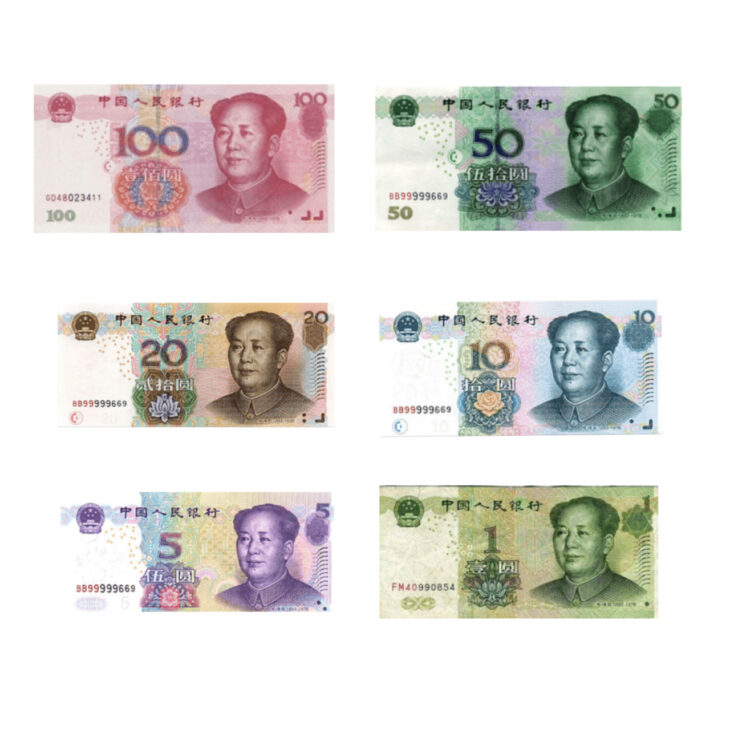
Panda bonds are debt securities issued by foreign governments or companies directly in the domestic market of China, but in yuan, the Chinese currency. The nickname refers to the country’s symbol animal, just as there are “samurai bonds” in Japan and “yankee bonds” in the United States.
The logic is simple to understand. Instead of raising money in dollars in the international market, Brazil will seek resources from Chinese investors, paying interest rates in their currency. It was an instrument created by China in 2005 to open its market to external issuers.
For Brazil, the news is historic. The country had never issued this type of paper before, and now it becomes the first in Latin America to launch panda bonds sovereignly, meaning with the National Treasury itself as the issuer of the debt.
The move is part of a larger strategy. By accessing the Chinese market, Brazil expands the options for who can buy its debt, no longer relying solely on investors who operate in dollars and opening a new financing tap in yuan.
The nickname follows a market tradition. Just as panda bonds honor China, there are the “samurais,” issued in Japan in yen, and the “yankees,” sold in the United States in dollars. Each name indicates the country and currency in which the debt is issued, and now Brazil joins the yuan club.
The ceremony in Beijing that made the debut official
The milestone took place in the heart of the Chinese financial system. On June 25, 2026, Finance Minister Dario Durigan delivered the letter of intent at the headquarters of the People’s Bank of China, the country’s central bank, in Beijing, formalizing Brazil’s desire to issue the panda bonds.
The ceremony had symbolic weight. Durigan was received by the president of the Chinese central bank, Pan Gongsheng, and the document was filed with the association that organizes this debt market in China, initiating the process that should lead to the first issuance.
On the Brazilian side, the delegation was high-level. Besides the minister, the National Treasury Secretary, Daniel Leal, directly responsible for managing the public debt, participated, showing that the decision to raise funds in yuan was treated as a government priority.
The atmosphere was one of rapprochement between the two countries. According to Durigan, President Lula was “very happy” with the progress and said he would call President Xi Jinping to celebrate the moment, signaling that the issuance of the panda bonds also carries a political message.
Up to 5 billion yuan: the size of the operation
The number gives the dimension of Brazilian ambition. The issuance of panda bonds can reach 5 billion yuans, equivalent to about US$ 735 million, or something close to R$ 4 billion at the approximate exchange rate, a value that is already large for a debut.
If confirmed, it would be a record of scale. This amount would surpass the largest sovereign debut ever made in this market, placing Brazil as one of the largest newcomers to directly access China‘s investors in search of financing in yuan.
The first issuance should not take long. According to the Treasury’s expectations, the first Brazilian panda bonds could be issued within two to three months after formalization, putting the operation on the short-term radar for the market.
It is worth remembering that Brazil will not be alone on this path. Brazilian companies have already tested the waters, and other countries have started accessing the Chinese market in recent months, showing that raising funds in yuan has become a concrete alternative to the traditional issuance of debt in dollars.
Brazil arrives after others have paved the way. The Brazilian company Suzano had already issued about 1.2 billion yuans in such papers in 2025, and Pakistan launched the first sovereign paper of this kind in 2024, with interest of about 2.5% per year, a sign that China‘s market is open to new issuers from abroad.
Why are “panda bonds” cheaper than the dollar?

The answer lies in the difference in interest rates. Papers recently issued in this market came out with rates between 1.70% and 2.05% per year, a much lower level than Brazil usually pays when it issues debt in dollars abroad.
The comparison is impressive. In dollar issuances made in 2025, the Treasury paid around 5.2% per year on a five-year paper and 7.5% on a thirty-year paper, that is, more than double what is currently charged for panda bonds in yuan.
The minister himself summarized the reasoning. According to Durigan, when Brazil issues abroad it ends up paying less interest than in domestic issuance, and if it is possible to burden the Treasury less by raising funds abroad, there would be no reason not to take advantage of this benefit.
Less interest means less spending on debt. Each percentage point saved in a billion-dollar issuance represents a lot of money that stops leaving the public coffers, resources that could be used in other areas or ease the country’s accounts over the years.
There is, of course, a risk to manage. Since the debt is in yuan, Brazil also becomes dependent on the exchange rate of the Chinese currency, and a strong appreciation of the yuan could make future payments more expensive. Even so, the low interest rates and growing trade with China help balance this risk.
What Brazil gains by financing in yuan
The most immediate advantage is the cost. By paying lower interest rates, Brazil reduces the debt burden and improves, in the long term, the health of public finances, an important relief in a country that spends billions just to roll over what it owes.
There is also a gain in currency protection. As trade between Brazil and China grows each year, having part of the debt in yuan helps match what the country receives and pays in the same currency, reducing the risk of surprises with dollar fluctuations.
Diversification is another benefit. Depending on a single source of financing is risky, and opening the Chinese market gives Brazil more options for investors, which can be decisive in times of tightening in the international market.
Finally, there is the gateway effect. The issuance of panda bonds is part of a broader cooperation in the capital market between the two countries, which could attract more Chinese investment in Brazilian securities and projects in the future.
The moment also has symbolism. Being the first country in Latin America to issue panda bonds gives Brazil a pioneering status that could draw the attention of China investors to the entire region, paving the way for new yuan fundraising by Brazilian states and companies in the future.
The strategy to reduce dependence on the dollar
The backdrop is the so-called dedollarization. Several countries have been seeking to reduce the weight of the dollar in their reserves and debts, and issuance in yuan is a step for Brazil in this direction, even though the dollar remains dominant worldwide.
The idea is not to abandon the dollar. It is about better balancing the basket of currencies in which the country finances itself, something that makes sense as China establishes itself as Brazil’s largest trading partner and as a power in the global debt market.
The official discourse reinforces this view. Durigan stated that Brazil has a national strategy that will be executed regardless of foreign forces, and even said that few countries are as well-positioned as Brazil and China to jointly lead part of the world economy.
Even so, caution is needed. Expanding the debt in yuan also creates new ties and dependencies, and it will be up to the Treasury to calibrate the size of these issuances to take advantage of the low interest rates without becoming too exposed to a single economy.
Brazil and China increasingly closer in the economy
The issuance of panda bonds is another chapter in a rising relationship. China is currently Brazil’s largest trading partner, the main destination for products such as soybeans, iron ore, and oil, and this closeness now extends to the world of finance.
The movement has economic logic. With so much trade at stake, it makes sense to also deepen financial ties, creating bridges between the capital markets of the two countries and facilitating the flow of investment in yuan in both directions.
Other agreements accompany the issuance. The cooperation includes initiatives to bring investors and financial products from both sides closer, which tends to facilitate new debt operations and give Chinese investors more familiarity with Brazilian risk.
The trade numbers explain the closeness. China buys huge volumes of soybeans, iron ore, and oil from Brazil, and a large part of Brazilian exports goes there, making it natural to also deepen financial ties and the issuance of debt in yuan.
On the global board, the gesture carries weight. By becoming the first Latin American country to issue panda bonds, Brazil positions itself as a bridge between China and the region, which can yield influence and new business opportunities in the coming years.
What this has to do with Brazil
In the end, the topic touches the pocket of every Brazilian. The public debt is paid with tax money, and the lower the interest the country pays to finance itself, the less pressure there is on the budget and on the accounts that sustain public services.
The case also shows Brazil seeking alternatives. Instead of always accepting market conditions in dollars, the country is testing new paths to finance itself more cheaply, an attitude that, if well conducted, can ease the cost of debt over time.
There is also the aspect of economic sovereignty. Diversifying the currencies in which Brazil owes gives the country more room to maneuver and reduces exposure to dollar fluctuations, something that interests any citizen concerned with economic stability.
On the other hand, it is important to monitor closely. Borrowing from China offers interest advantages, but requires responsibility to not exchange one dependency for another, and the size and pace of yuan issuances will determine if the strategy was correct.
And you, do you think it’s right for Brazil to seek money in China?
The debut of panda bonds shows Brazil betting on a new path to finance its debt. By raising up to 5 billion yuan directly in China, at much lower interest rates than the dollar, the country aims to reduce the cost of what it owes and get even closer to its largest trading partner.
More than a technical operation, it is a strategic choice. Reducing dependence on the dollar and diversifying funding sources can strengthen the Brazilian economy, as long as the size of this debt in Chinese currency is carefully controlled.
And you, do you think Brazil is right to issue panda bonds and seek cheaper money in China, or do you see a risk in becoming increasingly dependent on the Chinese economy? Share your opinion here in the comments and share with those who like to understand economics.