





 Portuguese
  English
  Spanish
 5 min of reading
  0 comments


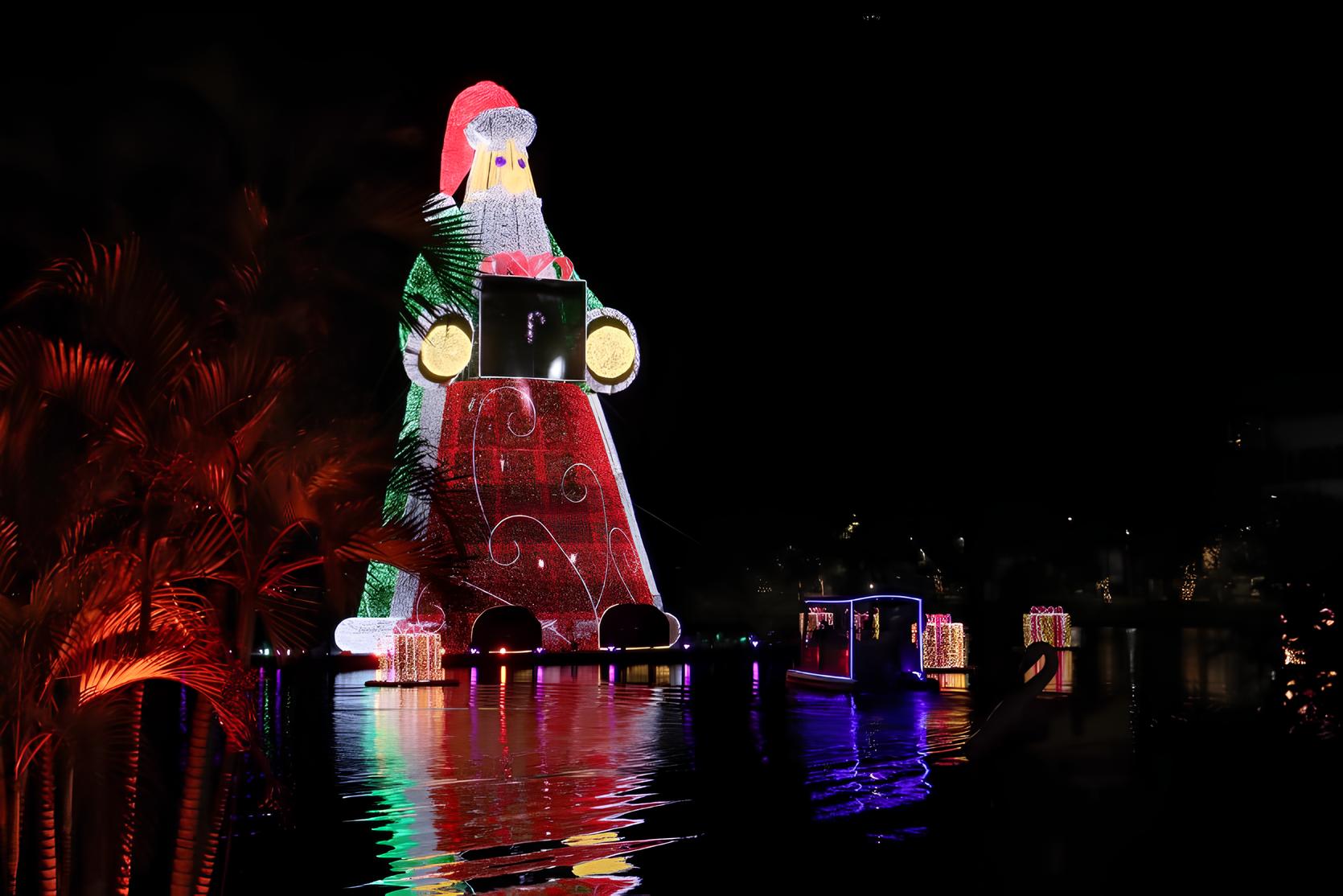
With 27 Meters, 15 Tons, and Floating Structure, The World’s Largest Santa Claus Was Erected in Southern Brazil, Certified by Guinness, and Now Generates Millions in Tourism.
Brazil has officially become home to the world’s largest Santa Claus. The certification was made by a judge from Guinness World Records, who confirmed that the structure installed in Londrina surpasses any other ever recorded on the planet. With 27 meters in height, 15 tons in weight, and erected on a floating platform on Lake Igapó II, this colossal Christmas figure is not just a decorative piece: it has transformed into a powerful vector for tourism, international visibility, and regional economic movement.
The record was officially confirmed in December 2025, surpassing the previous mark held by the city of Águeda, where the largest previous Santa Claus stood at 21 meters high. Now, Brazil takes the top spot in this symbolic ranking, but with rigorously technical criteria that were measured, audited, and recognized by the world’s largest record entity.
Technical Structure of the World’s Largest Santa Impresses with Engineering and Logistics
The statue was not simply erected on solid ground. One of the biggest challenges of the project was precisely to raise a monument of such size on a floating base in an urban lake, which required precise calculations of weight, load distribution, hydraulic stability, and structural resistance.
-
The song that made the whole of Brazil sing during the 1970 World Cup seemed like just a celebration of the third championship, but it hid a much more complex story linked to the military dictatorship.

-
With a length of about 150 meters and an estimated weight of 300 tons, a giant hose appeared on a beach in Japan, and now the country must spend R$ 1.6 million to remove the stranded piece with no known owner.

-
Hotel Nacional connects the colors of Brazil on the Rio waterfront, transforms Oscar Niemeyer’s facade into a giant postcard, and makes even those passing by São Conrado look twice.
-
Ancient footprints in the Bàsura Cave reveal how a human group and a dog illuminated deep tunnels with pine branches.



The main structure was assembled on land and then transported by barge to the final location on Lake Igapó II. The total weight of 15 tons includes the internal metal frame, coverings, lighting, electrical systems, and the floating base itself. The height of 27 meters is equivalent to a building of approximately nine stories, which makes Santa a true urban landmark visible from great distances.
In addition to the main statue, the project was complemented by 40 illuminated arches in the shape of comets, as well as special lighting on trees and structures around the lake, creating a visual corridor that further enhances the impact of the installation.
Guinness Certification Transforms the Sculpture into an Official World Record
The title of “largest in the world” is not symbolic or promotional. The certification was officially made by a judge from Guinness World Records, who accompanied the measurement and validated all the technical parameters required by the record book: total height, structural stability, physical integrity of the sculpture, and compliance with international safety standards for large temporary monuments.
With the validation, Londrina not only achieved a Christmas record but also officially became part of the global collection of monumental temporary architectural feats.
Overcoming the Old International Record and a Symbolic Dispute Between Countries
Until then, the world record belonged to the Portuguese city of Águeda, which had installed a Santa Claus measuring 21 meters in height and 9 meters in diameter.
The new Brazilian colossus surpassed that mark by six additional meters in height, a significant difference when it comes to structures of this size.
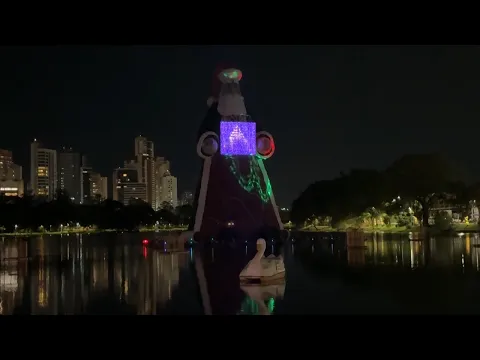

This overcoming gives Brazil a leading role in a type of symbolic competition that involves Christmas tourism, urban marketing, themed cities, and large-scale seasonal events, an area that generates billions of dollars annually worldwide.
Cost of R$ 1.8 Million Reveals the Economic Scale of the Project
The city government of Londrina reported that the total cost of the installation was approximately R$ 1.8 million. This amount includes the production of the structure, transportation, assembly, electrical system, artistic lighting, logistical operation, and maintenance during the exhibition period.
Although the number impresses at first glance, it needs to be interpreted within the logic of the tourism economy. Projects of this nature are not merely decorative: they serve as triggers for attracting visitors, boosting commerce, hotel occupancy, and expanding consumption in bars, restaurants, shopping centers, and services.
Direct Tourism Impact: Visits, Photos, Social Media, and City Occupation
Since the inauguration, the surroundings of Lake Igapó II have begun to receive intense flows of visitors. Entire families, tours, tourists from nearby cities, and even from other states are traveling to see the world’s largest Santa Claus up close.
The impact is directly reflected in: increased urban traffic, heightened hotel occupancy rates, growth in revenue for bars, cafes, and restaurants, expansion of both formal and informal commerce, and a strong presence on social media, with millions of views and shares.
The monument has become not only a physical attraction but also viral digital content, serving as spontaneous advertising for the city both in Brazil and abroad.
Christmas as an Economic Strategy and Not Just a Cultural One
Major cities around the world have transformed Christmas into a strategic platform for economic development, using lighting, giant sculptures, themed events, temporary parks, and large-scale attractions to generate tourist flows outside the traditional high season.
By investing in a work of such symbolic and visual weight, Londrina enters this international circuit of cities that use the festive calendar as a driver of creative economy, generating temporary jobs and increasing revenue.
From Religious Symbol to Financial Asset of Urban Tourism
Santa Claus, although it has cultural and religious origins associated with Christmas, is now primarily a global economic asset. It drives:
– Decoration Industry
– Urban Marketing
– Seasonal Tourism
– Retail
– Advertising
– Themed Events
By achieving the title of largest in the world, the sculpture in Londrina ceases to be merely an ornament and becomes part of the international circuit of attractions that generate continuous economic value.
Engineering, Aesthetics, and Controlled Risk in a Giant Floating Structure
Building a structure of this size on water exponentially increases the technical risks. The floating base must support the total weight, resist winds, lake level variations, waves, currents, and lateral forces generated by the statue’s own height.
Additionally, anchoring systems and cables were designed to prevent movement, ensuring that the monument remained stable throughout the exhibition period. The project combines ephemeral architecture, simplified naval engineering, and large-scale scenic design.
Brazil on the Map of Great Temporary Urban Records
By achieving this title, Brazil now appears on the map of internationally recognized temporary urban mega-installations. This places the country in a spotlight that goes beyond football, carnival, and natural landscapes.
Records of this type generate international visibility, attract foreign media, stimulate cultural exchange, and strengthen the image of medium-sized cities capable of producing events with global technical standards.
When the Christmas Giant Becomes a Symbol of Modern Urban Planning
What was merely a decoration idea has transformed into one of the largest seasonal tourism strategies ever implemented in Southern Brazil.
A Santa Claus measuring 27 meters, 15 tons, and recognized by Guinness has become a real tool for territorial development.
More than just breaking a record, Londrina has transformed a symbol of Christmas into an economic, tourism, media, and urban asset of international reach.





-

-

-

-

-

-

11 people reacted to this.