Portuguese
  Spanish


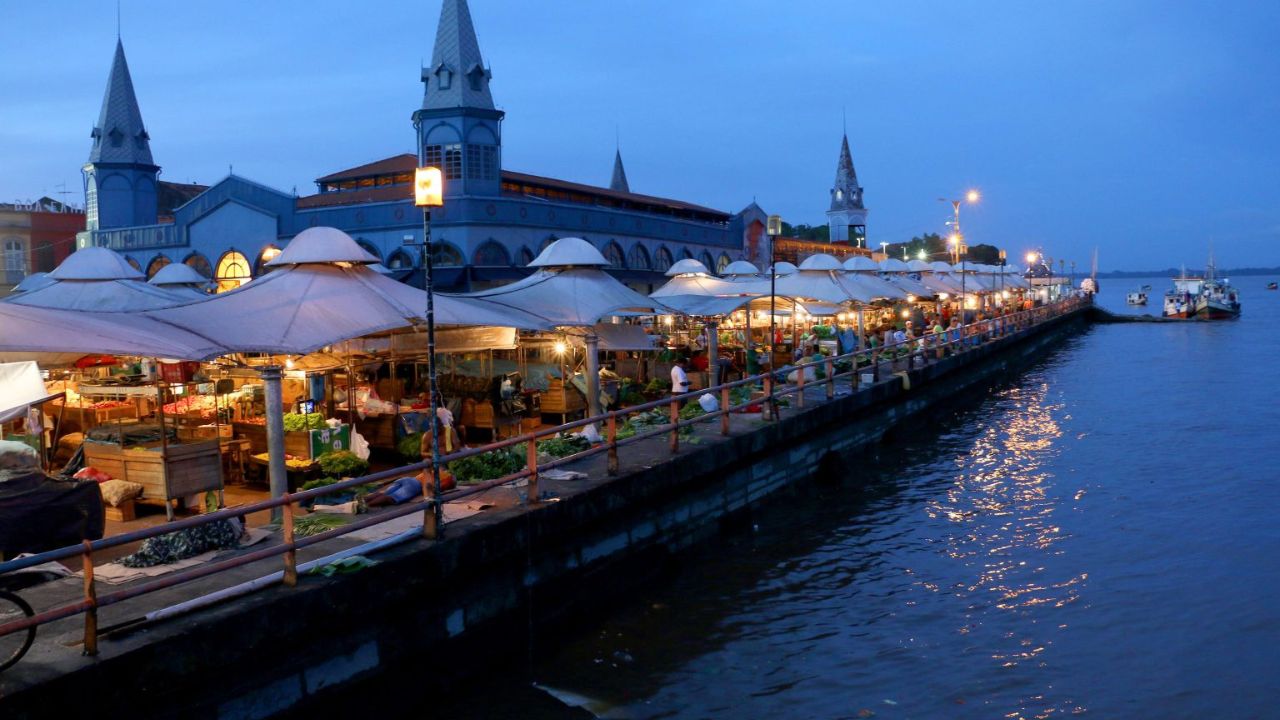

With 35,000 m2, Icon of the Belle Époque in Belém Receives R$ 64 Million in Restoration Works, Placing the Largest Outdoor Market in Latin America at the Center of Global Attention.
The Ver-o-Peso Market, known as the largest outdoor market in Latin America, is more than a tourist spot in Belém (PA); it is a living organism that pulses to the rhythm of the Amazon. With a history that, according to the Belém Agency, is 398 years old, this complex is an explosion of colors, scents, and sounds. Now, this icon of the Belle Époque, famous for its European iron structure, is undergoing a profound transformation: a R$ 64 million renovation aimed at preparing it for COP 30, which will take place in the Pará capital.
The complex, which extends over 35,000 m2 according to Wikipedia, is not just a market but an economic and cultural pillar. According to the National Institute of Historical and Artistic Heritage (IPHAN), its value is so unique that it was listed in 1977 in three different books: Historical, Fine Arts, and Ethnographic, protecting not only the architecture but also the knowledge of the herb gatherers and the lives of the vendors. The current renovation aims to balance the necessary modernization with the preservation of this unique identity.
The Genesis of a Commercial Empire
The history of Ver-o-Peso is intertwined with that of Belém. Its origins date back to the 17th century, with the “Casa de Haver o Peso”, a tax station of the Portuguese Crown, as detailed in the historical chronology available on Wikipedia. The function was clear: to control and tax the “drugs of the sertão” that came out of the Amazon. The very name “Ver-o-Peso” derives from this fiscal obligation to weigh goods before the tax was collected.
-
Brazil’s Federal Revenue Auction: iPhone 13 for $95, PlayStation 4 for $80, and Volkswagen Jetta for $2,600 Among 232 Lots Available

-
Tech Giant Oracle Lays Off 21,000 Employees and Invests $70 Billion in Artificial Intelligence

-
Chilean Giant Acquires St. Marche, Expanding from Discount to Premium Supermarkets in São Paulo’s High-End Retail Market
-
After 60 Years of Selling Cheap Milk, Brazilian Family Invests in $4,000 Equipment to Transform Farm’s Milk into Premium Sweets, Producing 2 Tons Daily and Aiming for $6.4 Million


This fiscal past gave way to a vibrant trading center. The great architectural transformation occurred during the Rubber Boom, a period of wealth that sought to mirror Europe in the Amazon, according to Wikipedia. The Iron Market, or Fish Market, inaugurated in 1901, is the ultimate symbol of this era, when the local elite remodeled the city with cosmopolitan aspirations.
An Icon of the Belle Époque in the Amazon


The Iron Market is a gem of Art Nouveau architecture. As described by IPHAN, its metal structure was entirely pre-fabricated and imported from Europe, a trend of industrial modernity at the time. The design, with ornate towers and a zinc-scaled roof, was erected to house the most authentic products of the forest, creating a cultural paradox that defines the place: European refinement safeguarding pirarucu and açaí.
The importance of the complex was officially recognized by IPHAN in 1977. The listing of Ver-o-Peso is exceptional for being inscribed in three books: Fine Arts (for architecture), Historical (for its role since the colonial period), and Ethnographic and Landscape. IPHAN highlights that this last inscription was groundbreaking, protecting intangible heritage: the practices of vendors, the knowledge of herb gatherers, and the complex social web that makes the market function.
The Economic Engine That Fuels Belém
The scale of Ver-o-Peso is monumental. The Belém Agency, the city’s news agency, estimates that the complex receives a daily flow of about 20,000 people. This intense movement supports thousands of workers, including registered permit holders and a vast network of informal economy that relies on the market for survival.
The market is the true pantry of the Amazon metropolis. Data from the Belém Agency indicates that the volume of fish traded at the location is vast, being the main supply point for the city. The Açaí Fair, an integral part of the complex listed by Wikipedia, is the delivery point for the main food of the locals, boosting both the riverside and urban economies even before sunrise.
The R$ 64 Million Renovation for COP 30
After decades without significant structural interventions, Ver-o-Peso is under renovation. The reform, driven by the upcoming COP 30 in Belém, aims to revitalize the historical structures and modernize the infrastructure, as reported by the Belém Agency. The investment of R$ 64 million seeks to resolve chronic security and hygiene issues, preparing the complex to welcome visitors from around the world.
The biggest challenge of the project is finding the balance between the new and the old. The revitalization is urgent to ensure the safety of workers and the preservation of the heritage. However, there is concern that excessive modernization could “sterilize” the space, removing the authentic chaos that, according to IPHAN, is a fundamental part of its ethnographic value. The management of this process will define the future of the largest outdoor market in Latin America.
The renovation of Ver-o-Peso is one of the most debated topics in Belém. And what do you think about this transformation? Do you believe modernization is necessary for COP 30 or do you fear it could take away the soul of the market? Leave your opinion in the comments, we want to know the views of those who live and love this place.