






 Portuguese
  Spanish


Cencosud’s purchase places St. Marche at the center of São Paulo’s premium supermarket, repositions capital after Bretas sale, expands presence in premium retail, and tests whether the Chilean giant will manage to preserve curation, service, assortment, and loyalty in a high-income network still dependent on the Brazilian Cade.
The supermarket St. Marche entered a new phase in Brazil after the Chilean Cencosud announced, on Wednesday, June 24, 2026, the purchase of 100% of the São Paulo network. The operation was carried out through the subsidiary Cencosud Brasil Comercial and marks the group’s stronger entry into the premium retail of São Paulo.
The acquisition involves St. Marche, a network founded in 2002, with 32 stores in the state of São Paulo and nearby cities, including the Santa Maria emporium. According to information released by Exame, the network grossed more than R$ 1 billion in the 12 months ending in March 2026, but the completion of the deal still depends on Cade’s approval and the finalization of an out-of-court recovery process linked to the seller.
A purchase that changes the map of the premium supermarket in São Paulo
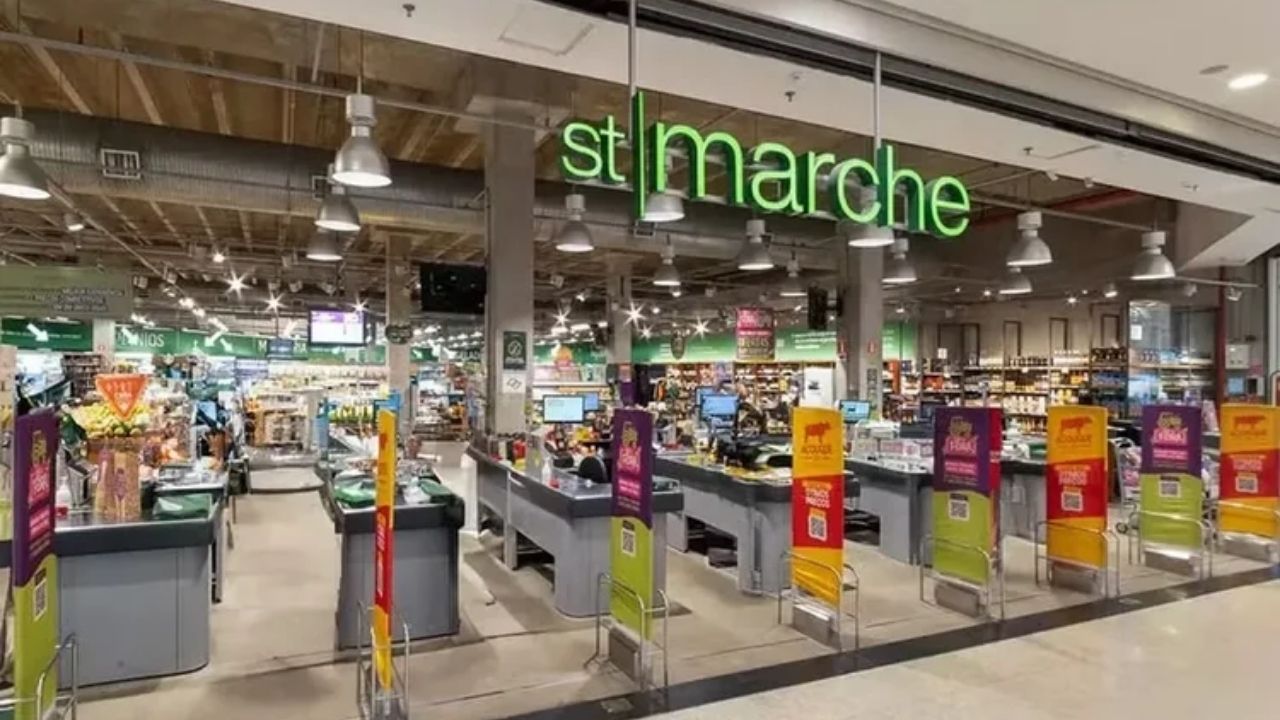
The purchase of St. Marche places Cencosud in a very different segment from the one in which the company had been concentrating part of its Brazilian operation. The Chilean giant was already known for brands like GBarbosa, Prezunic, Perini, Mercantil Atacado, and Giga Atacado, but now it starts to compete more strongly in the supermarket aimed at the high-income public.
-
After 60 Years of Selling Cheap Milk, Brazilian Family Invests in $4,000 Equipment to Transform Farm’s Milk into Premium Sweets, Producing 2 Tons Daily and Aiming for $6.4 Million

-
Northern Brazilian ports surpass the South as the country’s largest grain corridor amid record harvest

-
Amazon launches its own brand in Brazil a week before Prime Day, following a $3.7 billion investment and the establishment of over 300 distribution centers nationwide by 2025.
-
Trump’s 50% Tariff on Brazilian Goods Cuts U.S. Exports by 30%, Brazil Sets Records in 42 Countries and Germany Becomes Top Coffee Buyer


This change draws attention because premium retail requires more than scale. The St. Marche customer does not just buy basic products, but also curation, freshness, service, convenience, and a sense of closeness to the store. It is precisely for this reason that any abrupt change in operation can create noise among consumers accustomed to a specific standard.
Cencosud swaps part of wholesale for a higher value bet
The acquisition takes place after Cencosud sold 54 Bretas stores in Minas Gerais, as well as gas stations and a distribution center, to Supermercados BH. According to Exame, the company stated that the purchase of St. Marche will be financed by reallocating capital from these divestments.
In practice, the move shows a strategic shift: less exposure to operations considered less aligned with the new focus and more presence in higher value-added formats. Cencosud exits part of the mass retail market and enters a premium supermarket showcase, concentrated in the country’s main consumer market.
Who is St. Marche and why is the brand so valuable
St. Marche was founded in 2002 by Bernardo Ouro Preto and Victor Leal. The chain grew from the proposal to transform grocery shopping into a more curated experience, focusing on fresh products, gastronomic novelties, and stores located in higher-income regions.
In 2007, the group purchased the Santa Maria emporium, one of São Paulo’s traditional brands, and in 2015 brought an Eataly unit to Brazil. Over the years, St. Marche has become a reference in the premium segment, especially for combining neighborhood market, emporium, and gastronomic experience in one model.
The chain also faced financial difficulties
Despite the brand’s strength, St. Marche faced cash flow difficulties in recent years. In April 2025, the group filed for debt restructuring in the São Paulo court, in an out-of-court recovery process that helps explain why the chain came to market.
This history makes the purchase even more delicate. For Cencosud, the acquisition represents the chance to enter the São Paulo premium supermarket market with a ready, well-known brand with an established clientele. For St. Marche, the arrival of a large group may mean capital, scale, and greater reorganization capacity.
The deal still needs to go through Cade
The completion of the operation depends on the approval of the Administrative Council for Economic Defense, Cade, the body responsible for assessing competitive impacts in large transactions. This type of analysis observes whether the purchase may generate excessive concentration or relevant effects on the market.
In addition to Cade, Cencosud also informed that completion depends on the finalization of the ongoing out-of-court recovery process by the seller. In other words, the announcement does not mean that everything is already finished, but indicates that the companies have signed an agreement to advance in the transfer of the operation.
Why São Paulo is so important in this dispute
São Paulo concentrates high-income consumers, neighborhoods with high average tickets, and an intense competition for convenience, brand, and experience. For a Latin American retailer, entering this market with an already established network is faster than trying to build a new brand from scratch.
St. Marche offers exactly this shortcut. There are 32 stores, a 7,500 square meter own distribution center, and a customer base with high purchasing power. In premium retail, location and loyalty weigh as much as price, and this helps explain Cencosud’s interest.
The risk of altering a sensitive brand
The biggest challenge for the new owner will be to preserve what made St. Marche recognized. In premium networks, changes in assortment, service, standardization, suppliers, or store environment can be quickly noticed by the consumer. A small change for the controller may seem big to those who visit the store every week.
This is the difference between buying a network and maintaining its reputation. Cencosud gains immediate presence in São Paulo, but also takes on the risk of managing a brand with a demanding audience. If it tries to transform the operation too much, it may lose precisely the asset it bought: customer trust.
What changes for high-income retail
The entry of Cencosud into the São Paulo premium segment may increase competition among networks that compete for consumers willing to pay more for quality, convenience, and experience. In this market, price matters, but it is not the only decisive factor. Curation, fresh products, imports, bakery, butcher, wine cellar, and service can weigh heavily in the choice.
The move also reinforces a trend in food retail: large groups seek different formats to balance margin, scale, and positioning. While cash-and-carry has grown strongly in recent years, premium supermarkets offer another type of return, more dependent on differentiation and less based solely on volume.
Cencosud expands its presence in Brazil
Cencosud arrived in Brazil in 2007 with the purchase of GBarbosa and built a multi-format operation in the country. According to Exame, the Brazilian operation billed about R$ 10 billion in 2025, according to the Brazilian Supermarket Association ranking.
With St. Marche, the group starts to operate more strongly in a higher-income niche within the largest Brazilian consumer market. The purchase is not just store expansion, but portfolio repositioning, because it places the company on a more sophisticated shelf of food retail.
Buying was just the first challenge
The acquisition of St. Marche by Cencosud shows how the premium supermarket has become a strategic piece in the Brazilian retail. The Chilean giant buys a well-known chain, with billion-dollar revenue, stores in São Paulo, and a strong brand among demanding consumers. But it also takes on a business that requires care, identity, and fine execution.
The next test will be to prove that a multinational can preserve the local DNA of St. Marche without stifling the operation or alienating its most loyal customers. Do you think the arrival of Cencosud can strengthen the chain or is there a risk of losing the premium supermarket character that São Paulo residents already know? Leave your opinion in the comments.


