Portuguese
  Spanish


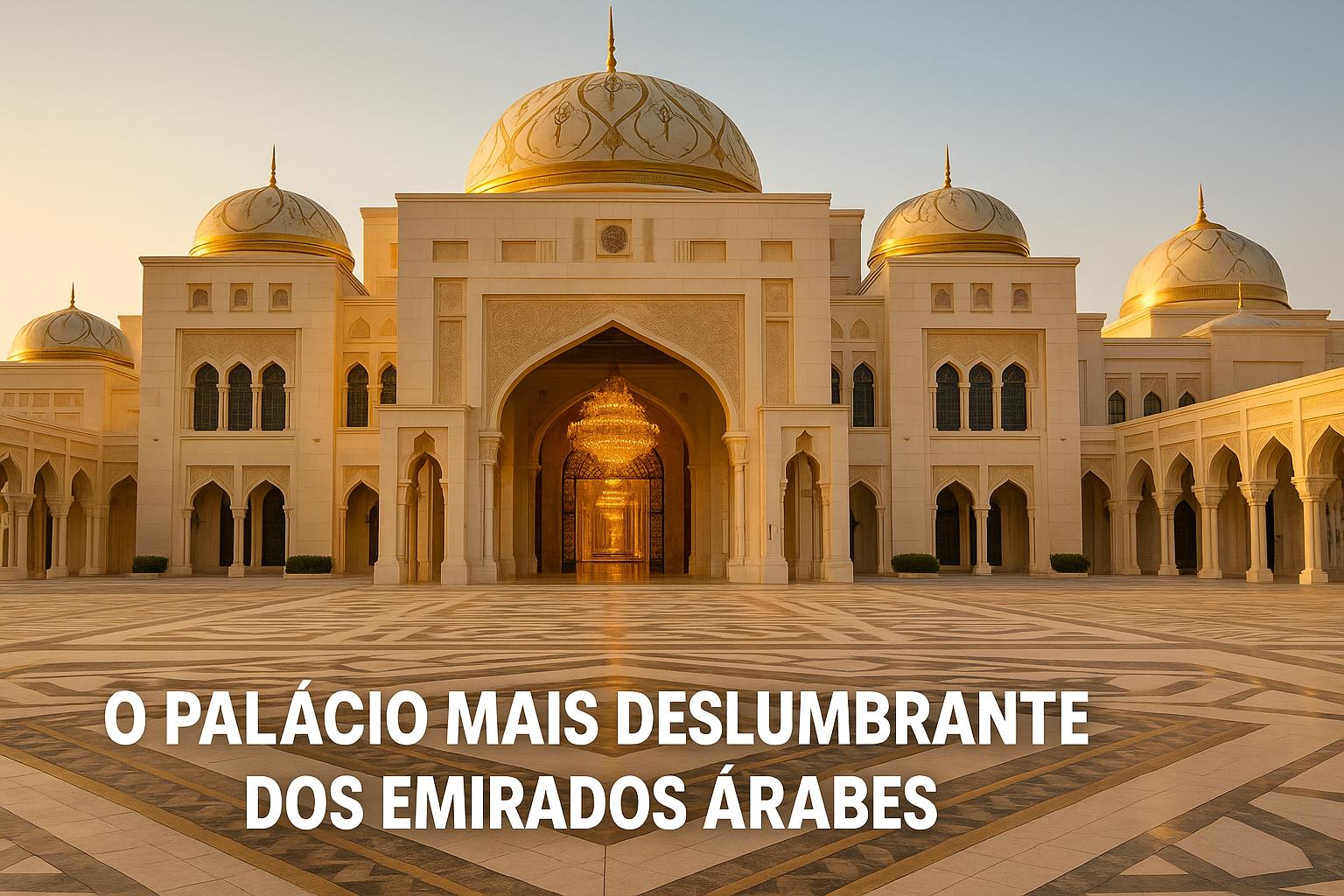


With 380,000 m² and Chandeliers Made of 350,000 Crystals, Qasr Al Watan Is the Most Luxurious Presidential Palace in the Middle East and a Symbol of Arab Power.
Located in Abu Dhabi, Qasr Al Watan, which in Arabic means “Palace of the Nation” — is one of the most monumental structures ever built in the modern Middle East. With 380,000 square meters of built area, the complex impresses both with its size and the richness of architectural details, becoming not only the official seat of the government of the United Arab Emirates but also a symbol of the political, cultural, and technological power of the country.
A Palace That Represents the Power of a Nation
Inaugurated in 2017 and opened to the public in 2019, Qasr Al Watan was designed to host high-level diplomatic meetings, state ceremonies, and official events of the royal family.
The building is an extension of the Presidential Palace in Abu Dhabi and, unlike traditional royal residences, functions as an institutional and cultural space — a physical representation of the national identity of the Emirates.
-
Bottle Caps in the Garden: A Creative Solution You Won’t See the Same Way Again

-
Brazilian Producer Adopts Hydroponic Strawberry Farming in Western Paraná, Achieving Year-Round Harvests and Becoming a Model for Continuous Production

-
Vale Achieves 45% Female Hiring in Mining by 2025, Surpassing Target a Year Early with 109% Increase in Six Years

-
Over 400 Gold Coins Found in Shipwreck Linked to 17th-Century Dutch Vessel, Unveiling Historic Trade Between Morocco, the Netherlands, and England




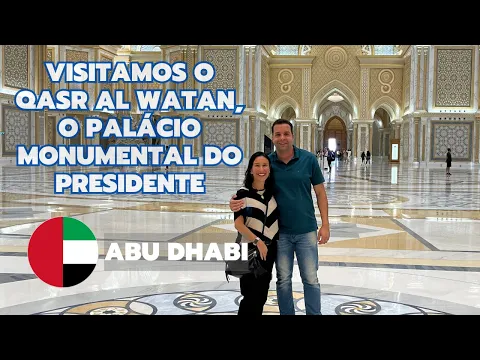

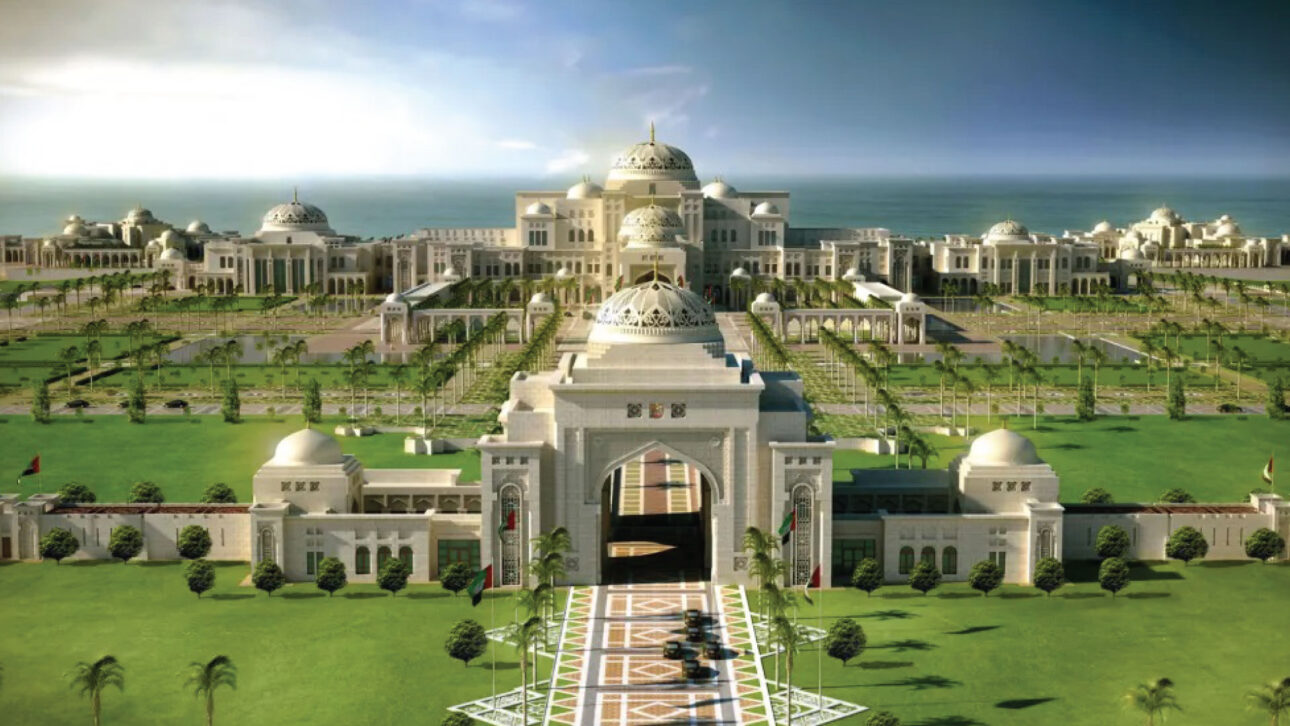
The dimensions of Qasr Al Watan are impressive: 380,000 m² of built area, distributed over monumental halls, corridors lined with Italian marble, and huge domes adorned with gold.
Every detail of the design follows the principles of classical Islamic architecture, reinterpreted with contemporary techniques and cutting-edge technology that allow for full control of light, temperature, and sound.
Monumental Luxury: Gold, Marble, and Crystal
The interior of the palace is a spectacle in itself. The Main Hall, called The Great Hall, is one of the largest vaulted chambers on the planet, supported by columns of white marble that appear to be hand-carved. The ceiling, covered with golden and blue geometric patterns, culminates in a central dome measuring 37 meters in diameter.
The chandeliers of the palace are another symbol of grandeur. The main chandelier, suspended in the center of the great hall, features 350,000 high-purity crystals, weighing tons and reflecting light in hundreds of directions. Each crystal was assembled individually, creating a visual spectacle that evokes the idea of abundance and perfection.
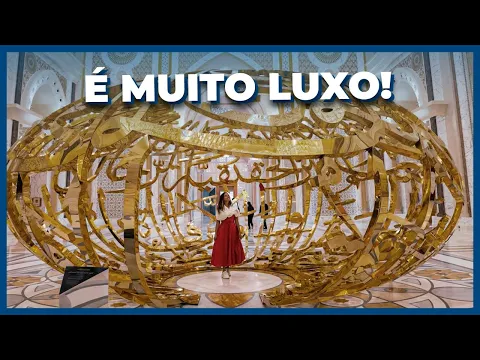
Besides gold and crystal, imported marble from Italy and India covers floors and walls, contrasting with handcrafted mosaics of Arab origin. The decor follows the aesthetics of a modern empire, blending cultural tradition and technological splendor.
Architecture That Unites Tradition and Technology
Designed by international firms under the coordination of the Abu Dhabi government, Qasr Al Watan represents the pinnacle of precision engineering and Arab cultural architecture. The entire project was built to withstand high temperatures and the typical humidity of the Persian Gulf, without compromising internal comfort and aesthetics.
The palace features automated lighting systems, smart climate control, and total acoustic insulation in its main halls.
The floor is supported by a network of underground cables and pipes that control temperature and vibrations, allowing the environment to remain stable even under heavy flows of visitors and diplomatic events.
The construction used materials from over 10 countries, notably Italian white marble, granite from China, and Austrian crystals. Every detail was supervised by artisans skilled in traditional Arab techniques, ensuring cultural authenticity even amidst technological luxury.
Cultural Heritage and Center for Knowledge
In addition to being a political seat, Qasr Al Watan houses one of the most important centers of culture and knowledge in the contemporary Arab world. Its interior features the Presidential Library, which brings together over 50,000 books and documents on history, politics, and Islamic art.
There is also the Spirit of Collaboration Hall, where meetings of the Gulf Cooperation Council (GCC) and official gatherings between leaders of Arab nations take place. This hall symbolizes the country’s role as a diplomatic mediator and an active voice in global geopolitical discussions.
Visitors also have access to the “House of Knowledge”, a space dedicated to the exhibition of rare manuscripts and scientific discoveries that marked the Islamic world — from advancements in astronomy and medicine to the first translations of Aristotle into Arabic.
An Experience Open to the Public
Qasr Al Watan is one of the few presidential palaces in the world open to the public. Tourists and locals can explore its corridors, halls, and gardens, accompanied by official guides.
At night, the site transforms into an audiovisual spectacle with the show “Palace in Motion”, a mapped projection that illuminates the building’s façade with effects of light and music, narrating the story of the United Arab Emirates.
The visit includes access to symbolic areas, such as the Great Hall, the Presidential Meeting Room, the Official Gifts Gallery — where objects received by international leaders are displayed — and the ornamental gardens surrounding the palace, meticulously maintained by specialized teams.
The Symbol of a Modern Nation
More than a work of architecture, Qasr Al Watan represents the futuristic and culturally proud vision of the United Arab Emirates. It embodies the idea that tradition and modernity can coexist in harmony, transforming the country into a global symbol of development, luxury, and diplomacy.
The grandeur of the palace reflects Abu Dhabi’s growing role on the international stage — not only as a political capital but as a center of economic and cultural influence that connects the East and the West.
Today, Qasr Al Watan is one of the country’s main tourist attractions, visited by millions of people every year and recognized as one of the most imposing architectural works of the 21st century.