Portuguese
  Spanish


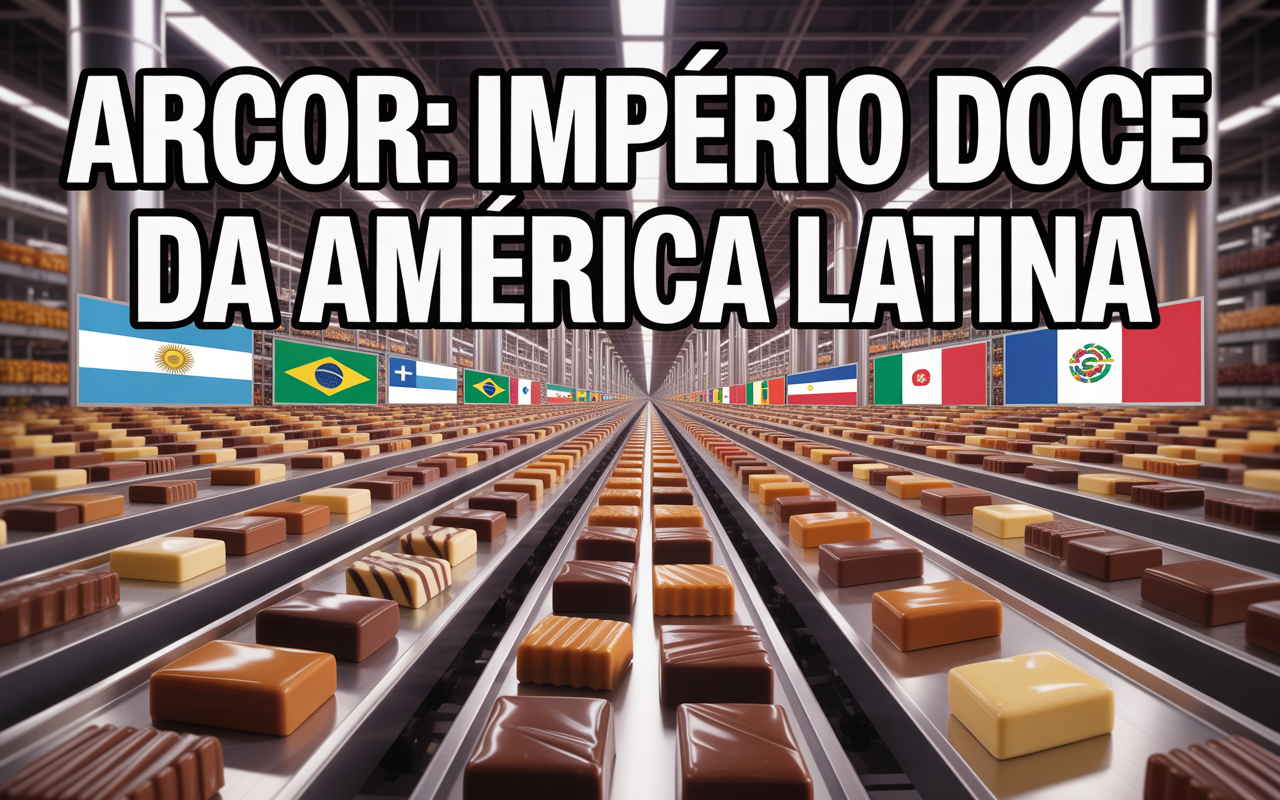


With 47 Factories in Five Countries, Arcor Produces 1 Million Tons per Year and Is One of the Largest Candy and Chocolate Manufacturers in the World.
The history of Arcor is one of the greatest examples of how a Latin American company managed to transform artisan tradition into global industrial scale. Founded in 1951 in the city of Arroyito, province of Córdoba, Argentina, the company started as a small candy factory and, in seven decades, became one of the largest food industries in the world, with a presence in more than 120 countries and annual revenue exceeding US$ 3 billion.
Today, the Arcor group operates 47 factories spread across five countries: 37 in Argentina, 5 in Brazil, 3 in Chile, 1 in Mexico, and 1 in Peru, producing an impressive variety of products that includes candies, chocolates, biscuits, sauces, pasta, juices, and plastic packaging. The conglomerate is responsible for over 1 million tons of processed food per year, establishing itself as the largest multinational food company of Argentine capital and one of the ten largest candy producers in the world, alongside giants like Ferrero, Mondelez, and Mars.
The Factory That Became an Empire
Expansion began in the 1960s when Arcor started investing in automation and technology to increase its production scale. In 1968, it became the first candy exporter from Argentina, and in the following decades began to internationalize, building factories in Brazil and Chile, strategic markets due to their population size and high demand for confectionery products.
-
15-Year-Old Entrepreneur Malu Lira Publishes 20 Children’s Books on Financial Education, Earns $500,000, and Expands Her Project to the Amazon Rainforest

-
Entrepreneur Turns Rio Cemetery Canteen into a Successful Snack Chain Generating $4.9 Million Annually and Expanding to Metro Stations

-
Rare fox feared “extinct” found alive on Caribbean island after over two decades without official sightings

-
21-Year-Old Brazilian Student Turns Homemade Popsicle Hobby into $100,000-a-Month Business




Today, Arcor’s industrial complex in Arroyito is considered the largest candy hub in Latin America, with a structure that occupies more than 200,000 m² and operates 24 hours a day.
From there, around 600,000 tons annually of candies, chocolates, chewing gum, and biscuits are produced, supplying both the Argentine internal market and exports to Europe, Asia, and North America.
A Diversified Giant
Arcor is not just a candy brand. The group has diversified its operations into several branches:
- Food: with brands like La Campagnola and Noel, it manufactures sauces, canned goods, pasta, and ready-to-eat products.
- Biscuits and Chocolates: lines such as Bon o Bon, Tubi Tubi, Butter Toffees, and Rocklets are among the most popular in South America.
- Packaging and Plastics: with the Cartocor division, it produces cardboard materials and recyclable packaging that supplies both the group and other multinationals.
This integrated structure makes Arcor a vertically integrated company, capable of controlling all stages — from raw material production to final packaging — ensuring competitiveness and independence from the external market.
The Presence of Brazil and Regional Strength
In Brazil, Arcor opened its first factory in 1981, in Bragança Paulista (SP). Since then, the country has become one of the pillars of the Latin American operation, with units also in Campinas (SP), Contagem (MG), Porto Alegre (RS), and Rio das Pedras (SP).
Together, these factories produce hundreds of millions of units per month of chocolates, candies, biscuits, and chocolates, catering to both the internal market and neighboring countries.
Additionally, Brazil houses one of the main logistics centers of the group outside Argentina, responsible for exports to more than 30 countries. This structure has consolidated the country as the second largest industrial hub of Arcor in the world, surpassed only by the Argentine headquarters.
Arcor – A Silent Power
Despite its family origins, Arcor has transformed into a global empire without losing national control. The group remains of Argentine capital and employs over 20,000 people directly, with a chain that supports hundreds of small and medium supplier companies throughout South America.
According to the consulting firm Statista and the Candy Industry Global 100 ranking, Arcor ranks 7th among the largest candy and confectionery companies in the world, surpassing traditional European brands in production volume. In addition to candies and chocolates, the company is one of the largest exporters of food products in Latin America, with 30% of its production aimed at international markets.
A Symbol of Latin American Industry
The success of Arcor lies not only in the numbers but in its ability to unite technological innovation, logistical efficiency, and regional identity.
While competitors outsource production stages, the group relies on maintaining manufacturing close to consumption centers, strengthening local economies and creating industrial hubs in countries like Argentina, Brazil, and Chile.
The result is a network of interconnected factories that operate as a single continental system, capable of processing millions of kilograms of sugar, cocoa, and derivatives every month — transforming Latin America into one of the world’s major centers for candies and chocolates.
More than just a company, Arcor is a portrait of a region that, even far from the traditional poles of Europe and the United States, has learned to compete on a global scale.