





 Portuguese
  English
  Spanish
  5 min of reading
  0 comments


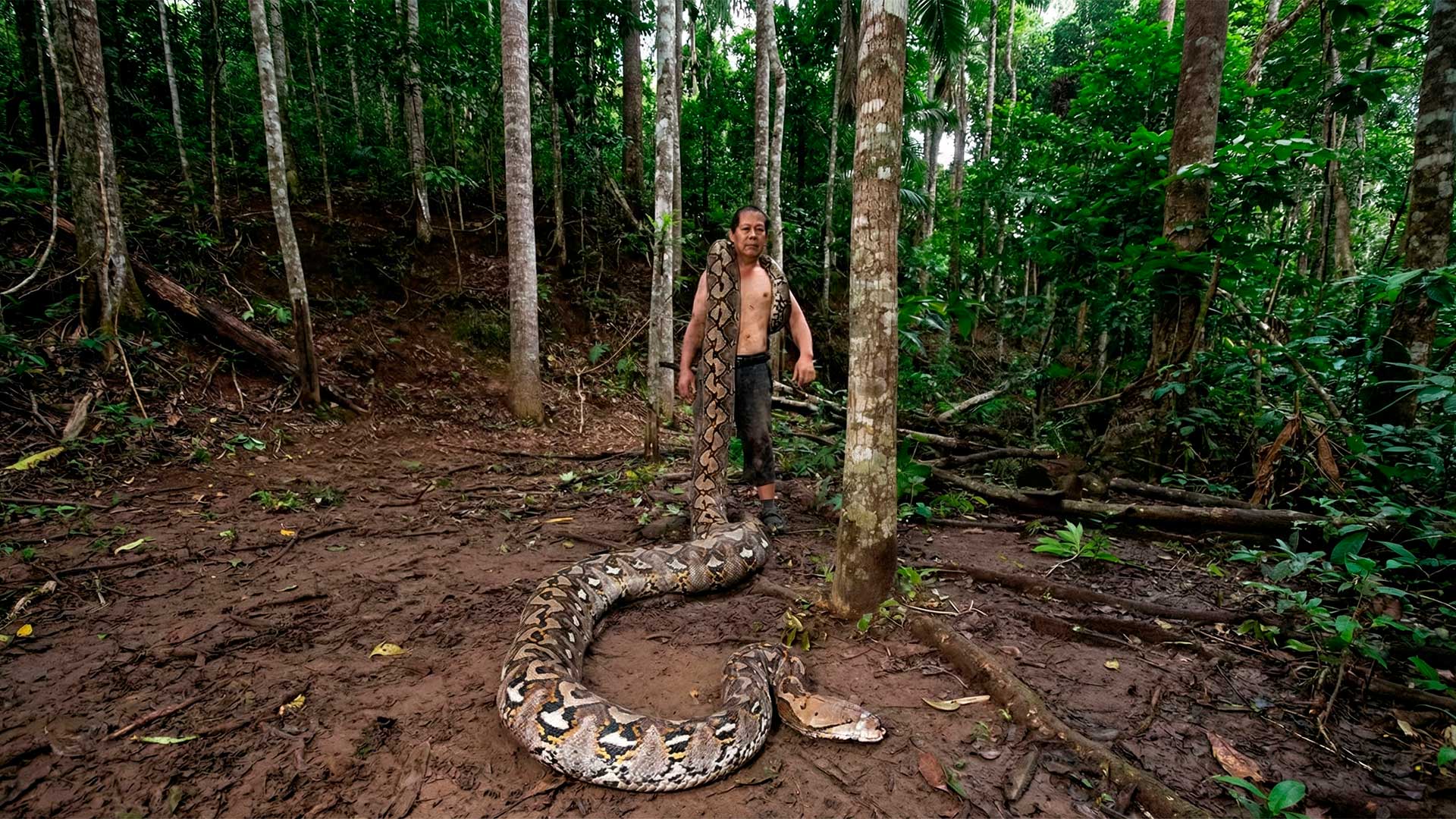
Named “Ibu Baron”, the Reticulated Python Found in Sulawesi Measures 7.22 Meters and Weighs Nearly 100 Kg, Surpassing All Previous Records
An extraordinary discovery on the island of Sulawesi, Indonesia, has just redefined the limits of what we know about giant snakes. A female reticulated python has been officially recognized by the Guinness World Records as the longest wild snake ever recorded in the world, measuring an impressive 7.22 meters in length. The animal, named “Ibu Baron” (The Baroness), was found in late 2025 and officially measured on January 18, 2026.
The confirmation of the record happened after a rigorous documentation process. The specimen identified as Malayopython reticulatus was assessed by wildlife guide and rescuer Diaz Nugraha, along with nature explorer and photographer Radu Frentiu, who traveled specifically to the Maros region to verify reports of a colossal snake.
To size the impressive length of the animal, the distance from the head to the tip of the tail is equivalent to the width of an official FIFA goal or more than six shopping carts lined up. The recorded weight was 96.5 kilograms, comparable to that of an adult giant panda.
-
For around 200 reais, anyone can buy a kit and have a chip implanted between their fingers to replace cards, keys, badges, and even medical information in case of a hospital emergency.

-
A 600-meter hill in the interior of Santa Catarina hides a volcanic past of almost 600 million years. The Morro do Garrafão in Corupá may have been an ancient extinct volcano, and science now confirms what the residents have always suspected.
-
Family has lived for over 50 years without electricity and running water at home in the South of Minas, 10 minutes from the city, improvising light, bath, and water while facing a lack of basic resources and awaiting property regularization.

-
Children from the 1980s and 1990s who spent hours playing in the street until dark naturally developed spatial intelligence, which today has become the subject of expensive courses, cognitive training, and modern methods of child and adult learning.





Largest Documented Wild Snake Surpasses Previous Records
This is not humanity’s first encounter with gigantic reticulated pythons. The previous scientific record of a wild reticulated python measured 6.95 meters and was documented in 1999 in East Kalimantan, Borneo. However, “Ibu Baron” surpassed this record by an impressive 27 centimeters.
According to information from the Guinness World Records, there are historical reports of even larger snakes. However, many do not have formal verification through the rigorous process of measurement and documentation that Ibu Baron underwent, which guaranteed her official recognition.
It is worth noting that the length of the python could be even greater. According to the Guinness, under anesthesia, when the body fully relaxes, the size could be up to 10% larger, reaching nearly 8 meters. However, this procedure is only recommended for medical or safety reasons and was not performed.
Impressive Characteristics of the Reticulated Python

The reticulated python is naturally one of the largest snakes on the planet. Generally, the species measures between 3 and 6 meters, with females being larger than males. Although not venomous, these snakes are extremely efficient predators, using the enormous strength of their muscles to hunt.
“Every muscle of this snake is a powerhouse, and it seems to work individually”, explains Radu Frentiu, one of the experts responsible for the animal’s analysis. According to him, what impresses the most is the python’s strength, along with its ability to expand its body when swallowing massive prey, reaching sizes comparable to a cow.
The hunting method of these snakes is constriction. Contrary to what many believe, constriction does not kill by suffocation, but rather by interrupting the blood flow necessary for vital organs like the heart and brain, causing a quick death of the prey. Reticulated pythons can feed on large mammals, including wild boar, deer, and buffalo.
Rescue and Conservation of Ibu Baron
The story of “Ibu Baron” could have had a tragic ending. The animal was rescued in December 2025 by local conservationist Budi Purwanto to prevent it from being harmed or killed. Currently, the gigantic python is under his care in a spacious enclosure in Maros Regency, where other rescued snakes also reside.
Purwanto’s initiative reflects a growing concern for the species’ survival. According to experts, in recent years the number of dead pythons in Indonesia has increased because the population views them as a danger to domestic animals, livestock, and humans, especially children.
Growing Threats to Reticulated Pythons in Indonesia
The increase in encounters between giant pythons and human populations is no coincidence. Deforestation in Indonesia for palm oil extraction and other commercial activities has surpassed Brazilian rates, according to a study published by Nature Climate Change in 2012.
The loss of habitat is devastating for these snakes. According to Diaz Nugraha, a wildlife guide who participated in the documentation of Ibu Baron, the pythons’ habitats are being reduced, and the availability of natural food, such as wild pigs and buffalo, is decreasing due to illegal hunting. This forces the snakes to come into contact with people more frequently.
In addition to habitat destruction, another threat to reticulated pythons is the trafficking of wildlife to meet the demand for exotic pets. The species is also hunted for its skin, used in the leather goods industry.
Tourism and Conservation as a Solution to Protect the Species
Conservationists involved in the discovery of Ibu Baron believe that this world record can be used as a conservation tool. For them, promoting the exceptional size of this python is a way to raise awareness for the species and inspire new environmental protection policies.
“Our hope is that pythons and other giant snakes stop being seen as pests and start being considered a symbol of the islands and essential animals for the ecosystem,” emphasizes Radu Frentiu. According to the explorer, they can become a treasure of the local fauna, generating tourism and encouraging reptile observation expeditions, creating income for the local population.
The proposal is that ecotourism focused on observing pythons can bring economic benefits to local communities while raising awareness about the ecological importance of these snakes. Pythons play a fundamental role in controlling rodent populations and other animals, maintaining the balance of ecosystems.
And you, do you believe that giant snakes like the reticulated python should be protected or represent a real threat to rural communities? Is ecotourism truly the solution to ensure the survival of these impressive species? Share your opinion in the comments and join this debate about conservation and safety!









-

1 person reacted to this.