Portuguese
  Spanish


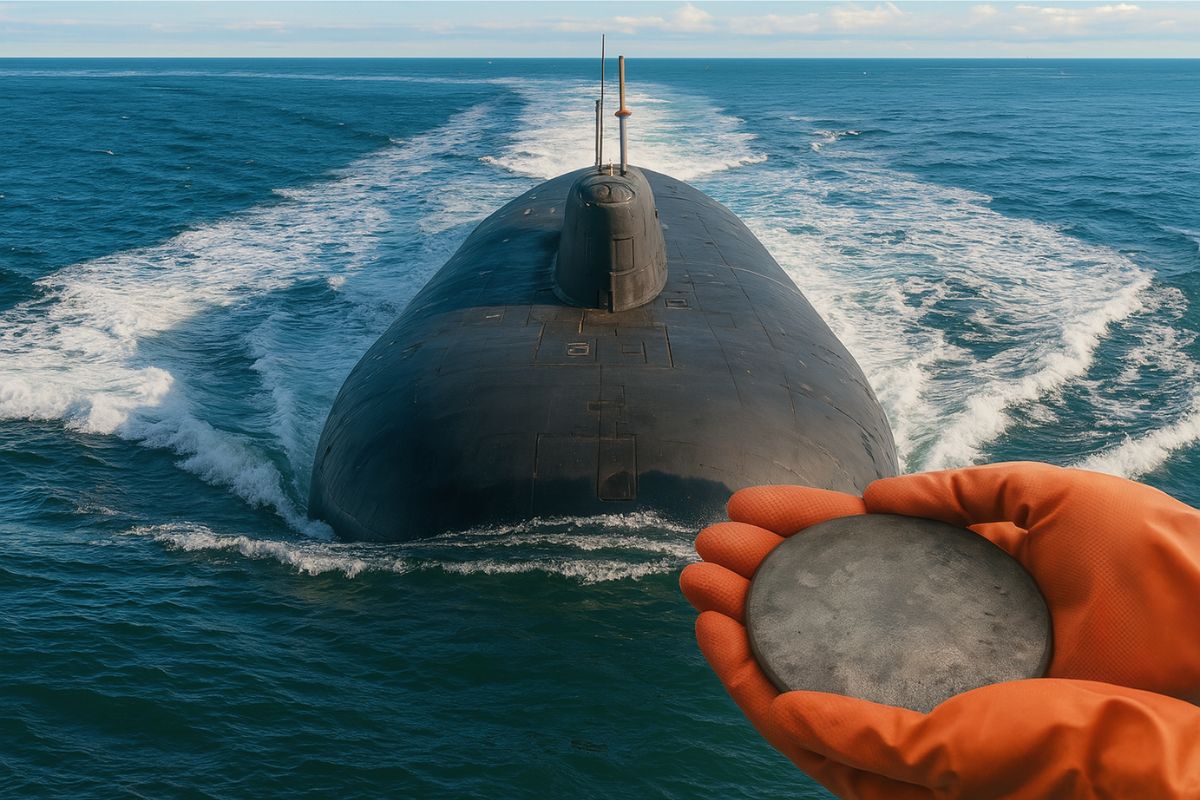


With Compact And Highly Efficient Reactors, These Vessels Represent The Pinnacle Of Military Engineering And Modern Strategic Deterrence
With just a few kilograms of uranium-235 enriched to 90%, a nuclear submarine can operate for 20 to 30 years without needing a single refueling. It sounds like science fiction, but this is the reality of one of the most powerful machines ever built by humankind.
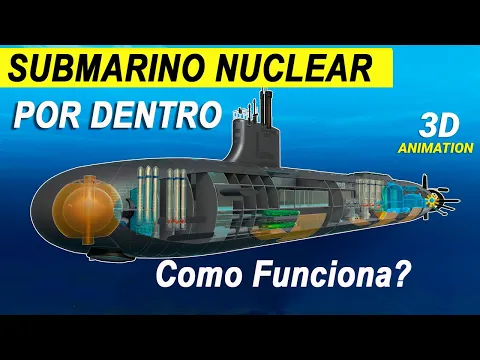
While most vehicles rely on constant fuel, nuclear submarines carry within them a reactor as compact as a small room, yet capable of producing enough energy to keep the entire structure functioning for decades. We are talking about an atomic core that generates approximately 24 million kWh per kilogram of fuel, enough to power an entire city for months. And all of this, hidden beneath the ocean waters.
The Invisible Heart Of These Machines
What powers a nuclear submarine is not just the engine, but the reactor – silent, hidden, and incredibly efficient. Inside it, highly enriched uranium undergoes a controlled fission process. Each split atom releases an immense amount of thermal energy, which heats the water and generates steam. This steam drives turbines connected to generators and propulsion systems.
-
Stingless Bee Honey from Brazil Can Cost Up to $120 a Liter, Surprises with Flavors of Wood, Citrus, and Even Cheese

-
Woman Claims to Have Spotted a Technical Pattern in Recent FIFA Tournaments, Predicts Possible World Cup Winner
-
Chevrolet Offers Chance to Win a 2026 Sonic RS for Free via WhatsApp
-
Earthquake vs. Tsunami: Which Causes More Destruction and Why One Can Be Even More Dangerous


Everything happens in a closed system, protected by layers of steel and lead. Outside, no sound betrays the presence of that giant. And it is precisely this silence that makes the nuclear submarine one of the deadliest weapons on the planet: it can spend months, or even years, submerged, traveling thousands of kilometers without being detected.

An Invisible Force Capable Of Changing The Course Of A War
In practice, this means that a country with nuclear submarines can monitor strategic areas of the planet without anyone noticing. They cross continents, watch over enemy coasts, and in the case of ballistic submarines (SSBN), they also carry intercontinental nuclear missiles ready to launch. These missiles, hidden in the depths of the ocean, are an essential part of the so-called “nuclear triad,” alongside land silos and air bombers.
No other weapon offers such autonomy, stealth, and deterrent power at the same time. A diesel-powered submarine needs to surface frequently to refuel and renew the crew’s oxygen. Nuclear submarines can literally disappear into the ocean and only return when they wish. For this reason, they are considered the last line of defense — or the first silent strike, depending on the strategy.
Engineering From Another World
Installing a functional nuclear reactor inside a submerged vessel is one of the greatest achievements of modern engineering. These reactors are smaller than those used in land-based power plants, but they require a higher level of safety and precision. Any failure can be catastrophic on board.
The uranium used in these reactors generally has a very high enrichment level — something that is typically only found in nuclear weapons. This ensures greater energy density and less need for refueling. The lifespan of the fuel can exceed 25 years without external maintenance, meaning uninterrupted missions for decades.
Despite this, the system is considered extremely safe. Most modern naval reactors have multiple containment systems, automation, and redundant cooling. Additionally, the entire structure of the submarine is designed to withstand the pressure at the ocean floor, impacts, and even enemy attacks.
Who Has Access To This Technology?
Currently, only six countries operate nuclear submarines: the United States, Russia, China, the United Kingdom, France, and India. All of them are part of the select group that masters both uranium enrichment and high-level military shipbuilding. And this power does not come cheap.
A Virginia-class submarine from the United States costs over US$ 3 billion. Meanwhile, Russia’s Borei class has an estimated cost of US$ 1.7 billion per unit. But this investment pays off in terms of geopolitical presence, military deterrence, and global strike capability.
Brazil is also approaching this exclusive club. With the Álvaro Alberto submarine project, part of the ProSub program, the country is preparing to launch its first nuclear submarine this decade. If successfully completed, it will be the first nation in South America to operate a vessel with this level of autonomy and power.
The Perfect Machine For Modern Warfare
When we look to the future of conflict, all signs indicate that silent warfare will become increasingly important. Drones, hypersonic missiles, and artificial intelligence share the spotlight, but nuclear submarines remain the hardest pieces to detect and neutralize.
Imagine a ship that can hide at the bottom of the sea for years, capable of destroying a city thousands of kilometers away with a single command — and then disappear without a trace. That is what a nuclear submarine represents.
It is not an exaggeration to say that they are the cold, calculating face of contemporary military power. Invisible, constant, and lethal.