





 Portuguese
  English
  Spanish
  5 min of reading
  1 comment


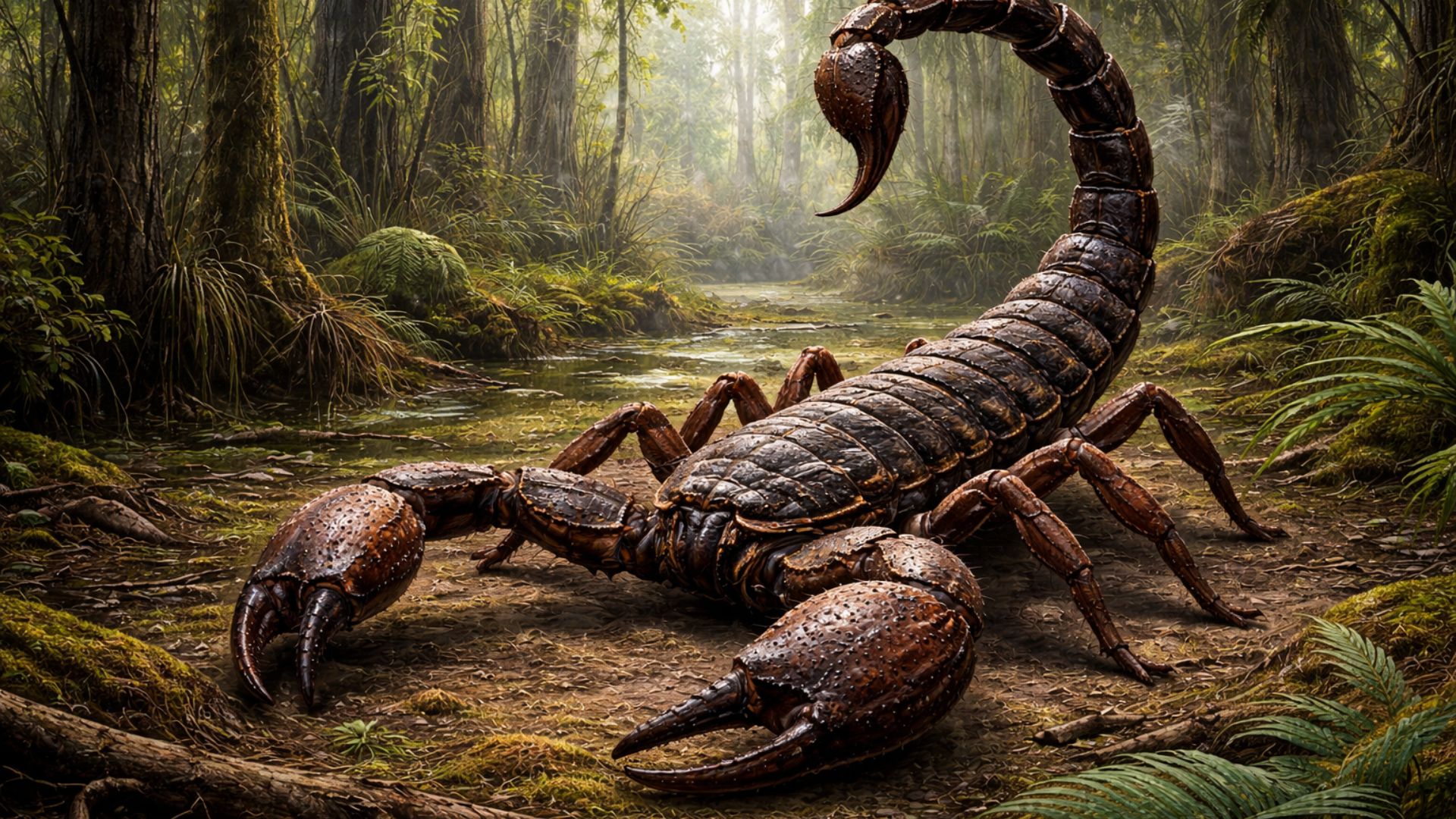


Prehistoric Scorpion Associated With the Carboniferous Grabbed the Attention of Science Due to Unusual Dimensions, Fossils Preserved in Scotland and Connection With a Period Characterized by High Levels of Oxygen and Arthropods Much Larger Than the Current.
A scorpion associated with the Carboniferous period in Scotland is cited in scientific literature as one of the largest ever identified in the fossil record among terrestrial arachnids.
This is Pulmonoscorpius kirktonensis, described from fossils found at the East Kirkton site in the area that today corresponds to West Lothian.
In scientific and outreach materials, the animal is often presented with length estimates that can reach around 70 centimeters, a value used as a reference to illustrate its unusual scale compared to modern scorpions.
-
A hospital in the United States freezes 280,000 liters of water overnight, stores it in 27 tanks, and uses the ice the next day to cool surgical rooms without relying solely on air conditioning.

-
Mr. Gerardo built replicas of airplanes with his own hands in Porto Velho, caught the attention of Embraer, and turned the Casa Avião into a tourist attraction for aviation enthusiasts.

-
A bricklayer was clearing debris from a destroyed house in Syria to rebuild the property when he found a 1,500-year-old underground tomb with a cross, burial chambers, and stone graves hidden beneath the floor.
-
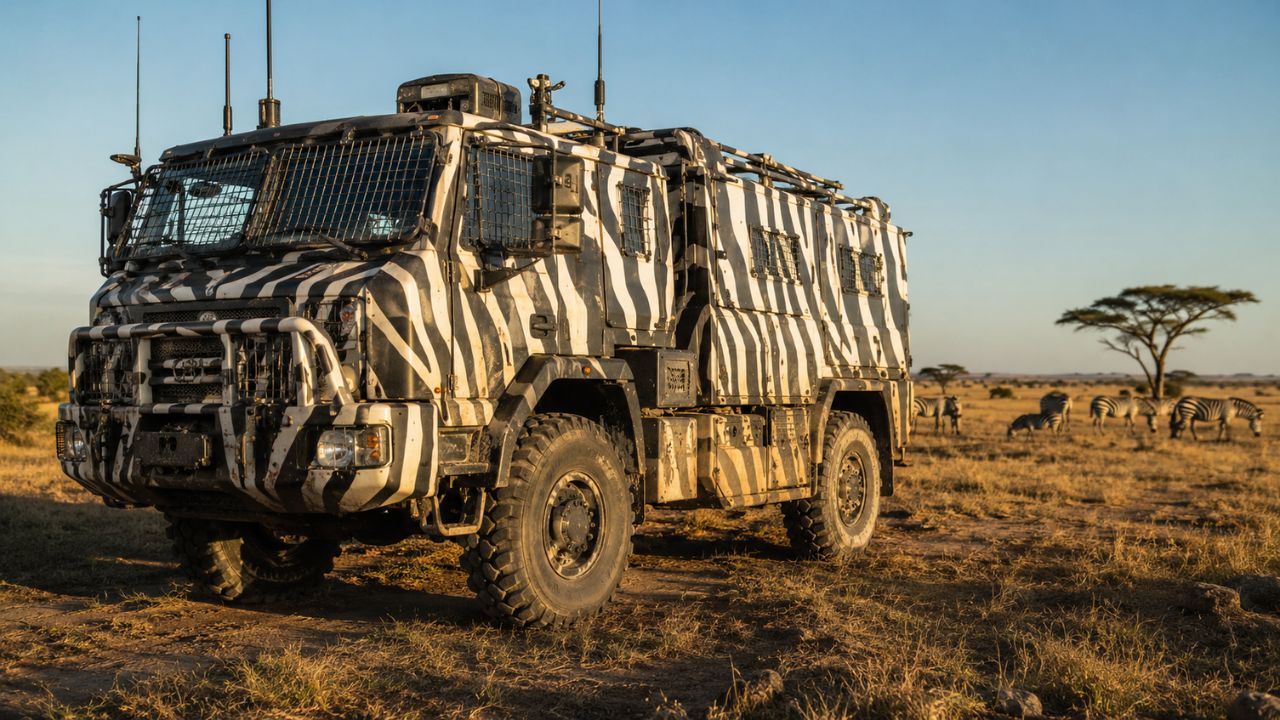
Russia paints trucks with zebra stripes to confuse Ukrainian drones powered by artificial intelligence, surprising experts by using a technique created in 1917; learn about zebra camouflage.





How The Fossils Indicate the Size of Pulmonoscorpius
The dimensions attributed to Pulmonoscorpius appear in studies that analyze both relatively well-preserved specimens and fossil fragments.
Research indicates the existence of an almost complete specimen with a body length close to 30 centimeters, as well as other materials that allow for inferring larger individuals.
Experts highlight that, in fossil scorpions, estimates vary according to the criteria adopted, as body, tail, and pincers may be preserved unevenly, which influences the calculation of total size.
Respiratory Structures and Adaptation to Terrestrial Environment
The genus Pulmonoscorpius is considered relevant for presenting clear evidence of respiratory structures known as book lungs, similar to those found in modern scorpions and other arachnids.

According to descriptions published in scientific reviews, this characteristic indicates that it was a fully terrestrial animal adapted to air respiration.
The presence of these lungs is cited as an important data point for understanding the evolution of modern scorpions.
Giant Arthropods and The Context of the Carboniferous Period
The existence of a scorpion of this size in the Carboniferous is not treated as an isolated case by researchers.
The period, which lasted approximately between 359 and 299 million years ago, is known for presenting a diversity of arthropods with dimensions much larger than those observed today.
Insects, myriapods, and giant arachnids frequently appear in the fossil record from this era, which led the scientific community to investigate the environmental conditions that could have favored this pattern.
Elevated Oxygen and Biological Limits of Arthropods
Among the most discussed factors is the composition of the atmosphere.
Scientific institutions and reference museums indicate that, during parts of the Carboniferous, atmospheric oxygen levels were significantly higher than today, possibly reaching values close to 30% to 35%.
This scenario is cited in specialized publications as a favorable context for large arthropods, as these animals depend heavily on direct diffusion of oxygen to their tissues.
Physiology and Body Size in Insects and Arachnids
Studies on the physiology of arthropods point out that the way these animals breathe imposes limits on body size.

In the case of insects and arachnids, oxygen needs to reach internal regions without the aid of a dedicated circulatory system for gas transport, as occurs in vertebrates.
According to analyses published by scientific academies and specialized journals, greater availability of oxygen in the environment may reduce these limitations, allowing larger bodies without compromising metabolism.
Other Environmental Factors Involved in Gigantism
Researchers emphasize, however, that oxygen should not be seen as the only involved factor.
Academic works highlight that the gigantism of the Carboniferous likely resulted from the combination of several elements, including a warm and humid climate, extensive swampy forests, and distinct ecological networks from the current ones.
This combination of conditions would have created a favorable interval for the expansion of body size in different groups of arthropods.
Scientific Importance of Pulmonoscorpius
In the specific case of Pulmonoscorpius, confirmed information indicates that it lived in terrestrial environments associated with the ecosystems of the Lower Carboniferous.
The animal is cited in systematic reviews as an example of an ancient scorpion that already possessed anatomical characteristics comparable to modern forms, while simultaneously reaching much larger proportions.
For this reason, it frequently appears in studies about the origin and diversification of scorpions.
Comparisons Used in Scientific Outreach
Scientific outreach often resorts to comparisons with domestic animals to facilitate public understanding, describing Pulmonoscorpius as a scorpion with a size similar to that of a cat.
Experts note that this type of analogy serves an illustrative function and does not replace technical description, which depends on the state of preservation of the fossils and the criteria adopted in measurements.

Limitations of the Fossil Record and Scientific Reviews
Another point emphasized by researchers is the caution required when dealing with incomplete fossils.
Reviews on the systematics of fossil scorpions highlight that many genera were described from fragmentary material, which requires periodic reviews as new specimens are found or reinterpreted.
This process explains why different studies may present variations in size estimates and anatomical reconstructions.
Contrast With Current Scorpions
The presence of giant scorpions in the Carboniferous helps to contextualize a period in which the biological limits observed today were different.
For Brazilian readers, accustomed to associating scorpions with species of a few centimeters, the record of an animal of this size grabs attention by contrasting with the current fauna.
This contrast, according to paleontology experts, reinforces the importance of the fossil record to understand how environmental changes shape biodiversity over time.






Tem fundamento esta informação pois até hoje existe lacraias com tamanhos em centímetros muito grandes para esta época.