






 Portuguese
  Spanish
  4 min of reading
  7 comments


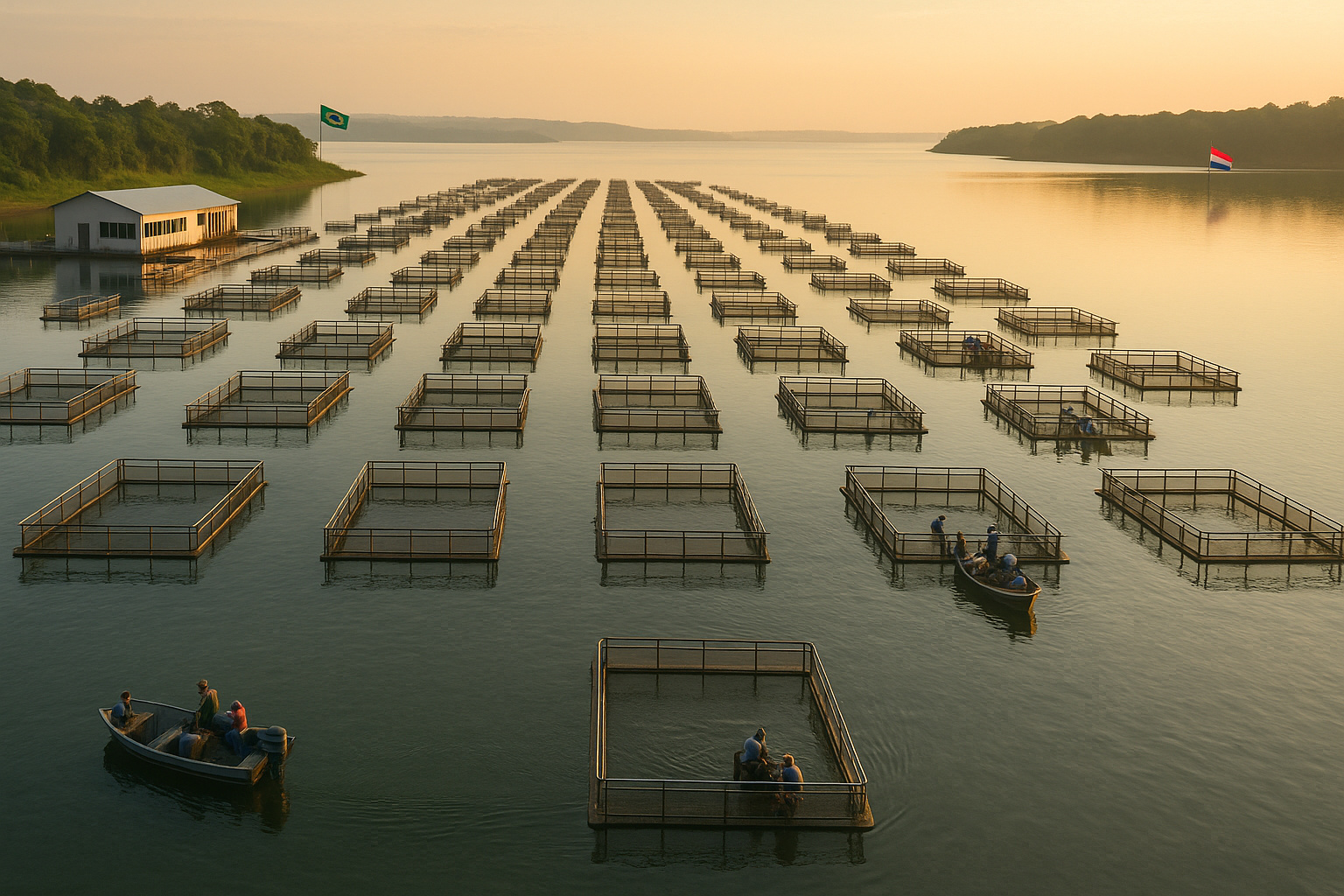


Historic Decision of the Paraguayan Senate Unlocks Binational Agreement, Projects Productive Integration and Could Place the Region Among the Five Largest Global Exporters of Fish
After decades of waiting, the change in Paraguayan legislation that authorizes the tilapia production in the Itaipu Lake has finally become a reality. The approval occurred on Wednesday, December 10, during an extraordinary session of the Paraguayan Senate, ending a historic impasse that limited the economic utilization of the reservoir shared with Brazil. The decision is seen as a milestone for South American aquaculture and for productive integration between the two countries.
The information was released by specialized channels in the aquaculture sector and confirmed at international technical events, such as the IFC Brazil, which has been following the debate on the release of fish farming in large artificial lakes for years. With the authorization approved by the Paraguayan Parliament, the way is opened for the formalization of a binational agreement between Brazil and Paraguay, allowing tilapia to be produced on a large scale in one of the largest reservoirs on the planet.
Moreover, technical data from the ANA (National Water Agency) indicate that Itaipu Lake has an estimated productive capacity of up to 400 thousand tons of fish, a figure that places the reservoir in a strategic position in the global aquaculture scenario. Until now, this potential remained underutilized on the Paraguayan side due to legal hurdles that have now been overcome.
-
In Matopiba, soybeans have replaced rice and beans, and traditional Cerrado communities that used to grow their own food now have to buy it, while pesticides from neighboring farms reach the springs.

-
Foreign tree planted to combat drought invades more than 1 million hectares of the Caatinga, encroaches on riparian forests, and turns an old solution for the semi-arid region into a silent threat to biodiversity.

-
Invasive weed that withstands extreme heat advances with climate change, threatens crops on several continents, and raises a global alert about a silent plant capable of dominating soils, suffocating native species, and reshaping entire ecosystems.
-
While other coffees escape the American tariff hike, Brazilian instant coffee is excluded, raising an alert in the sector and may become up to 37.5% more expensive in the United States.



Expectation Announced at IFC Brazil Is Confirmed and Strengthens Regional Integration
Even before the official approval, the expectation had already been publicly signaled. During the seventh edition of IFC Brazil, held on September 2, the Brazilian director-general of Itaipu Binacional, Enio Verri, anticipated that the release of tilapias in the lake was close to being realized. At that time, the statement generated strong repercussions among producers, investors, and representatives of local governments.
A few months later, the confirmation came with the vote in the Paraguayan Senate. From now on, the process advances towards constructing an integrated production model, respecting environmental, technical, and economic criteria. According to Enio Verri, the decision represents a unique opportunity for regional development, especially considering that Itaipu Lake is about 170 kilometers long, significantly increasing the possible production scale.
Binational studies indicate that, with appropriate regulation, Paraguay could become one of the five largest global exporters of tilapia, boosting investments, attracting new technologies, stimulating local industrialization, and expanding the generation of direct and indirect jobs. Thus, the impact goes beyond primary production, reaching the entire fish supply chain.
Decades of Work Culminate in a Historic Milestone for Aquaculture
For Altemir Gregolin, president of IFC Brazil and former Minister of Fisheries, the approval of the legislative change in Paraguay represents the consolidation of work that began decades ago. According to him, the decision crowns a historic effort to transform Itaipu into an international reference in sustainable aquaculture.
Gregolin recalls that, on March 20, 2008, when he held the position of Minister of Fisheries, the first Water Grant of the Union in the history of Brazil was granted in the Itaipu reservoir. This milestone later resulted in a bill that established the National Aquaculture Day, reinforcing the strategic importance of the sector. Since then, the release on the Paraguayan side was awaited as a decisive step.
With the new decision, according to the former minister, Itaipu has the potential to become one of the largest tilapia production hubs in Brazil and South America, strengthening regional prominence in the global fish market and consolidating aquaculture as a central activity of the so-called Blue Economy.
Brazil–Paraguay Cooperation Could Create One of the Largest Global Tilapia Hubs
The approval was also celebrated by leaders who have been following the topic since the early editions of IFC Brazil. Eliana Panty, director of the event, highlighted that since 2019, the sector had been provoking debates about production models in large-scale artificial lakes, and that the decision of the Paraguayan Senate represents a concrete advance to be celebrated.
The topic was further explored in the panel “Public Policies for Aquaculture Development”, held on September 4, with participation from authorities of both countries. Deputy María Rocío Abed de Zacarias, author of the legislative change proposal in the Paraguayan Congress, stated that the decision represents “a concrete step towards binational integration,” allowing the sharing of technical knowledge, investments, and access to new international markets.
Along the same lines, Carlos Carboni, Coordination Director at Itaipu Binacional, emphasized that the new Paraguayan legislation, combined with the existing structure on the Brazilian side, creates ideal conditions for establishing a sustainable, competitive, and integrated production hub. According to him, Itaipu reinforces its vocation as a platform for regional development, going beyond energy generation and directly reaching job creation, income, and productive inclusion.
With the approved regulation and the binational agreement underway, Itaipu Lake is now seen as one of the largest tilapia production hubs in the world, inaugurating a new cycle of economic opportunities, sustainability, and regional integration between Brazil and Paraguay.
In your opinion, does Itaipu Lake have the potential to become one of the largest global fish production hubs?





SERÁ QUE O GOVERNO ENTREGARA NA MÃO DOS BATISTAS?
Essas tilapias serão criadas presas em tanque redes, para evitar fuga, maior controle Sanitário, economia de ração, facilidade de manejo. Brasil já tem grandes produtores, e vai impulsionar ainda mais, o que falta é tornar o pescado mais barato pois hoje chega a custar mais que carne de ****. Por isso importação da Friboi do Vietna tem causado discussão, talvez force a abaixarem preços ao consumidores
Acredito que tenha havido um estudo de impacto ambiental mesmo porque a água do lago, após a geração de energia, continua servindo a diversas comunidades e não pode estar poluída com ração de peixe ou outros produtos químicos…