Portuguese
  Spanish



Petrobras Pipeline Saturation Expected by Mid-Next Decade, and Liquefaction Vessels (FLNGs) Could Be an Alternative
The supply of gas and the recent changes in natural gas legislation continue to drive the entire productive chain of the sector, and Petrobras declared through its executive manager of natural gas, Rodrigo Costa Lima e Silva, that the company is studying the use of cabotage as a way to bring its production from the pre-salt to the coast.
In August of this year, Click Oil and Gas reported that Golar Power, which is building a gas terminal in Sergipe, intends to build vessels to transport its liquefied natural gas (LNG).
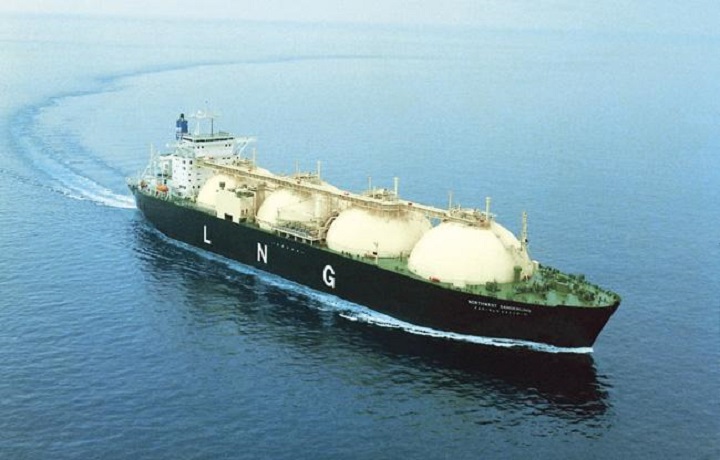
The use of liquefaction vessels (FLNGs) would be an excellent alternative to maritime pipelines and also present the option of enabling product exports.
-
Real Estate Agent Buys Marvel Movie Subway Car for $5,000 and Converts It into Themed Airbnb
-
Real Estate Agent Buys Marvel Movie Subway Car for $5,000 and Converts It into Themed Airbnb
-
Former Roma and Fiorentina Player Filipe Gomes Returns to Brazil to Found Empório do Galeto, Aiming for $10 Million Revenue by 2026
-
Canada Builds 6.2-Hectare Containment Box to Trap 615,000 Cubic Meters of Toxic Sediment in Lake Ontario


This measure is being studied by Petrobras considering the expected saturation by mid-next decade due to the increase in natural gas supply, especially after the discovery in the Sergipe Alagoas basin.
The company manager explained that liquefaction vessels are an option to supply gas-fired thermoelectric plants (both existing and upcoming), as well as to commercially market the product internationally.
The Demand
During the OTC Brazil event held in Rio de Janeiro from October 29 to 31, Lima e Silva stated: “If our projects (exploration in the Campos and Santos Basins) are successful, between 2025 and 2030 we will need new infrastructure: pipelines, processing units, and even an FLNG to provide flexibility. This is because we have volatility in thermoelectric demand, and our outlook is that the gas market will grow through new gas-fired plants. We are studying solutions that fit this situation.”
Petrobras had previously opened bids for hiring an engineering project for a liquefaction vessel, but the project did not move forward due to the high costs at the time (in 2009). However, according to its executive manager, current technology has advanced significantly, “Currently, we see some projects around the world that are doing offshore liquefaction. It is a technology that has advanced a lot, and the market has a greater understanding [of the technology] compared to ten years ago,” he explained.
The Petrobras executive concluded by stating that the company expects to complete the study on the increasing gas supply flow by 2022 and that investments in sector infrastructure will be through partnerships with private companies.
Read Also! Federal Police Identifies Greek Ship Responsible for Oil Spill in the Northeast!