






 Portuguese
  Spanish
  3 min of reading
  5 comments


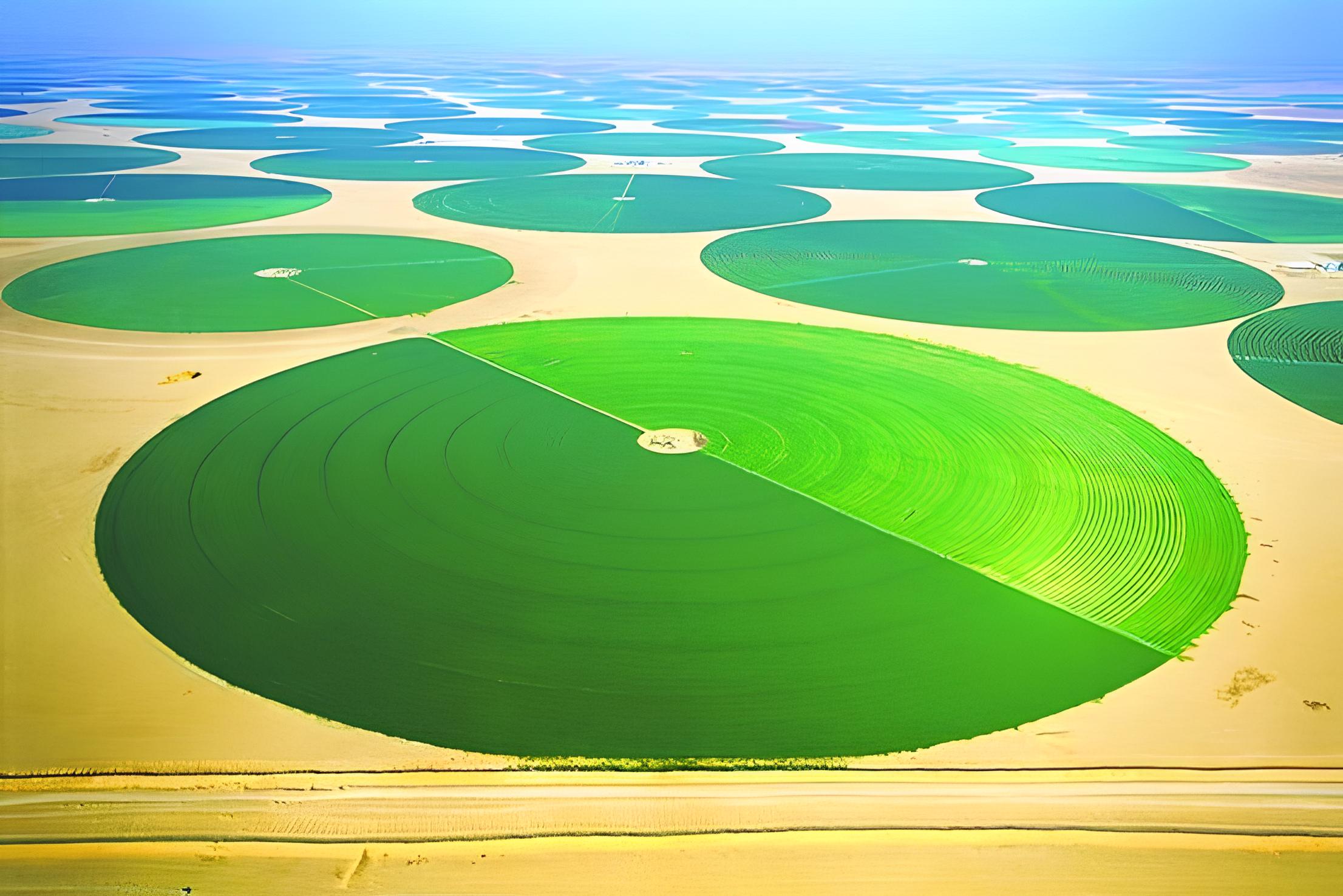


The Saudi Agricultural Pivot Irrigation Program Installed Over 20,000 Pivots in the Desert, Pumped Deep Fossil Water, and Created an Unprecedented Artificial Agricultural Frontier.
What appears today in satellite images as thousands of green circles in the middle of the desert is neither coincidence nor isolated private initiative. It is the Saudi Agricultural Pivot Irrigation Program, a state program launched in the late 1970s and expanded in the 1980s and 1990s as part of Saudi Arabia’s food security strategy.
The goal was straightforward and ambitious: convert oil into food, using technology, energy, and engineering to produce grains on a large scale where nature would never allow conventional agriculture.
Over 20,000 Central Pivots Installed in Hyper-Arid Environment
At the height of the program, the Saudi Agricultural Pivot Irrigation Program installed over 20,000 center pivot irrigation systems, spread across regions such as Al-Qassim, Tabuk, Al-Jawf, and Riyadh Province.
-
After working as a waiter for ten years, he borrowed R$ 500 from his brother, created 40-minute lines with an açaí cart on the street, and today runs a farm with 600,000 trees in Pará and a network worth R$ 45 million.

-
A Brazilian inventor converts a regular motorcycle into an agricultural tricycle with a sprayer, dump body, and mobile workshop with a generator to assist small rural producers without a tractor.
-
The $9.9 trillion agriculture that feeds the 2026 World Cup with hamburgers in Dallas, tacos in Mexico, poutine in Canada, and food for 7 million fans

-
While almost everyone depends on the supermarket, Ângelo, 36, and his aunt Inês, 75, go to the market only to buy salt, coffee, and cleaning products; everything else comes from their own land in Casca, Rio Grande do Sul.

Each pivot had metal arms with up to 800 meters in radius, irrigating circular areas that could exceed 100 hectares per unit. Together, these systems allowed for the creation of millions of hectares artificially irrigated, forming one of the largest technological agricultural landscapes ever seen in desert regions.
Fossil Water: The Invisible Base of the Entire Operation
Unlike traditional agricultural projects, the Saudi Agricultural Pivot Irrigation Program did not use rivers, lakes, or surface reservoirs.
The entire operation depended on pumping deep fossil aquifers, formed tens of thousands of years ago when the climate of the Arabian Peninsula was wetter.
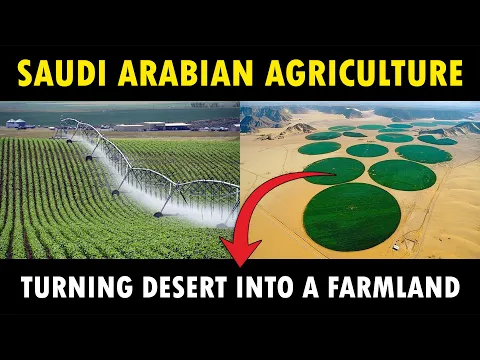

These aquifers, located hundreds of meters deep, are not renewable on a human scale. The water extracted to feed the pivots does not return to the natural system, making each harvest also a process of permanent depletion of the water resource.
Agricultural Engineering Powered by Energy and Government Subsidies
Each center pivot required continuous energy, mechanical maintenance, controlled fertilization, and heavy logistics. The program was only possible thanks to massive government subsidies, cheap energy from oil, and a highly centralized agricultural policy.
At its peak, the project enabled Saudi Arabia to become self-sufficient in wheat and, for a few years, even exporter, something unthinkable for a country with an average annual precipitation of less than 100 mm in much of its territory.
The Physical Limit of the Saudi Agricultural Pivot Irrigation Program
The scale of the project also revealed its biggest problem: fossil water was being consumed much faster than expected. Hydrological studies showed accelerated drops in aquifer levels, making the model unsustainable in the medium and long term.
Starting in the 2000s, the Saudi government initiated a scheduled reduction of domestic grain production, deactivating thousands of pivots and gradually phasing out the Saudi Agricultural Pivot Irrigation Program as a central supply policy.
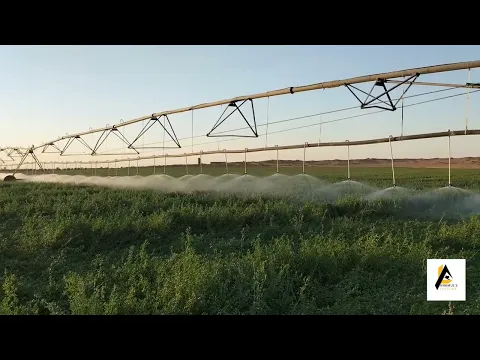
Even with the retreat, the program’s impact remains visible from space. Few projects in history have so clearly demonstrated how far agricultural engineering can go when there are no energy or financial limits and where it inevitably encounters physical limits.
The Saudi Agricultural Pivot Irrigation Program has gone down in history as one of the largest artificial agriculture experiments ever conducted, transforming desert into farmland, fossil water into food, and satellite images into permanent records of human ambition over the territory.






What the hell is fossil water?! It is called ground water in comparison to surface water.
Falou falou e não disse o nome do país kkkk
No artigo diz que é a Arábia Saudita.
Al-Qassim, Tabuk, Al-Jawf e Riyadh Province.
Gostaria de ver sobre isso no globo repórter ou Globo rural enviem está sujestão a eles!