Portuguese
  Spanish


Driven by Pre-Salt, the Country Leads a Productive Expansion That Is Expected to Surpass the Growth Rate of Regions Such as the Middle East and the United States by 2030.
Oil production in South America is on the rise. The region has not only broken historical records but forecasts indicate it will have the fastest growth in the world in the sector. This advancement is primarily driven by projects in the Brazilian pre-salt, Guyana, and Argentina, placing the continent in a new position in the global energy scenario.
The New Epicenter of Global Oil Growth
South America is consolidating itself as the fastest-growing region in oil production. Experts predict a jump of 30% between 2024 and 2030. This pace of expansion surpasses that of the Middle East and the United States.
According to the International Energy Agency (IEA), this boom will compensate for declines in older fields in the region that have already peaked. Consultancy Rystad estimates that South American production will increase from 7.4 million barrels per day to nearly 9.6 million by the end of the decade.
-
Oil production grows in Rio, but reserve replacement raises a warning sign

-
Petrobras is expected to complete the drilling of the Morpho well in the Foz do Amazonas in August 2026, the first well in the Equatorial Margin, an oil frontier that the ANP estimates at more than 30 billion barrels and could redraw the map of Brazil.

-
Oil returns to the center of concerns with tension between the US and Iran

-
IEA reduces forecast for global oil demand in 2026 after impacts of the Middle East crisis


The Three Engines of Expansion: Brazil, Guyana, and Argentina
The regional growth is led by three countries: Brazil, Guyana, and Argentina. They are responsible for driving the numbers, while other nations such as Colombia, Ecuador, and Venezuela face a downturn in fossil fuel production.
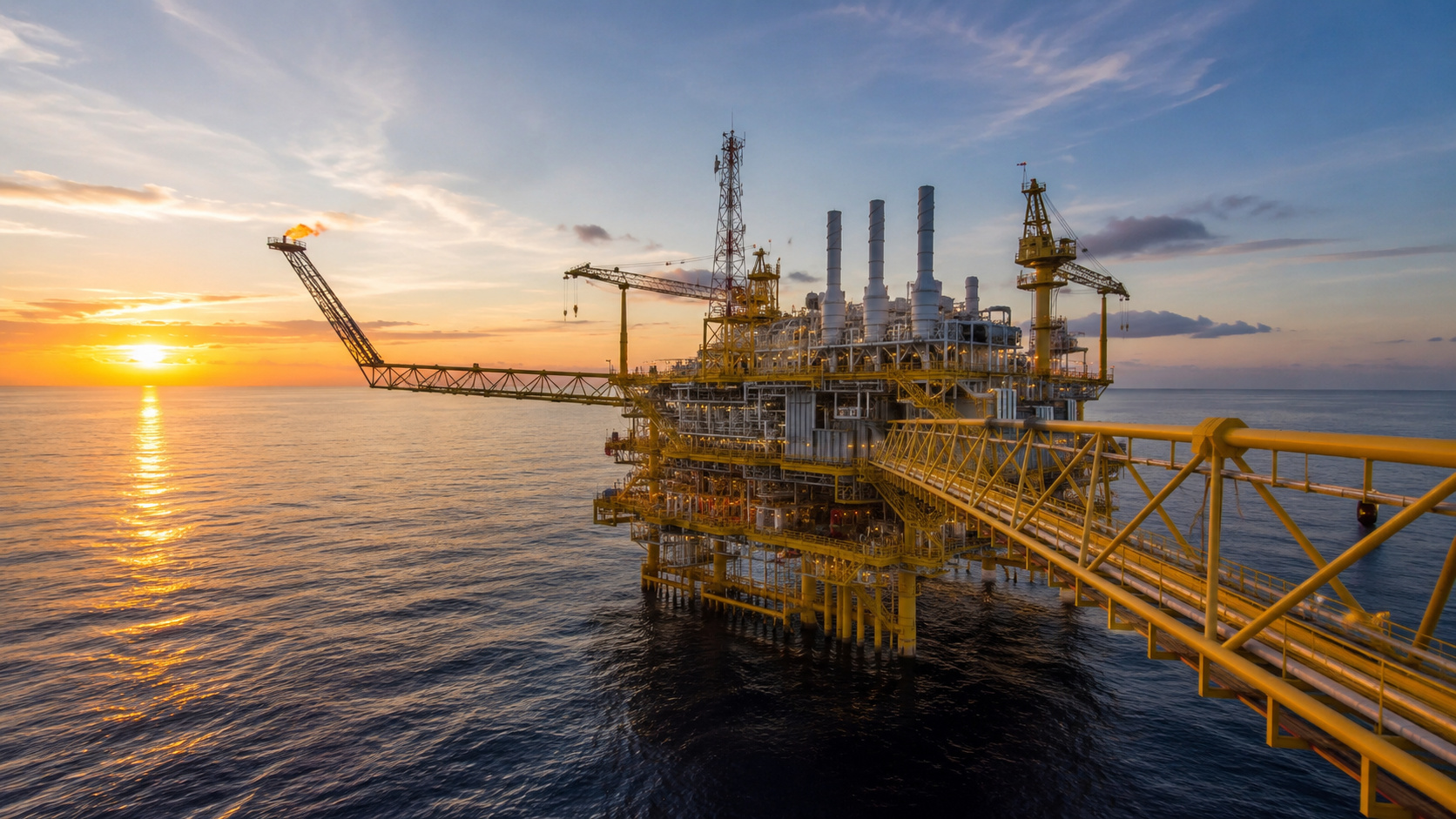
Approximately half of all projected growth will come from offshore reserves. Flávio Menten from Rystad states that “South America is the largest deepwater production region in the world.” This feature attracts major oil companies. The projects combine high productivity with low carbon intensity, an important competitive differential.
How Brazil Leads With Record Production and Investments
Brazil is the largest oil producer in the region and the key player in this expansion. The country set a production record in June, extracting nearly five million barrels per day of oil and natural gas, according to data from ANP.
The main attraction for investments is the pre-salt. This underwater geological formation, with its thick layers of salt, contains oil and gas fields with high productivity. Petrobras, the Brazilian state-owned company, is making significant investments to expand production capacity in strategic fields.
The Major Projects That Drive the Continent
Several large-scale projects support this growth projection.
- In Brazil: Fields such as Búzios, Mero, Sépia, and Atapu are among the largest in deep waters.
- In Guyana: Production in the Stabroek block, operated by a consortium led by ExxonMobil, is expected to double by 2030.
- In Argentina: The Vaca Muerta reserve, focused on shale gas extracted through hydraulic fracturing, could elevate its production to one million barrels per day. However, development depends on infrastructure investments, such as a new pipeline expected by 2026.
The Paradox of the Energy Transition and the Future of Production
This oil boom occurs amid debates about climate change. Scientists and environmental organizations criticize the expansion of fossil fuels and advocate for more investments in clean energy.
President Luiz Inácio Lula da Silva stated that oil revenues are necessary to fund green energy. For him, “it’s from this wealth that we will have money to build the dreamed energy transition.”
Despite the pressures, experts warn of the risk of a global oil shortage by 2030 if new fields do not come online. Without new exploration, dependence on OPEC countries, such as Saudi Arabia, could increase. Therefore, the oil industry continues to view South America as an attractive frontier, where barrels are relatively cheaper to produce than in other parts of the world.