





 Portuguese
  English
  Spanish
  3 min of reading
  0 comments



BNDES, With R$ 500 Million from the Climate Fund, Is Supporting the New Corn Ethanol Plant in Mato Grosso, Which Will Produce 222 Thousand m³ of Ethanol/Year and Generate 300 Direct and Indirect Jobs. See How This Unit Will Transform the Sector
The National Bank for Economic and Social Development (BNDES) approved a financing of R$ 500 million for Alvorada Bioenergia, part of the Alvorada Agricultural Group. The funds, from the Climate Fund, will be allocated to the construction of a corn-based ethanol plant in the municipality of Canarana, Mato Grosso.
The plant, once completed, will have the capacity to produce up to 222 thousand cubic meters of ethanol per year, in addition to 147 thousand tons of dried distillers grains (DDGS) and 8 thousand tons of crude oil.
The initiative stands out for using a novel technology in Brazil, provided by the German company Volgelbush, which has already been successfully implemented in other countries such as Argentina and the United States.
-
While banks see the risk of default and difficulty in recovering financed motorcycles, the Lula government is considering using a guarantee fund to unlock credit for delivery workers; the measure could reach up to 1.2 million workers linked to digital platforms.

-
SpaceX sets share price at $135 and targets a historic $75 billion IPO to debut on Nasdaq with a trillion-dollar market value

-
While the world rushes to mine lithium from Congo and Chile, Brazil sits on one of the largest reserves and has barely begun to explore.

-
Heir worked at thirteen in an ice cream factory without revealing he was the owner’s son; today, at twenty-five, he leads the best-selling ice cream brand for home consumption in the Northeast, grosses almost R$ 300 million, has 145 stores, and competes with multinationals with regional flavors.


The establishment of the plant in Canarana will mark a significant advancement in the economic diversification of the region, which predominantly depends on cattle ranching today.
Economic and Environmental Impact with Support from BNDES
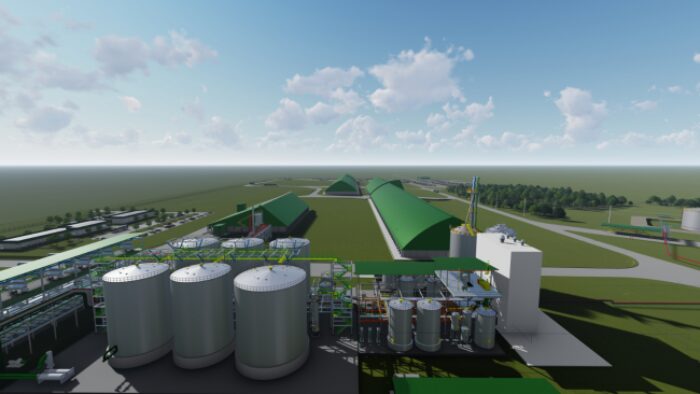
The construction of the plant will also bring a series of economic and social benefits to the region. With the growing demand for corn, the plant will ensure a stable source of purchase and sale of the grain for the Alvorada Group.
Additionally, the generation of direct and indirect jobs will be an important boost for local communities, with an expectation of around 300 job openings.
However, the impact goes beyond the economy. The project is aligned with the guidelines of the federal government’s New Climate Fund, which prioritizes the production of biofuels as a decarbonization strategy for the economy.
The use of corn ethanol in the energy matrix helps reduce pollutant emissions and greenhouse gases, contributing to more sustainable development.
“The corn ethanol plant will be a milestone for both our company and the Araguaia Valley, which will gain a new reference in renewable energy production,” highlighted Jarbas Weis, CEO of Alvorada Bioenergia.
A New Reference for the Region in the Corn Ethanol Sector

The new plant will be the first large-scale industrial venture in the BR-158 region, promoting a new cycle of local development.
The investment will bring significant transformation to the region, which currently relies primarily on cattle ranching as its main economic activity. The diversification of production, with the arrival of the plant, will stimulate the economy, creating new business and job opportunities.
The Director of Productive Development, Innovation, and Foreign Trade, José Luís Gordon, also emphasized the relevance of the initiative: “the project for the implementation of the new corn ethanol plant is also aligned with the industrial policy that prioritizes financing for technological solutions aimed at decarbonizing the Brazilian transport sector.”
About the Alvorada Agricultural Group
Founded in 2002 in the municipality of Primavera do Leste, Mato Grosso, the Alvorada Agricultural Group operates in the grain supply chain, especially corn and soybeans. The company has consolidated itself in the market, with a storage capacity of about 1.8 million tons and a daily grain receiving operation that reaches up to 88,500 tons.
With 19 storage units spread across 12 municipalities, the company is one of the largest in the region, employing more than a thousand people, including permanent employees and seasonal workers.
Alvorada Bioenergia, the group’s energy production branch, is now advancing with this new project, which promises to put the western region of Mato Grosso on the map of large corn ethanol productions in the country.





Be the first to react!