





 Portuguese
  English
  Spanish
  3 min of reading
  0 comments


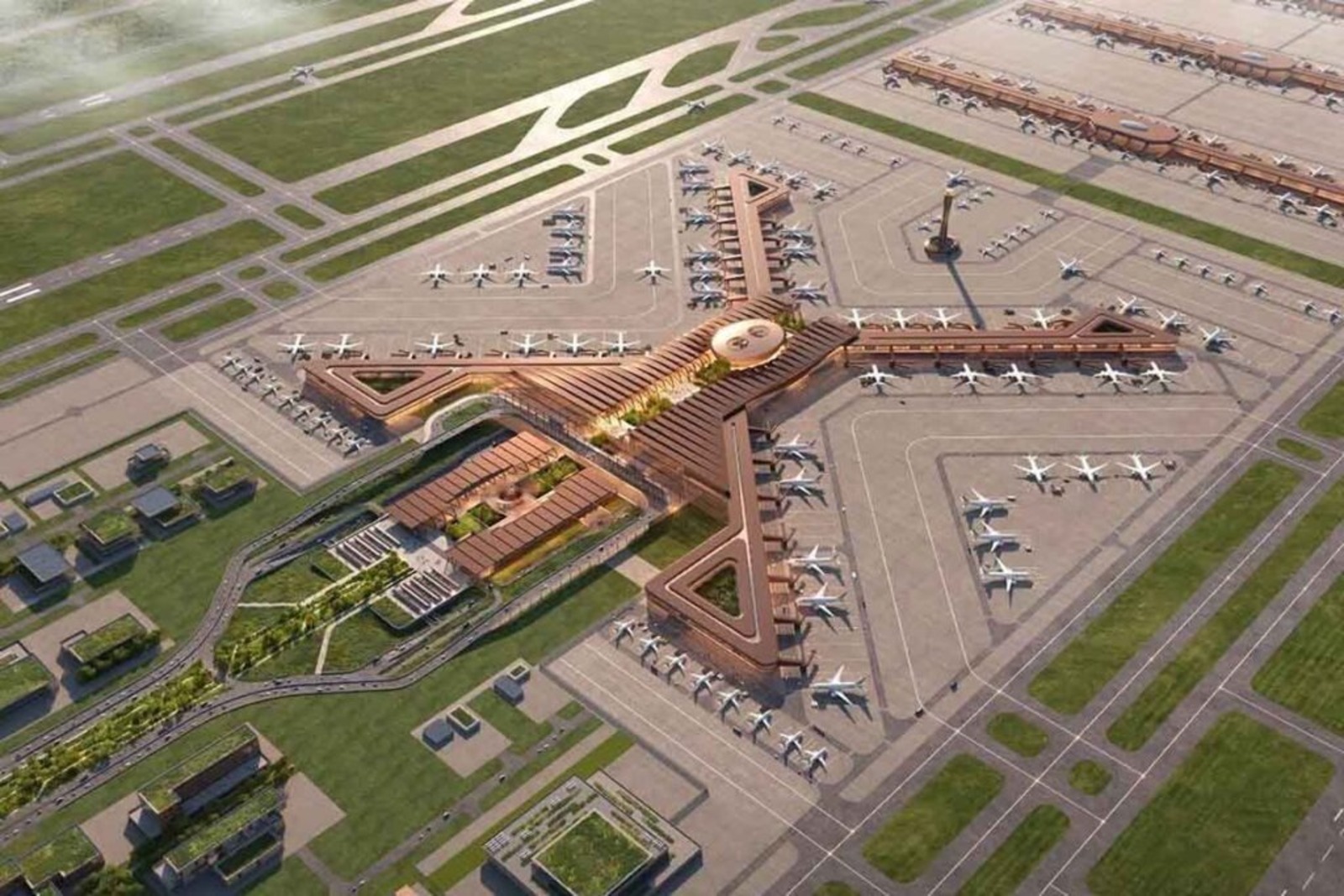
Bishoftu International Airport Project Plans Initial Capacity of 60 Million Passengers, Expansion to 110 Million by 2030, Strengthening African Integration, Regional Logistics and Continental Growth Strategy
The Ethiopian Airlines Group announced the start of construction of Bishoftu International Airport in Ethiopia, marking a strategic project to expand air infrastructure, meet growing demand and strengthen continental integration, with an official ceremony and participation from authorities.
Official Start of Construction and Project Presentation
The launch ceremony brought together government officials, industry leaders, stakeholders and executives, formalizing the beginning of construction of the new international airport.
During the event, Ethiopian Airlines presented the architectural design of the terminal, developed internally, highlighting planned solutions for passenger operations, cargo and regional logistics integration.
-
The largest marina in Southern Brazil invests R$ 100 million in a giant nautical shopping center with almost 40,000 m² and accelerates the transformation of Itajaí into one of the biggest maritime tourism powerhouses in the country.

-
South Africa created giant concrete blocks in the shape of a twisted “H” that reached 30 tons and became a global shield against destructive waves; dolosse were born after a storm devastated the port of East London in 1963 and today protect ports, beaches, and breakwaters on various continents.

-
Giant geotextile bags filled with sand have become flexible barriers against erosion in America, Europe, Asia, and Oceania; the technology replaces tons of concrete and rock with permeable tubes that dissipate waves and protect beaches, dunes, and riverbanks.
-
The largest bridge in Finland has just been inaugurated and cars simply cannot pass on it; only trams, bicycles, and pedestrians are allowed to cross the 1.2 km giant with a 135-meter pillar over the Baltic Sea.




The completion of the resettlement program and restoration of livelihoods for the affected communities was also confirmed, a step deemed essential before advancing with the works.
The unveiling of the symbolic plaque was performed by Prime Minister Abiy Ahmed and the company’s CEO, Mesfin Tasew.
Statements from Ethiopian Airlines Leadership
Mesfin Tasew stated that the project opens a new chapter for Ethiopian Airlines and Africa, with a direct impact on the continental aviation ecosystem.
According to the CEO, the start of construction coincides with the celebration of 80 years of service from the company, reinforcing strategic commitments to sustainable expansion.
He emphasized that the airport will help address the infrastructure deficit in Africa and support the implementation of the African Continental Free Trade Area.
The executive also highlighted the company’s dedication to completing the project with operational excellence and alignment to future passenger and cargo needs.
Government Vision and Corporate Culture
In his speech, Abiy Ahmed described the day as a milestone for modernization and prosperity in Ethiopia within the African regional context.
The Prime Minister emphasized that Ethiopian Airlines is a source of national pride due to its resilience, ability to overcome and pioneering role on the continent.
He cited the corporate culture based on safety, creative leadership and dedication, supported by more than 26,000 employees aligned with the entrepreneurial spirit.
This human foundation was identified as a central factor to sustain large-scale projects and consolidate the company’s strategic position.
Expected Impact and Future Capacity
Bishoftu International Airport, located in Bishoftu, is considered an emblematic project for African aviation and for Ethiopian Airlines.
The infrastructure is expected to facilitate trade, tourism and cultural exchange between African countries and connections with other regions of the world.
The first phase of the project is expected to be completed by 2030, with the capacity to serve 60 million passengers per year.
When fully completed, the airport complex will be able to accommodate up to 110 million passengers annually, becoming the largest airport on the African continent.
With information from Aeroin.








-

1 person reacted to this.