






 Portuguese
  Spanish


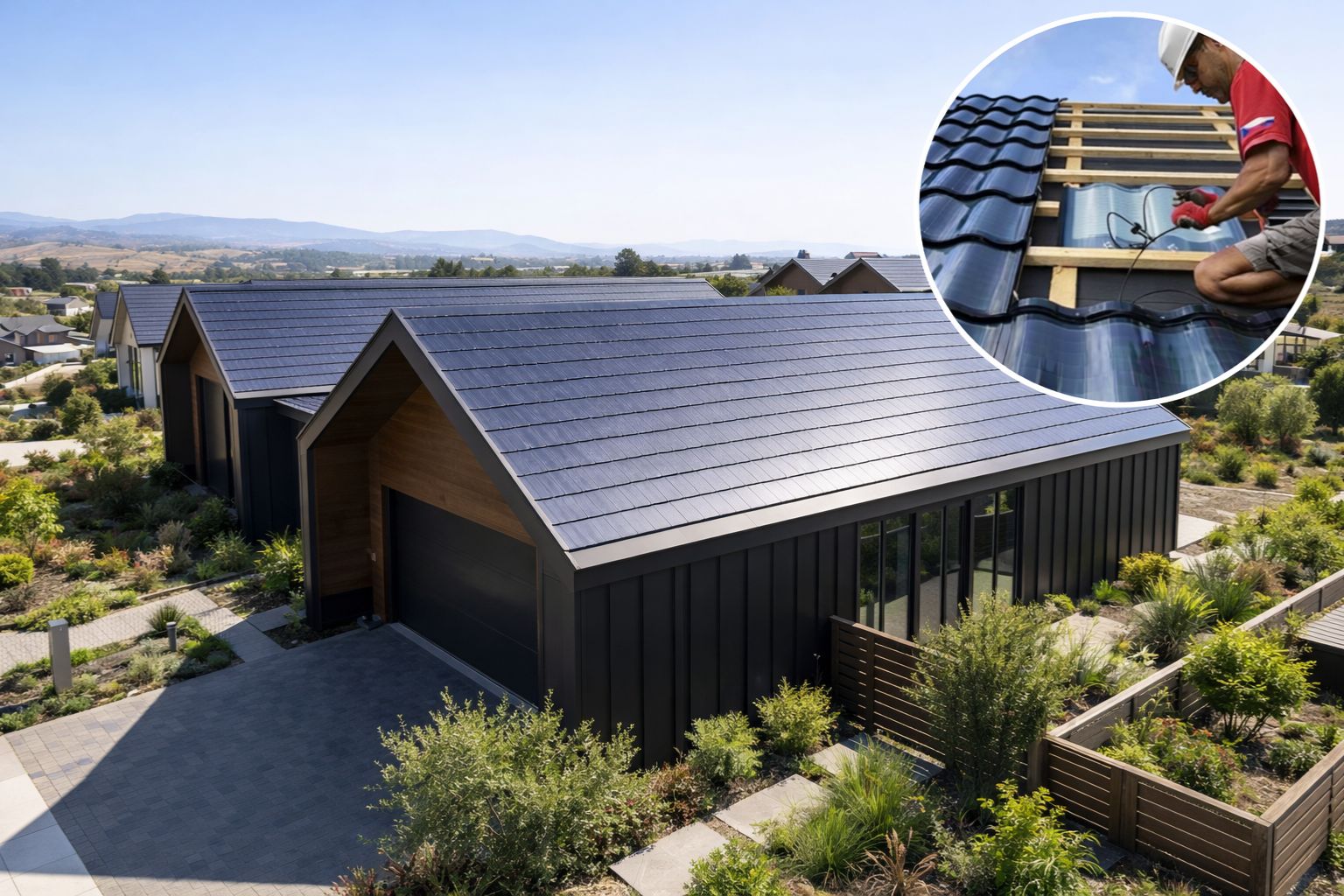

The new perovskite solar tile technology integrates photovoltaic cells into the tile itself, eliminating the need for overlapping panels. The material is lightweight, flexible, and allows the roof to generate electricity while maintaining a conventional appearance. The solution faces challenges of durability and cost but promises to redefine distributed generation in urban residences.
A new European technology could transform your home’s roof into a solar power plant without anyone noticing. Perovskite solar tiles are an alternative to traditional photovoltaic panels and work integrated into the roofing: instead of installing panels over the tiles, the tile itself receives a layer of perovskite-based photovoltaic material, capable of converting sunlight into electricity while preserving the visual appearance of a conventional clay or ceramic roof. The result is a house that generates its own energy without those visible blue rectangles that many find aesthetically unpleasing.
The new technology stands out for properties that conventional panels do not offer. Perovskite is lightweight, can be produced in thin, flexible films, and adapts to curved or wavy surfaces like classic tiles, without adding significant weight to the structure. This is particularly important in old roofs that would not support the weight of traditional photovoltaic panels. For those living in cities with strict facade regulations or in historic centers where the appearance of buildings is protected by law, the new technology solves an old dilemma: generating clean energy without compromising the visual heritage of the residence.
How the new perovskite solar tile technology works in practice

According to information from the portal Em Foco, the operational principle of the new technology is similar to that of other photovoltaic systems, but the integration with the building is the major differentiator. Thin layers of photovoltaic material in sheet form are applied to the surface of the tile, following the curvature of the piece and ensuring good exposure to sunlight on sloped roofs. When solar radiation hits the perovskite layer, electric charges are generated and conducted by metal contacts to cables inside the roof.
-
U.S. City Builds Tiny Home Village on Water Company Land to House 136 Homeless People: Inside the Social Housing Units

-
Woman Turns Shipping Container into Home, Embraces Rural Life to Cut Monthly Expenses to Just Over $330
-
France Revamps 530 Social Housing Units with Large Balconies and Glass Facades Without Demolishing Existing Buildings

-
Facing high rent, couple transforms parents’ garage into a fully functional apartment, creating a complete home at a fraction of the market cost.




From there, the flow of energy follows the same path as any residential solar system. The electricity generated by the new technology goes to an inverter, which transforms direct current into alternating current, ready for household use or injection into the power grid, as local regulations allow. In practice, the homeowner sees a reduction in their electricity bill, may receive credits for the excess energy injected into the grid, and contributes to the distributed generation of clean energy, all without altering the external appearance of the residence.
What makes the new technology different from traditional solar panels
Conventional solar panels are additional pieces that overlap the existing roof, which creates a set of limitations. They require mounting structures, add weight to the roof, require the homeowner to give up the original aesthetics of the house, and have standardized shapes that rarely adapt to irregular or historic roofs. The new perovskite tile technology eliminates all these barriers by making the roofing material itself the electricity generator.
The flexibility of the perovskite film is what enables this revolution. While crystalline silicon panels are rigid and bulky, the new technology produces solar cells that can be applied to virtually any surface, including corrugated tiles, curved roofs, and complex surfaces that have never been compatible with traditional solar energy. For architects and builders, this opens up a range of possibilities that go far beyond the roof: windows, facades, and even decorative elements can become energy generators in future projects.
The environmental and urban benefits of the new technology for cities

The expansion of the new technology brings benefits that go far beyond the individual residence. By generating electricity directly on rooftops, the new technology reduces the need for large areas of land for solar plants, avoiding the occupation of land that could be used for housing, agriculture, or environmental preservation. This characteristic strengthens the distributed generation model, where each building produces part of its own energy instead of relying on large distant plants.
In dense cities and historic centers, the advantage is even more pronounced. Places with little physical space and strict rules about facades and roofs can benefit from the new technology because it preserves the traditional look of the roof while generating electricity that would previously need to come from external sources. Europe, with its medieval cities and heritage regulations, is the ideal ground for the development of this solution, and that is precisely where pilot projects are most advanced. The reduction of losses over long transmission distances is another systemic gain that benefits the entire local power grid.
The challenges that new technology still needs to overcome
Despite the potential, the new perovskite tile technology faces significant technical obstacles. Durability is the main concern: on roofs, exposure to moisture, intense heat, temperature variations, and ultraviolet radiation is constant over the years, and perovskite needs efficient encapsulation that protects against water and oxygen without blocking sunlight. Silicon panels have decades of proven durability history; perovskite still needs to demonstrate that it can achieve the same.
There are also market challenges. Large-scale production of the new technology is not yet established, costs need to decrease to compete with established alternatives, and standardization of formats and technical norms is under construction. Additionally, the installation sector needs to be trained to handle tiles that are simultaneously roofing elements and electrical components, something that requires combined qualifications of roofers and electricians. Until these issues are resolved, the new technology will remain in pilot projects and in high-end constructions willing to pay the premium for innovation.
Why the new technology can change the future of homes
What the new perovskite tile technology represents is a philosophical shift about what a roof should do. Until today, the roof has been treated as a passive element: it protects from rain, sun, and wind, but does not generate active value. Solar tiles transform this surface into a productive asset that reduces energy costs, increases the autonomy of the home, and contributes to national climate goals without compromising the aesthetics of the property.
For those looking to build or renovate, keeping up with the evolution of this new technology is essential. Every roof that stops being passive and starts generating energy is a step towards reducing emissions, cutting electricity costs, and building more sustainable cities, and the growing demand for solutions that combine aesthetics and energy efficiency is likely to push prices down and accelerate the entry of perovskite tiles into the mainstream market. The question is no longer if common tiles will be replaced, but when this will happen widely.
A new European technology can transform roofs into solar power plants without visible panels. Would you replace your common tiles with this solution? Do you think this technology could arrive in Brazil soon? Share your opinion in the comments.








