





 Portuguese
  English
  Spanish
  5 min of reading
  2 comments


Beauty Salons Collect Hair That Would Go to Waste and Convert It into Barriers That Absorb Oil in the Sea and Help Protect Beaches and Marine Life.
When we talk about waste with environmental impact, we think of plastic, tires, disposables, and even wood and textiles. We rarely think about human hair. Every day, tons of hair are swept from salons and thrown into black bags, heading to landfills. But what seemed like just urban waste is gaining an unexpected second life: human hair is being used to absorb oil and other hydrocarbons in the sea, in spills that threaten beaches, birds, marine mammals, and coastal fishermen.
This use is not theoretical and is not new — it was first documented by NASA in the 1980s, when researchers compared human hair, animal fur, and synthetic fibers in contact with oil. The conclusion was simple: hair absorbs oil very efficiently, due to its lipophilic structure (affinity for fats and oils).
Decades later, this principle returned massively after the Deepwater Horizon platform spill in the Gulf of Mexico in 2010. There, for the first time, large organizations began testing “absorbent booms” made of human hair and animal fur. Today this process has expanded to the USA, Canada, Australia, the UK, France, Spain, and parts of Southeast Asia, with salons becoming regular suppliers of raw material.
-
Balloon the size of a stadium spends 25 days alone over Antarctica at nearly 37 km altitude and returns with data on cosmic antimatter that may reveal one of the rarest clues ever sought about the existence of dark matter.

-
The sea has stopped just warming and has started pushing storms towards the continent: marine heatwaves are already entering the path of up to 25% of extreme coastal rains and can increase storms by 30%, worsening floods on the coast.

-
Drone flies over indigenous area in Xingu and creates a point cloud capable of penetrating the tree canopy, revealing the forest floor, and mapping archaeological sites, ancient villages, roads, and ditches used to understand the historical occupation of the Kuikuro territory.
-
New technology may retire the common electric shower: Xiaomi introduces an intelligent model with tempered glass, a giant 305 mm spreader, antibacterial function, four water modes, and controls inspired by piano keys for around R$ 640 in China.




What Makes Hair an Efficient Absorber for Oil
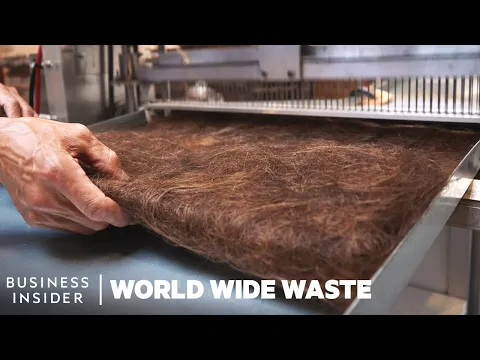

The basis of the phenomenon is physics and chemistry, not environmental marketing.
A strand of hair is primarily composed of keratin, a highly structured protein, with microscopic scales that increase the surface area. In addition, hair has a natural affinity for lipids and oils, and low affinity for water, meaning it “picks up” oil and rejects water.
To visualize the contrast:
- 1 gram of human hair can absorb up to 5 times its weight in oil (depending on the type)
- Synthetic absorbent foams range from 3x to 7x, but they are petrochemical
- Twine, cotton, and wool absorb oil, but also absorb water, which reduces efficiency
This technical behavior allows hair barriers to function as oleophilic microfilters, capturing suspended oil while allowing water to pass through.
It’s not about magic but rather engineering based on biology.
How the Complete Process Works: From Scissors to Ocean
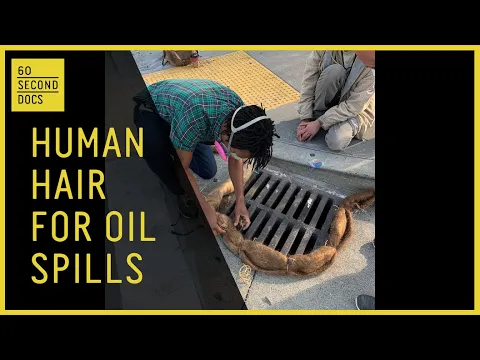
The operational model became clearer from the 2000s, with environmental associations structuring collection chains and compression factories.
The chain works like this:
- Salon Collection: the salon collects the cut hair in specific bags.
- Sorting: the material arrives at centers, where it is separated by contaminants (metals, plastics, long pieces, etc.).
- Compression: the hair is compressed and turned into absorbent mats or rolls.
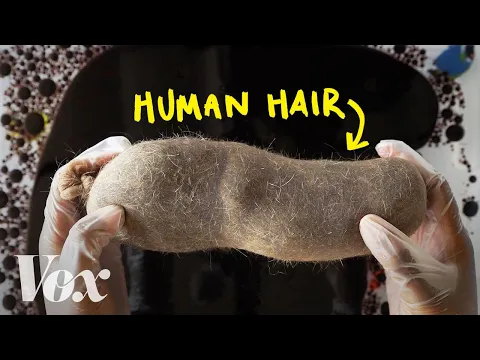
- Assembly: the material goes to absorbent booms — mesh tubes filled with hair.
- Maritime Application: the barriers are positioned in the sea, on beaches, mangroves, or marinas.
The mats can be used to collect oil in docks, ports, mangroves, shipyards, platforms and high-risk areas. The booms remain on the water line, blocking the advance of oil or capturing chronic leaks.
Human hair is just one part of the solution — animal fibers (sheep wool, alpaca, dog fur) also work, but are less abundant and more expensive.
The Countries That Transformed Hair into an Environmental Tool
The three largest programs in the world today are:
United States
In the USA, hundreds of salons participate in collection programs. After the Deepwater Horizon disaster, demand exploded. Today, the mats are used in:
- Ports
- Shipyards
- Nautical fuel stations
- Industrial reservoirs
Petrochemical companies also use the material in containment areas.
Australia
Australia applies the technology in:
- Commercial marinas
- Fishing ports
- Rivers polluted by runoff from shops and stations
The Australian advantage is logistics: many coastal cities and a large presence of maritime transportation industries.
Europe (France, Spain, United Kingdom)
In Europe, use is growing, especially in marinas and tourist areas, where contact with oil tends to be chronic, not catastrophic.
Real Results Already Documented
Recent cases have helped consolidate use:
- Mediterranean Sea: tests in ports in France reduced layers of surface oil in hours.
- Gulf of Mexico: after Deepwater Horizon, mats absorbed diesel and crude oil in coastal areas.
- Urban marinas in California: reduction of stains coming from nautical fuel pumps.
There are three practical advantages that have been reported by field teams:
- Speed of Absorption: hair captures oil almost immediately.
- Capacity: it does not become saturated with water, which increases efficiency.
- Low Cost: it is virtually free, compared to petrochemical absorbents.
Moreover, the material can be pressed after use and turned into solid fuel (bricks), preventing improper disposal.
How Much Hair Is Produced and How Much Could Be Used
The global potential is enormous. Conservative estimates indicate:
- More than 3,500 tons of human hair are discarded annually in the United States, Canada, and Europe.
- Globally, the number may exceed 20,000 tons per year.
Even if only 10% of this volume were converted into absorbent barriers, it would be possible to:
- Produce millions of meters of mats per year
- Replace tons of petrochemical absorbents
- Reduce dependence on emergency stock for spills
Instead of urban landfill waste, it would turn into permanent coastal environmental infrastructure.
Why This Matters for the Future (and for Environmental Crises)
Oil spills occur every year, but most don’t make the news.
Major events only appear when platforms explode or ships run aground, but most coastal pollution comes from:
- Ports
- Ship hulls
- Inefficient pumping
- Workshops by rivers
- Nautical stations
- Shipyards
In these cases, the spill is chronic, not catastrophic. And that’s where hair mats work best.
Furthermore, in an era of climate crisis, with:
- Stronger hurricanes
- More frequent coastal storms
- Beach erosion
- Collapse of mangroves
- Warmer waters
Low-cost, highly available tools become strategic, not just “curiosities.”
What Still Limits the Expansion of This Technology
There are three main barriers today:
- Industrial scale is still limited — few centers transform the material globally.
- Environmental legislation varies greatly between countries and ports.
- Hair is an organic waste, requiring sorting and processing to become a technical product.
With minimal investment, however, the potential is enormous: salons are thousands; raw material is continuous; cost is almost zero.
From Waste to the Ocean: An Unexpected Ending for an Invisible Material
The story of hair as an environmental tool is a rare case where a very simple solution brushes against extremely complex problems.
- It does not solve climate collapse.
- It does not prevent gigantic spills.
- It does not replace emergency protocols.
But it works so well that it buys time, absorbs oil, protects birds, saves turtles, defends beaches, and helps communities that live by the water. All this with something that, until the final moment, remained invisible, a waste that the world never took seriously.
When an environmental model transforms waste into a shield, and does so at almost zero cost, it’s hard not to pay attention.








E porque a Petrobras não faz alguma coisa nesse sentido aqui no Brasil
Não seria ‘do lixo à salvação marinha’, a frase correta da primeira foto?
Eu ia usar o texto com meus alunos, mas decidi que seria motivo para chacotas… Que pena!