






 Portuguese
  Spanish


Brazil Begins Unprecedented Procedure of the Economic Reciprocity Law After 50% Tariffs Imposed by the USA, Triggering Alert on Bilateral Trade, Intellectual Property, and Possible Retaliations in Strategic Sectors of the National Economy.
The Brazilian government has begun, as reported by CPG last Thursday (28), the formal procedure that may lead to the application of the Economic Reciprocity Law against the United States.
In a letter sent to the Foreign Trade Chamber (Camex), the Itamaraty stated that “the use or the threat of use of tariff measures as a pressure instrument on procedures and decisions made by Brazilian courts denotes a clear attempt of interference in Brazil’s internal affairs”.
Camex will have 30 days to analyze the case and suggest the next steps.
-
Brazil’s 2026 Tax Refund: Record 9.58 Million Filers in Largest Payout Ever, But a Key Detail on Priority Recipients Draws Nationwide Attention

-
Itaú Alters Hybrid Work Model, Increasing Office Days from 2028, Prompting Employees to Adjust to New Routine
-
Facing Labor Shortage, Japan Plans to Invest $34 Million to Attract Foreign Workers in Construction, Healthcare, Industry, and Commerce

-
Brazilian City Makes Remarkable Leap, Becomes 4th Wealthiest in the Country with GDP of R$ 134.1 Billion




What Is the Economic Reciprocity Law
Enacted on April 11, 2025 as Law No. 15,122, the law establishes criteria to suspend trade concessions, limit investments, and relax intellectual property rights obligations when another country adopts unilateral measures that harm Brazilian competitiveness.
The text was regulated on July 15, 2025 by Decree No. 12,551, which created an inter-ministerial committee to deliberate on countermeasures and monitor negotiations.
The declared objective is to provide a legal basis for proportional and coordinated responses between the government and the private sector.
In practice, the law functions as a reaction manual. It defines application hypotheses, lists possible instruments, and organizes the decision-making process.
Among the hypotheses are foreign acts that interfere in Brazil’s sovereign choices or impose trade barriers without support from international agreements.
Measures can be temporary, in an exceptional manner, when there is a need for a rapid response while diplomatic negotiations are ongoing.
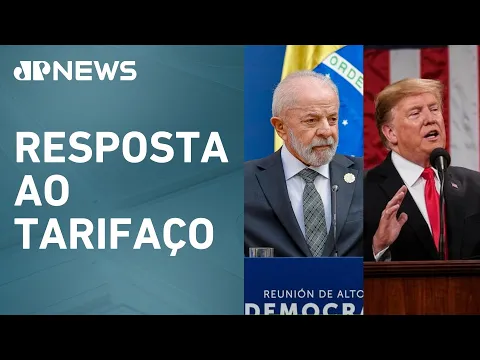

How the Process Will Be in Camex
The first step was the opening of internal consultations for Camex to evaluate, within 30 days, whether the American tariffs fit the hypotheses provided by the law.
If it fits, Camex submits the matter to the competent collegiate and can establish a working group to detail the countermeasures, which undergo public consultation before the final decision.
The whole process seeks to pressure for negotiation, preserving space for a bilateral agreement and, at the same time, signaling that Brazil has concrete instruments.
According to government members, the strategy aims to combine diplomatic channel and legal preparedness.
In parallel, Brazil maintains a multilateral path through consultations at the World Trade Organization (WTO), if necessary.
The design of the process, provided by law and the decree, gives predictability to the stages and deadlines without closing the door to negotiated solutions.
The Tariff Increase from the USA and the Immediate Effects
The tariffs imposed by the American government reached 50% on Brazilian products.
The package was formalized by executive order on July 30, 2025 and took effect on August 6.
There were notable exceptions, such as orange juice and aircraft, but key items on the export agenda, such as coffee and meats, were affected.
The narrative from the White House linked the hardening to Brazil’s internal political disputes, raising diplomatic tensions.
For the Brazilian foreign ministry, using tariffs to pressure decisions from national courts characterizes an attempt of interference in internal affairs.
This assessment was recorded in the letter sent to Camex. The interpretation is that the American measure exceeds trade disputes and impacts the institutional sphere.
“The use or threat of use of tariff measures as a pressure instrument […] denotes a clear attempt of interference,” says the document.
Intellectual Property and Other Legal Leverage
One of the most sensitive points of the law is the possibility to suspend intellectual property obligations in response to unilateral foreign actions.
This provision does not mean automatic patent breaches.
It is an authority of the Executive, to be applied in a targeted and justified manner, observing constitutional limits and safeguards in the legal text itself.
The regulatory decree emphasizes that exceptional measures can be adopted while seeking negotiated solutions, to restore symmetry in economic relations.
In addition to intellectual property, the law authorizes countermeasures on goods and services, as well as the suspension of trade concessions.
In practice, the options may include calibrated surcharges to temporary restrictions in strategic areas.
The definition of the sectoral target will depend on technical studies and dialogue with affected companies, a step that precedes any final decision.
Political Signal and Search for Negotiation
Even with the process initiated, the public guidance from the Planalto has been to prioritize dialogue.
President Luiz Inácio Lula da Silva indicated that there is no hurry to retaliate, while the government tries to open a dialogue table with Washington.
The sending of the letter and the activation of the law’s process, however, serve as a deterrent signal.
They show that Brazil is prepared to respond should there be no progress in negotiations.
The step taken this week also frames the domestic debate.
Based on the law and the decree, Camex will need to quantify impacts, simulate scenarios, and propose alternatives.
Only after this stage will the government decide whether to apply countermeasures — and to what extent — or if it will maintain diplomatic pressure while hoping for an understanding.
The official communication to the USA regarding the initiation of the process is part of this procedural roadmap.
What to Observe from Now On
The coming days will be decisive to measure the effect of the legal signal sent by Brazil.
Camex is working with the legal deadline of 30 days to complete the initial analysis.
In parallel, exporting sectors monitor the impacts of the 50% tariff, especially in chains such as agribusiness and manufactured goods.
Depending on the pace of discussions with Washington, the government may evaluate temporary measures, provided for in the regulation, to avoid irreversible damages while negotiations progress.
In the view of experts, the newly created institutional design provides predictability in a tense moment and helps calibrate the Brazilian response. The law provides instruments; the policy will determine if and how to use them.
In the face of the impasse, what combination of negotiation and countermeasures will be most effective to protect competitiveness without increasing costs to consumers?








Não é só vestir a camisa verde e **** e sair para as ruas para protestar contra a oposição! Agora é a hora de se unir a todos pelo bem da nação. Patriotismo é isso belo bem comum de todos da nação e agora não é pra ficar lambendo botas do Tio San a onde eles estão provando que querem encher o **** de dinheiro e querem que o mundo todo , se **** !
Independente do governo, a SOBERANIA NACIONAL deve ser mantida, não podemos aceitar que outros governos de países venham querer se impor a nossa soberania e errado estão aqueles que buscam auxílio para seus desmandos, fora de nossas fronteiras, para ficar fora da lei brasileira.
Não podemos nos esquecer de que a história mostra o que pode acontecer com aqueles que dizem defender seu país contra estrangeiros, o nacionalismo exacerbado, levou a guerras mundiais.
A SOBERANIA NACIONAL deve ser defendida por todos, e para isso, apoio sim as medidas de resposta no mesmo nível e tom, contra qualquer país que queira fazer de nosso território o seu quintal.
Pois é., esse **** dos bolsonaros irão pagar o preço das atrocidades que estao cometendo contra as empresas e cidadãos brasileiros, o Brasil é soberano e aque temos leis e constituição digna do povo brasileiros e temos homens de redoeito com a soberania brasileira nsobesse capitão de ****, que foi até expulso di exército, wue prevalecerá. Aqui temos um Supremo, o guardian da constituição que esses juízes fazem o dever de casa, pondo ordem nos pilantras teaidores da pátria,. Graças a esses homens de verdades do Supremo, que podemos confiar.