Portuguese
  Spanish




Deloitte Study Shows How Advanced Technology, Industrial Digitalization, and Low-Carbon Energies Are Redefining Strategies, Productivity, and Investment Decisions in the Global Oil and Gas Market
The oil and gas industry is undergoing one of the most intense transformation periods in its recent history. This movement is driven by three central forces: technological advancement, the quest for operational efficiency, and the strengthening of the energy transition.
According to an article published by Agência iNFRA on Monday (9), the scenario was highlighted in the global study 2026 Oil & Gas Outlook, prepared by Deloitte, which identifies artificial intelligence as a key player in redefining business strategies, investments, and innovation in Brazil and worldwide. The report emphasizes that companies combining technology and sustainability tend to demonstrate greater competitiveness and resilience in the face of global economic fluctuations.
Understand the Deloitte Study in the Oil and Gas Sector
Right at the beginning of the study, the consultancy emphasizes that the sector is not only digitalizing processes but also changing its operational logic. Artificial intelligence has ceased to be a future bet and has become central to corporate decision-making.
-
It’s official: Petrobras takes 75% of block 3 in São Tomé and Príncipe and debuts as an offshore operator outside South America.

-
With a record production of nearly 3 million barrels per day, Petrobras resumes importing diesel in July, highlighting the bottleneck in Brazilian refining.
-
Qantas and Airbus Invest in Company Aiming to Convert Unsorted Household Trash into Jet Fuel

-
Brazil’s ANP Opens 86 New Oil Blocks in the Equatorial Margin, Expanding the Amazon River Mouth Frontier


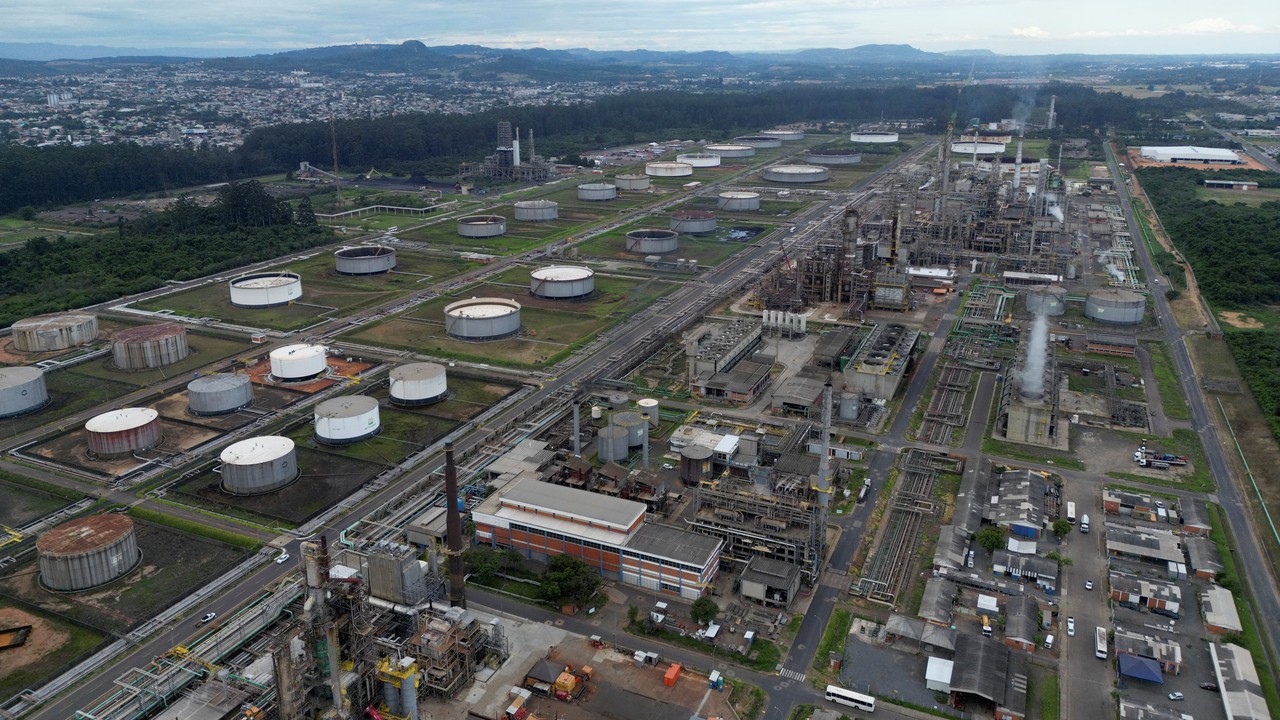


The adoption of AI and advanced analytical tools has become a priority for companies seeking to increase productivity, reduce costs, and enhance operational reliability. At the same time, the energy transition is directly influencing capital allocation and long-term planning.
This is a structural change, not a passing phase. The new market dynamics require integration between technological innovation, asset efficiency, and environmental responsibility. Therefore, companies that ignore this convergence are likely to lose competitive relevance in an increasingly data-driven and sustainability-oriented environment.
The New Strategic Axis Redefining Investments and Corporate Decisions
The Deloitte study illustrates that digital transformation is not limited to task automation but redefines how companies plan investments and assess risks. In this context, artificial intelligence plays a strategic role in forecasting scenarios and directing resources. Data analysis tools allow organizations to identify production bottlenecks, predict demand fluctuations, and map expansion opportunities with greater precision.
Furthermore, digitalization strengthens corporate governance by enhancing operational transparency and reducing uncertainties. Companies using analytical systems can monitor performance in real time and respond quickly to market changes. This agility has become a decisive competitive advantage. At the same time, there is a growing perception that technological innovation and sustainability go hand in hand, as energy efficiency reduces costs and emissions simultaneously.
Another relevant point is the impact on organizational culture. The introduction of intelligent technologies encourages professional development, skills updating, and the creation of new work models. Consequently, digital transformation affects not only machines and systems but also people and internal processes. The sector is undergoing comprehensive and interconnected modernization.
Oil and Gas Facing Robust Reserves and Tighter Margins
Official data from the National Agency of Oil, Natural Gas, and Biofuels indicates that Brazil ended 2024 with 29.2 billion barrels in total oil reserves, a growth of 6% compared to the previous year. However, production recorded a 1% decline, reaching 3.4 million barrels per day. At the same time, natural gas reserves increased by 5.1%, totaling 740.5 billion cubic meters. These figures reveal a scenario of resource abundance coupled with profitability challenges.
In this context, operational efficiency has become an absolute priority. Companies seek to extract more value from each asset, reduce waste, and optimize logistical chains. The pressure for sustainable results drives investments in technology and innovation. The energy transition also influences strategic decisions, as the global market demands a balance between the exploration of fossil resources and the development of renewable alternatives.
Therefore, the sector faces a paradox: it has substantial productive potential but needs to modernize processes to maintain competitiveness. This duality stimulates the adoption of intelligent tools and the revision of traditional business models. Rapid adaptation has become a fundamental condition for survival.


Artificial Intelligence and AI as Drivers of Operational Efficiency in the Oil and Gas Sector
The pursuit of operational efficiency has solidified artificial intelligence as one of the most relevant technologies today. AI systems are used for predictive maintenance, equipment monitoring, seismic analysis, and logistics optimization. Companies implementing these solutions report significant reductions in failures and increases in productivity.
Smart sensors, drones, and industrial robotics enable continuous data collection and rapid interventions in critical situations. Moreover, advanced algorithms can identify patterns invisible to conventional human analysis.
The result is greater operational reliability and lower maintenance costs. According to the Deloitte study, companies that implemented predictive maintenance achieved substantial annual savings and reduced unexpected downtimes.
This technological advancement also contributes to workplace safety and environmental protection. Automated processes reduce human exposure to risks and increase monitoring accuracy. Consequently, operational efficiency is no longer just a financial goal but also represents social and environmental responsibility. Technology and safety become permanent allies.
Energy Transition and Matrix Diversification as Responses to the Global Market
The energy transition has gained momentum in recent years, evolving from being just an environmental issue to becoming an economic driver. Brazil has approved the Future Fuel Law, creating incentives for the expansion of biomethane, ethanol, biodiesel, and sustainable aviation fuel. This measure signals a structural change in the national energy matrix.
The effects are already evident in official figures. Biodiesel production grew by 20.4% in 2024, while ethanol increased by 4.2%, reaching 37 billion liters, according to ANP data. These results underscore the relevance of renewable fuels in the energy landscape. Companies in the sector have begun to invest in hybrid portfolios, combining fossil sources and clean alternatives to reduce regulatory risks and enhance competitiveness.
Moreover, energy diversification strengthens corporate image and meets the demands of investors attentive to environmental, social, and governance criteria. Sustainability has become a reputation element and a capital attraction factor. The market values companies that balance profit and environmental responsibility.
Data-Driven Business Innovation and Strategic Intelligence
Business innovation in the energy sector is increasingly data-driven. Analytical tools allow for complex simulations, demand forecasting, and geopolitical risk assessment with greater accuracy. Artificial intelligence enhances anticipation capacity and reduces uncertainties. This trend facilitates more secure decisions and more efficient investments.
Companies have also started investing in carbon capture, low-impact hydrogen, and synthetic fuels. These projects expand operational horizons and create new market opportunities. Innovation is no longer optional but has become a basic requirement for competitiveness. Deloitte emphasizes that organizations combining digitalization and sustainability perform better in volatile scenarios.
Another important aspect is the collaboration between industrial sectors, universities, and research centers. Strategic partnerships accelerate technological development and broaden access to specialized knowledge. Consequently, the innovation ecosystem becomes more integrated and dynamic. Cooperation drives advances that would otherwise be slower if attempted individually.

Paths Defining Leadership in the Energy Landscape of the Coming Years
The energy industry is at a turning point where technology, efficiency, and sustainability definitively converge. The future of the sector will be determined by the capacity for rapid adaptation and the intelligent use of data. Companies that invest in digitalization, energy diversification, and continuous innovation are likely to assume leadership positions.
At the same time, public policies and regulatory incentives play an essential role in accelerating this process. Markets that stimulate research, innovation, and sustainability create favorable environments for balanced growth. The integration between the private sector and strategic policies strengthens national competitiveness.
In summary, the current scenario indicates that the balance between productivity, environmental responsibility, and technological intelligence will be the main differentiating factor in the coming years. Those who combine operational efficiency, innovation, and a sustainable vision will have a greater capacity for prosperity in an increasingly dynamic and demanding market.