Portuguese
  Spanish


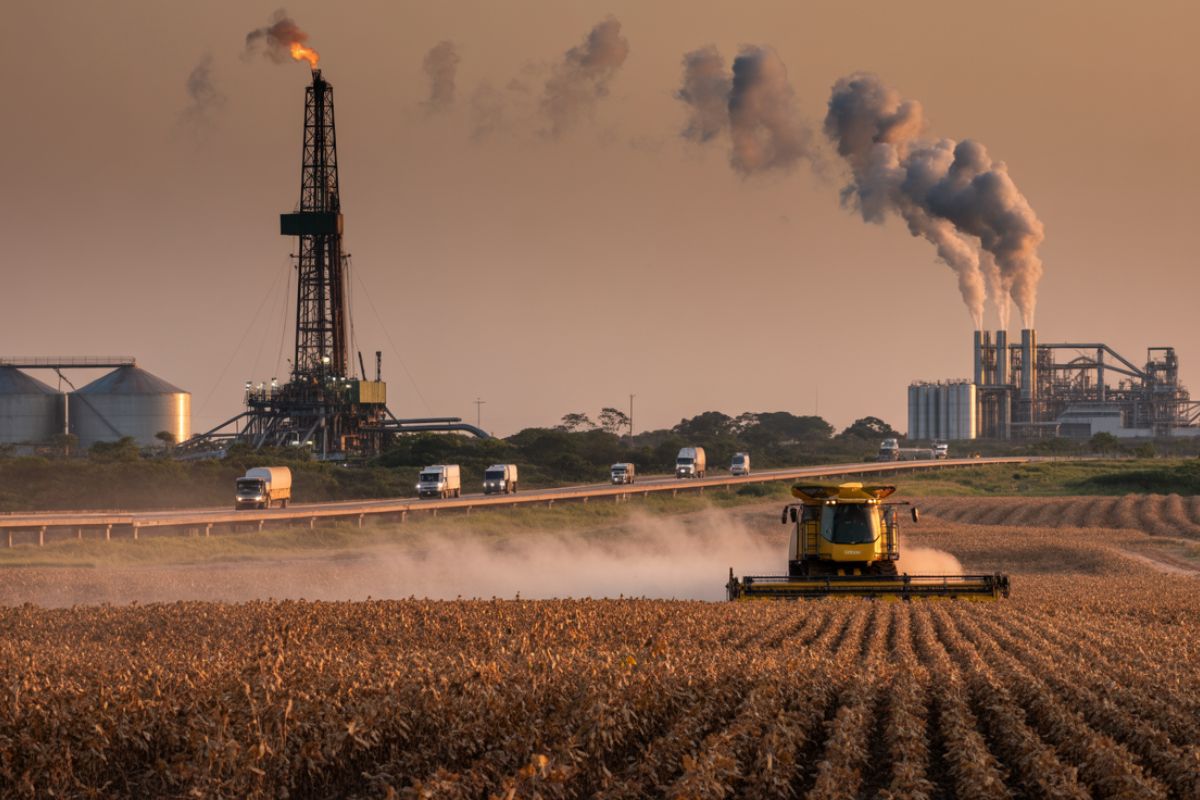


Much Beyond Soybeans and Corn, the State Solidifies as a Power in Energy, Logistics, and Technology, Mirroring the Development of the American Giant and Becoming the True Brazilian Texas.
When thinking of Mato Grosso, the first image that comes to mind is that of a vast barn, the heart of the national agribusiness. However, a silent revolution is transforming the state into something much bigger: a true Brazilian Texas. The comparison, which was once limited to the strength of agriculture, now expands to energy, with oil exploration and record ethanol production, to accelerated urban development, and to an expanding logistical infrastructure.
Like the American state, Mato Grosso is diversifying its economy at an impressive pace. What was once just countryside is making way for clean energy plants, vertical cities, and a technological innovation ecosystem. This transformation not only boosts the local economy but also redrafts the map of development in Brazil, showing that the strength of the interior goes far beyond farming.
The New Energy Frontier: Oil, Ethanol, and Sun
The strongest similarity with Texas lies in energy. Few know, but Mato Grosso has the potential to be a major producer of oil and natural gas. Studies in the Parecis Basin are already attracting the interest of major companies, and onshore exploration has begun in some areas, promising a new frontier for “black gold” in the heart of Brazil.
-
Itaú Alters Hybrid Work Model, Increasing Office Days from 2028, Prompting Employees to Adjust to New Routine

-
Facing Labor Shortage, Japan Plans to Invest $34 Million to Attract Foreign Workers in Construction, Healthcare, Industry, and Commerce

-
Brazilian City Makes Remarkable Leap, Becomes 4th Wealthiest in the Country with GDP of R$ 134.1 Billion

-
Controversial 6-day Workweek Elimination in Brazil Faces Economic Criticism Over Productivity Claims




But the real energy revolution is already happening. The state is the world leader in corn ethanol production. Giants like Inpasa — which operates in Sinop the largest plant of its kind in the world — and FS Bioenergia have transformed Mato Grosso into a powerhouse in biofuels. Additionally, solar energy is advancing rapidly, with farms and entire cities adopting photovoltaic systems to become self-sufficient.
Cities That Grow Upward and Tracks That Cross the Country
The agribusiness and energy boom is driving accelerated urbanization. Cities like Sinop, Sorriso, and Lucas do Rio Verde are becoming vertical, with the construction of modern buildings, shopping centers, and hospitals. Development is no longer concentrated only in the capitals.
To sustain this growth, logistics is evolving at a rapid pace. The duplication of BR-163, the main transport corridor, and the expansion of the Senador Vicente Vuolo Railway (Ferronorte), operated by Rumo, are projects that integrate Mato Grosso with the main ports of the country, reducing costs and increasing competitiveness.
From Cattle to Drone: The Era of Agro 5.0


Mato Grosso is not only the owner of the largest cattle herd in Brazil; it is modernizing its livestock farming with cutting-edge technology, including traceability and precision nutrition to produce high-quality meat for the whole world.
At the same time, the state has become a hub for AgTechs. Startups focused on agriculture are developing solutions with drones, sensors, and artificial intelligence to optimize production, proving that the future of agribusiness is digital. This innovation ecosystem consolidates Mato Grosso’s image as the Brazilian Texas: a land of opportunities, bringing together the brute strength of the countryside with the intelligence of technology.
And you, what do you think of this transformation? Do you believe that Mato Grosso is the state that most resembles the Brazilian Texas? Leave your opinion in the comments!