Portuguese
  Spanish


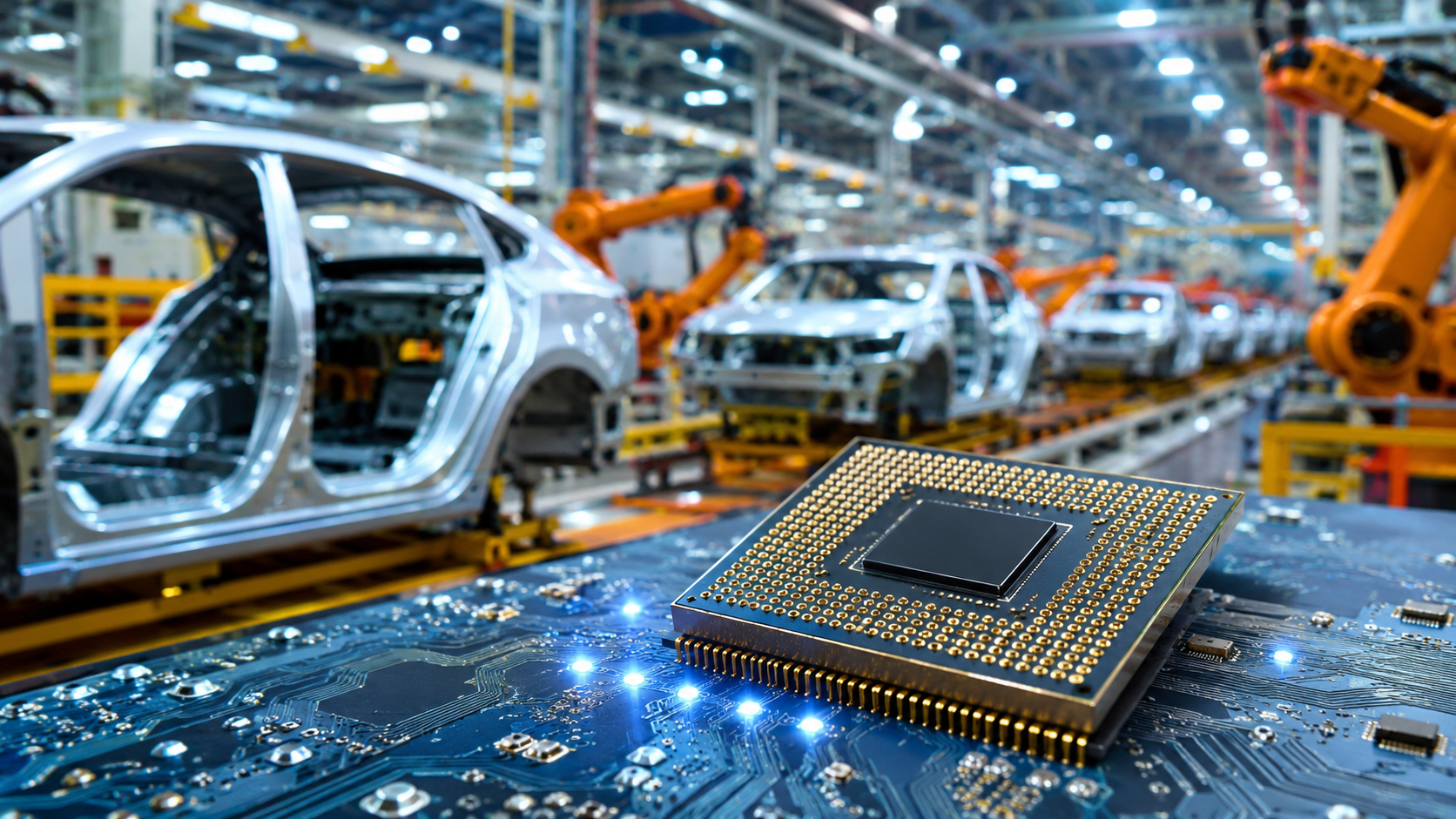

Espírito Santo articulates semiconductor project to serve GWM, expand the automotive industry, create jobs, and strengthen the economy.
Espírito Santo has begun discussions to host a chip factory aimed at supporting GWM’s future operation in Aracruz. The proposal has the potential to strengthen Brazilian industrial production, expand national technological capacity, and reduce dependency on imported components.
According to information from the website A Gazeta on May 13, the discussions involve the state government, the productive sector, and educational institutions. If the project progresses, the state could become one of the few Brazilian centers linked to semiconductor manufacturing, in a move that could boost qualified jobs, attract investments, and strengthen the economy.
Besides local demand, the structure could also serve other industrial segments in the country. The topic gains even more relevance in light of the growth of electrification and the technological transformation of the automotive industry.
-
Brazil’s Federal Revenue Auction: iPhone 13 for $95, PlayStation 4 for $80, and Volkswagen Jetta for $2,600 Among 232 Lots Available

-
Tech Giant Oracle Lays Off 21,000 Employees and Invests $70 Billion in Artificial Intelligence

-
Chilean Giant Acquires St. Marche, Expanding from Discount to Premium Supermarkets in São Paulo’s High-End Retail Market
-
After 60 Years of Selling Cheap Milk, Brazilian Family Invests in $4,000 Equipment to Transform Farm’s Milk into Premium Sweets, Producing 2 Tons Daily and Aiming for $6.4 Million


GWM, chip factory, and Espírito Santo enter a new industrial phase
The arrival of GWM in Espírito Santo is seen as one of the most significant industrial movements in the state in recent years. The Chinese automaker is preparing to set up its unit in Aracruz, in the northern part of Espírito Santo, with a total capacity expected to produce up to 200,000 vehicles per year.
An operation of this size requires nearby suppliers, efficient logistics, and strategic components available on a large scale. It is precisely at this point that the proposal for a chip factory gains strength.
Local production can help shorten supply chains and increase industrial competitiveness. In highly technological sectors, proximity between manufacturers and suppliers usually represents significant gains in efficiency.


Global semiconductor shortage changed automotive industry strategies
In recent years, vehicle manufacturers in various parts of the world have felt the effects of the global semiconductor crisis. Automakers had to halt production lines due to the lack of electronic components.
The scenario raised an international alert. A large part of the world’s chip manufacturing remains concentrated in specific regions, mainly:
This concentration made supply chains more vulnerable to logistical crises, geopolitical issues, and market fluctuations.
The automotive industry was one of the most affected areas, especially because modern vehicles use increasing amounts of electronic systems.

Espírito Santo and semiconductors: plan targets national technology and productive autonomy
The initiative discussed in the state seeks to reduce part of this international dependency. The idea is to strengthen a national productive infrastructure capable of meeting specific demands of the Brazilian market.
According to the state secretary of Science, Technology, Innovation, and Professional Education, Jales Cardoso Junior, there are already discussions with strategic institutions to analyze the feasibility of the initiative.
Among the participants are:
- Federation of Industries of Espírito Santo (Findes)
- National Service for Industrial Learning (Senai)
- Capixaba Movement for Innovation (MCI)
- Federal Institute of Espírito Santo (Ifes)
The proposal involves creating a network of technical support, research, and professional training to sustain this new industrial segment.
USP model bets on compact structure and capacity of 10 million components
The project studied for inspiration was born from a partnership between the University of São Paulo (USP), Federation of Industries of the State of São Paulo (Fiesp), and Senai.
The model, known as PocketFab, was developed as a compact semiconductor manufacturing infrastructure.
Unlike large industrial complexes, the proposal bets on a smaller, modular, and adaptable structure.
Some numbers stand out:
- Estimated area of 150 square meters
- Production of up to 10 million components per year
- Portable and reconfigurable system
- Production focused on specific applications
The concept seeks to bring scientific research closer to industry and allow for more flexible processes.
Chip factory can create technical jobs and strengthen the regional economy
A unit linked to semiconductor manufacturing requires specialized labor and professionals with different technical backgrounds.
Among the most demanded areas are:
- Electrical engineering
- Materials engineering
- Information technology
- Industrial automation
- Physics
- Computer science
In addition to the direct generation of jobs, such projects usually stimulate new investments in education, research, and innovation.
Espírito Santo already has educational institutions and training centers capable of collaborating with this structure. This increases expectations about the state’s potential to host an industry considered unprecedented in its scale.
The strategic role of chips in the transformation of the automotive industry
Semiconductors are often called the brains of modern devices. Today, they are present in practically all equipment used in daily life.
In vehicles, the role of chips has grown rapidly in recent years. They operate in systems such as:
- Electronic brakes
- Smart sensors
- Safety features
- Multimedia center
- Driving assistants
- Engine management
Hybrid and electric vehicles rely even more on this technological structure, increasing the importance of local production chains.
What this movement can represent for the Brazilian industrial future
The proposal goes beyond the installation of a new production unit. The project can open space for a broader ecosystem involving technology, research, universities, and industrial development. If the initiative advances, Espírito Santo could occupy a strategic position in a sector considered essential for the global economic future.
The presence of GWM, the planned capacity of 200 thousand vehicles per year, the compact model of 150 square meters, and the possibility of producing 10 million components annually show that the discussion goes beyond a simple industrial expansion. The topic involves innovation, technological autonomy, and new paths for the Brazilian economy.