






 Portuguese
  Spanish
 3 min of reading
  0 comments


Structure in Itacoatiara Maintains Supply for Manaus Amid Extreme Drought
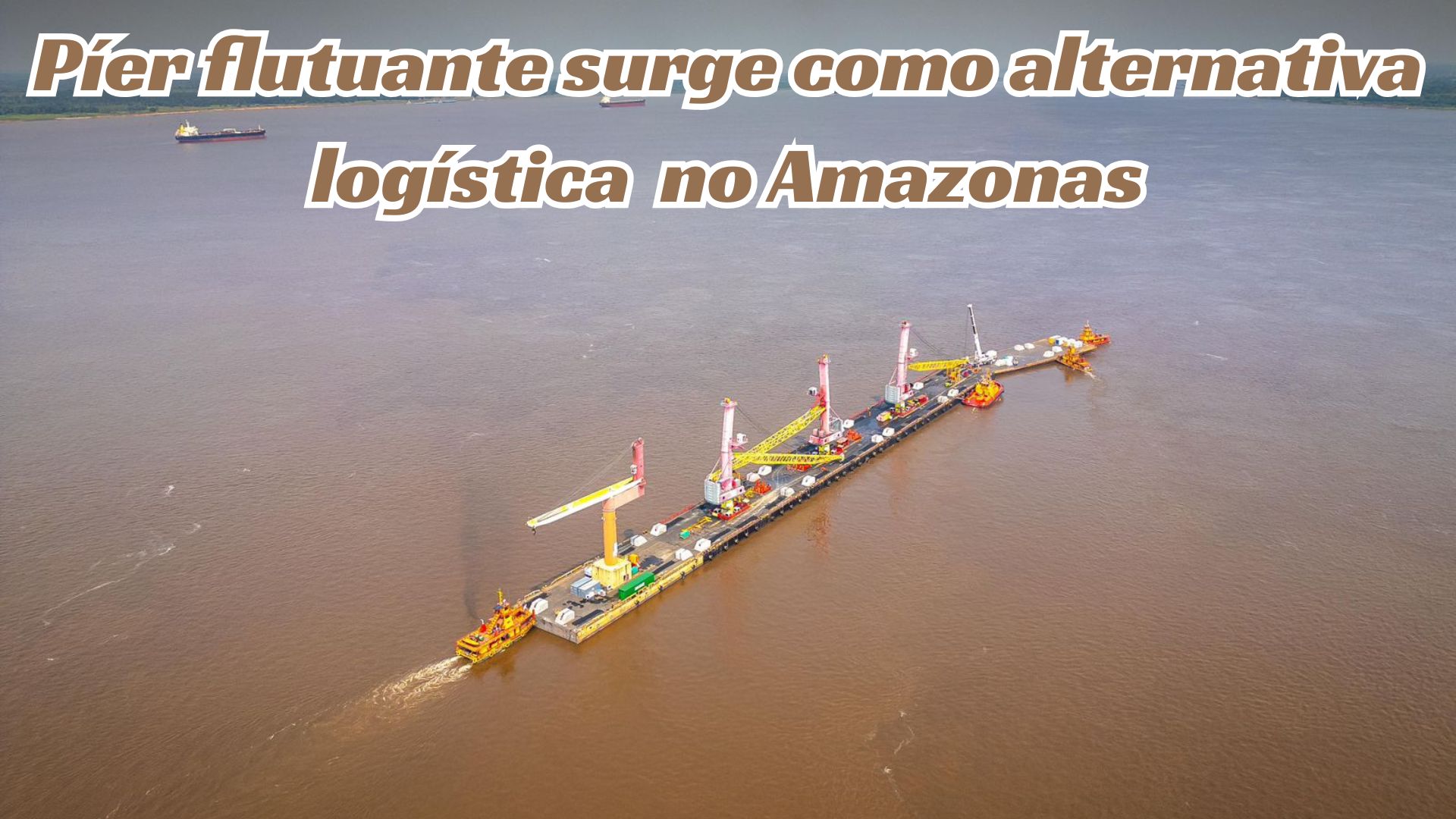
To face the unprecedented water crisis in the Amazon in 2024, an innovative floating pier was installed in Itacoatiara (AM). Thus, this structure, operated by Log-In Logística Integrada and developed by the Chibatão Group, quickly became essential for the flow of goods. Consequently, the project was highlighted at the Ilos Forum 2024, attracting the attention of industry leaders and establishing itself as a crucial solution to reduce the impacts of drought on the region’s logistics.
Understand the Drought and Its Effect on Logistics
Today, nearly 80% of the products that supply Manaus arrive by river. However, the level of the Amazon River has dropped to only 12 meters, making safe navigation for large vessels impossible. Thus, logistics have been severely impacted, jeopardizing the supply of essential goods for the population. Therefore, the creation of the floating pier emerged as a quick and effective response, allowing the transshipment of goods to barges and avoiding a logistical collapse.
How the Floating Pier Works and Its Advantages
The floating pier was designed to adjust to the river’s variable levels, maintaining continuous operations. This flexibility allows for direct transfer of containers from ships to barges, eliminating the need for unloading on land. Furthermore, the system saves time and costs. As a result, transportation remains safe and agile, ensuring supply even in extreme drought conditions.
-
Three Chinese companies manufacture more than 96% of the world’s dry cargo containers and 100% of refrigerated ones, in a dominance built over 40 years that has made it almost impossible for the West to compete in this market.

-
The Panama Canal stores water in Gatún and Alhajuela lakes to maintain 38 daily crossings and prevent a drought linked to El Niño from once again stalling ships, raising freight rates, and putting pressure on global supply chains as occurred in 2023 and 2024.

-
While the US Navy still relied for decades on the subsonic Harpoon and Tomahawk missiles for naval combat, the US Air Force reactivated the AGM-183A ARRW program on May 12, 2026, in an anti-ship version capable of making a Nimitz-class aircraft carrier disappear in minutes.

-
While commercial hydrogen fuel cells do not exceed 80 degrees Celsius due to the requirement of liquid water in the membranes, researchers at Monash University on May 18 made an ultrathin graphene and boron nitride-based membrane operate at 250 degrees Celsius without needing water.


Main Benefits of the “Carousel” System
Through the “carousel” system, the constant flow of barges allows the transport of up to 180 containers per convoy, maintaining an average of 24 cargo movements per hour. Thus, the method becomes fast and safe, reducing the risk of delays and congestion. Additionally, it minimizes interruptions that could affect product costs. According to Jhony Fidelis, director of the Chibatão Group, the strategy was essential to ensure continuous transportation in the region.
First Operation and Effective Collaboration
In September, the ship Log-In Jacarandá conducted the first operation at the floating pier, transporting 1,032 containers to Itacoatiara. Of this total, 360 containers were transferred to barges, while the remainder continued to Manaus on the same ship. Marcus Voloch, vice president of Navigation at Log-In, highlighted the importance of cooperation between the private sector and the government, which was decisive for the quick approval and implementation of the project.
Floating Pier: Temporary or Permanent Solution?
Initially, the floating pier was conceived as a temporary measure. However, with the forecast of frequent droughts, it may become a permanent structure. Other sectors, such as agribusiness, have also expressed interest in similar floating solutions. However, to ensure long-term safety and efficacy, Voloch and Fidelis advocate for new investments in infrastructure, such as channel dredging and port improvements.
Sustainable Collaboration Between Public and Private Sectors
The floating pier project in Itacoatiara demonstrates that collaboration between the public and private sectors can result in quick and sustainable solutions for local crises. Moreover, the structure has been essential in ensuring the supply of Manaus and maintaining production in the Free Trade Zone. In this way, the pier prevents a logistical collapse and ensures economic stability for the local population.





Be the first to react!