Portuguese
  Spanish


See How The Vaca Muerta Reservoir Can Transform The Argentinian Economy With Global Potential
The reservoir of Vaca Muerta is located in Patagonia, Argentina.
It has been recognized since 2011 as one of the largest unconventional gas and oil reserves in the world.
With the advancement of exploration technologies, especially since 2020, experts from YPF and Rystad Energy highlight the potential of this field.
Vaca Muerta currently has characteristics capable of altering the energy dynamics of the South American country.
Thus, Argentina sees a route for economic growth, driven by the energy sector.
Technical Potential Of The Reservoir Highlights Argentina On The International Stage
Since 2023, Vaca Muerta occupies a strategic position among the largest unconventional gas and oil reserves.
The U.S. Energy Information Administration estimated in 2022 that the Argentinian field has 308 trillion cubic feet of gas.
At the same site, there are about 16 billion recoverable barrels of oil.
These numbers place Argentina among powers such as the United States and China in the shale gas sector.
As a result, global companies have intensified investments in the region.
YPF points out that Vaca Muerta accounts for almost half of the oil and 60% of the natural gas produced in the country.
In June 2024, the field exceeded 300,000 daily barrels, reducing imports and benefiting the entire local economy.

Accelerated Production Modifies The Energy Scenario And Reduces Costs
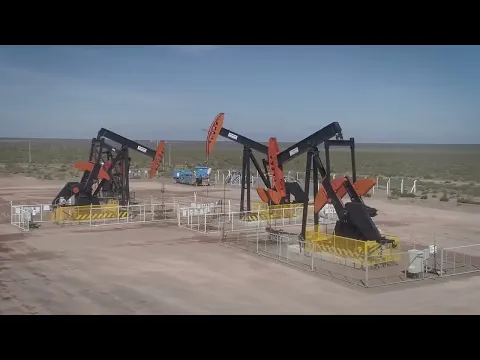
The evolution of projects since 2021 reflects a process of continuous innovation in Vaca Muerta.
Since then, the country has adopted hydraulic fracturing technologies used in the United States to optimize extraction.
The increase in productivity was highlighted by the Argentinian Institute of Oil and Gas in March 2025.
This advancement brought a significant reduction in operational costs.
The National Electric Energy Agency detailed in April 2025 that Vaca Muerta’s gas is priced lower than the international market.
The continuous supply to Brazil and Chile strengthens Argentina’s trade balance.
Foreign investments led by Shell, Chevron, and TotalEnergies grow sustainably in the region.
-
With a record production of nearly 3 million barrels per day, Petrobras resumes importing diesel in July, highlighting the bottleneck in Brazilian refining.

-
Qantas and Airbus Invest in Company Aiming to Convert Unsorted Household Trash into Jet Fuel

-
Brazil’s ANP Opens 86 New Oil Blocks in the Equatorial Margin, Expanding the Amazon River Mouth Frontier

-
OPEC+ Boosts Oil Supply by 188,000 Barrels per Day in July 2026, Leading to Price Drop from $112 to $89 per Barrel in Under Two Months
Economic And Social Impact Moves Local And International Markets
The effects of the Vaca Muerta expansion appear in various sectors of the Argentinian economy.
The Ministry of Economy, in a report published in May 2025, showed that the reservoir generated over 70,000 formal jobs in Neuquén.
At the same time, there was an increase in revenues from royalties and energy taxes.
The Argentinian Central Bank recorded a positive balance in the balance of payments in June 2025, thanks to liquefied natural gas and light oil exports.
The Foreign Trade Chamber indicates that the diversification of buying markets expands Argentina’s influence in regional energy agreements.
The country’s economic stability has become more viable, even in the face of adverse global scenarios.
Environmental And Technological Challenges Remain On The Investors’ Radar
Despite the advancements, environmental institutions such as the Environment and Natural Resources Foundation have warned since 2023 about the risks of accelerated growth.
In addition, companies and authorities have reinforced sustainable practices throughout 2024 and 2025 to preserve Vaca Muerta.
Thus, constant monitoring of water and soil quality stands out, always in accordance with international standards.
Consequently, YPF announced in June 2025 the adoption of modern practices to mitigate environmental impacts.
Thus, experts from the Brazilian Institute of Oil and Gas emphasize that the energy transition requires a balance between production and preservation.
Therefore, Argentina invests in research to increase efficiency and also reduce carbon footprint.
Finally, the future of Vaca Muerta remains a central topic in discussions about energy supply in South America.