






 Portuguese
  Spanish


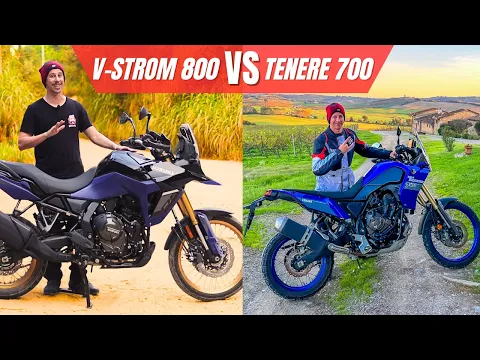
While the Yamaha Ténéré 700 Bets on Off-Road Tradition, the Suzuki V-Strom 800 Arrives with More Technology and Competitive Price, Tightening the Dispute Among Medium Displacement Big Trails.
The arrival of the new Yamaha Ténéré 700 in Brazil in 2024 marks a decisive moment in the medium displacement adventure motorcycle segment. Although the model debuted in the international market in 2018, its delay in arriving here coincides with Suzuki’s offensive, which launched the unprecedented V-Strom 800 DE in the country — a heavyweight rival that promises to intensify the competition for the audience looking for versatility, off-road performance, and good value for money.
Both motorcycles are focused on rough terrain, trails, and long trips, but each has its strengths. While the T7 arrives with a reputation forged in the Dakar Rally and a respected lineage in the trail segment, the V-Strom bets on cutting-edge technology, superior performance, and a competitive price. Below, you can check the main comparison points between them.
Engine: Advantage for the Suzuki V-Strom 800

Both motorcycles feature parallel twin engines, but with distinct configurations:
-
Toyota Launches First 100% Electric Car in Brazil: bZ4X with 343 HP, All-Wheel Drive, 361 km Range, Priced at $419,990 BRL, Limited to 99 Units

-
Chinese SUV Achieves 24.4 km/l, Outperforms Toyota Yaris Cross in Real-World Tests with 224 hp Hybrid System, Offers 51-Liter Tank for Greater Range, and Costs Up to R$ 5,000 Less.

-
Uber Black Revamps Fleet, Drops Ten Car Models and Sets Deadline for Electric BYD Dolphin
-
Chinese Giant Uses Metal Structures and Cranes to Deliver Over 700 Electric Cars to Brazil


Yamaha Ténéré 700
- CP2 Engine 689 cc
- 68.9 hp at 9,000 rpm
- Torque of 6.6 kgfm
- Weight: 208 kg
- Tank: 16.2 liters
Suzuki V-Strom 800 DE
- Engine of 776 cc
- 84 hp at 8,500 rpm
- Torque of 7.95 kgfm
- Weight: 230 kg
- Tank: 20 liters
The difference of 22 kg more in the V-Strom may be a disadvantage in narrow and technical trails, but it compensates with a more powerful and modern engine, in addition to a standard quickshifter (gear changes without clutch up and down). In urban or highway use, this translates into greater comfort and sportiness.
Suspension and Handling of the Yamaha Ténéré 700 and Suzuki V-Strom 800
Both are equipped with 43 mm inverted Showa forks in the front and monoshock rear suspension, with slight variations:
- Front travel: 210 mm (T7) x 220 mm (V-Strom)
- Rear travel: 200 mm (T7) x 212 mm (V-Strom)
The T7 has an advantage in ground clearance, with 24 cm, compared to 22 cm of the rival, in addition to a higher seat (87.5 cm vs. 85.5 cm). This favors its off-road vocation. However, Suzuki responds with larger brake discs and multi-level electronic traction control, in addition to the electronic throttle that ensures adjustable riding modes.
Both feature spoked wheels, with a size of 21’’ at the front and a difference at the rear: 18’’ on the Ténéré, more suited for trails, and 17’’ on the V-Strom, which favors the asphalt.
Equipment: Connectivity and Embedded Technology
In the technological package, both adventure bikes offer full LED lighting, handguards, USB input and adjustable windshield. But there are important differences:
- Yamaha Ténéré 700
- 6.3” vertical TFT display
- Smartphone connectivity via Y-Connect
- USB-C port
- Suzuki V-Strom 800 DE
- 5” horizontal TFT display
- Standard USB port
- Radiator guard as standard
While the larger screen of the T7 favors navigation and readability during standing riding, the V-Strom compensates with bidirectional quickshifter and electronic riding modes — features absent in the Ténéré. In connectivity, Yamaha takes the lead with Y-Connect, allowing pairing with the phone and real-time alerts.
Prices and Cost-Benefit
The Suzuki V-Strom 800 DE is priced at R$ 67,500, while the Yamaha Ténéré 700 costs R$ 72,990. The difference of over R$ 5,000 may weigh in the consumer’s decision, especially considering that the V-Strom delivers more power, more technology, and a more complete factory package.
| Model | Price (R$) | Power (hp) | Torque (kgfm) | Weight (kg) | Tank (L) | Quickshifter | Connectivity |
|---|---|---|---|---|---|---|---|
| Yamaha Ténéré 700 | 72,990 | 68.9 | 6.6 | 208 | 16.2 | No | Yes (Y-Connect) |
| Suzuki V-Strom 800 | 67,500 | 84 | 7.95 | 230 | 20 | Yes (2 ways) | No |
The Suzuki V-Strom 800 DE offers a more modern, more powerful, and technologically advanced package for a more accessible price. For those who value performance, versatility, and cost-effectiveness, it appears to be the better option.
On the other hand, the Yamaha Ténéré 700 relies on its reputation, reliability, and tradition in off-road. For purists, fans of the brand’s robustness and Dakar legacy, the T7 is still a safe choice.
In the end, the decision depends on the profile of the motorcyclist. If the goal is adventure with a lot of electronics and performance, the Suzuki wins. If the idea is to tackle any terrain with simplicity and mechanical reliability, the Yamaha remains strong in the game.








A Yamaha traz suspensões Kayaba, não Showa! A Suzuki tem motor mais moderno? Como assim?…