Portuguese
  Spanish


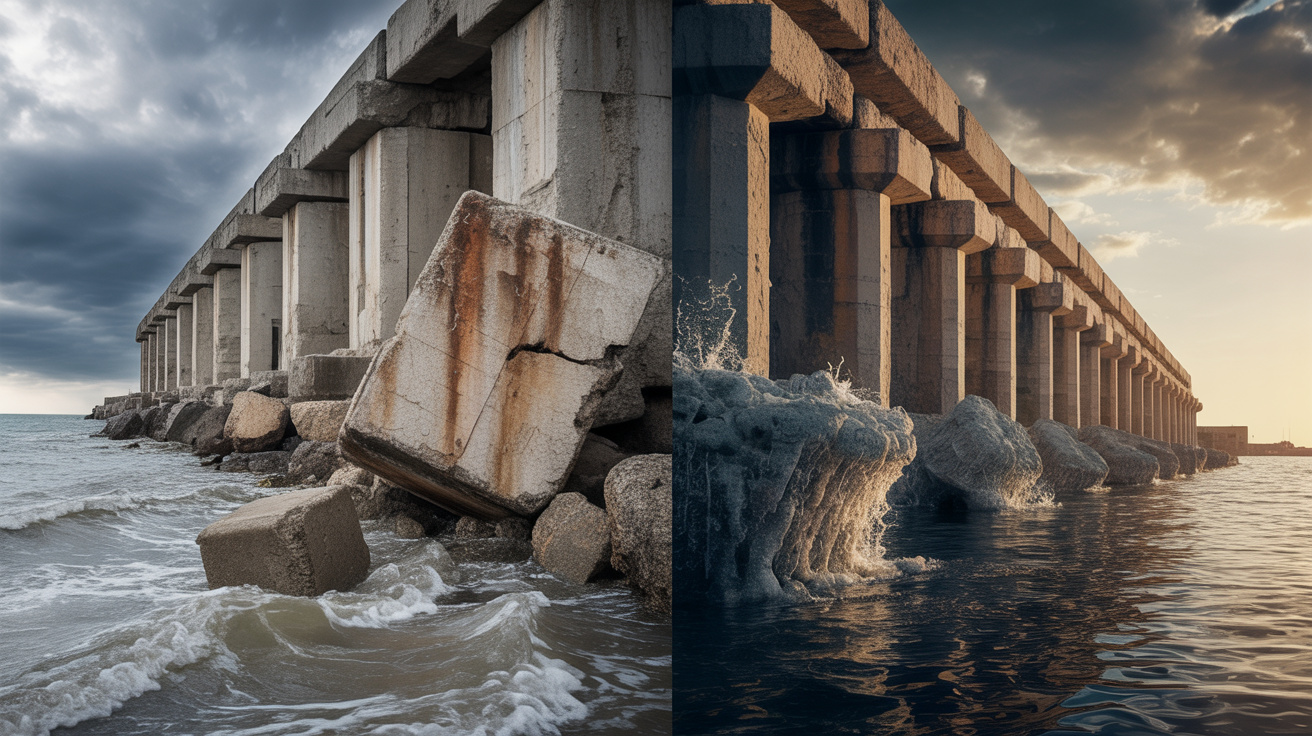


Studies from UC Berkeley Show Why Roman Concrete Reacts with Seawater, Becomes More Resistant Over the Centuries, and Outperforms Modern Concrete in Maritime Durability.
In 2013, a set of research conducted by scientists from the University of California, Berkeley in partnership with the Lawrence Berkeley National Laboratory revealed something that modern engineering did not expect to hear: Roman structures submerged in the Mediterranean for over two thousand years remain stable — and, in some respects, more resilient — while 20th-century concrete ports, piers, and bridges suffer accelerated corrosion in just a few decades.
The samples analyzed came from Roman ports along the coast of Italy, including areas near Pozzuoli and Baiae, and the results were published in scientific journals and disseminated by official research institutions in the United States. The finding forces engineers, public managers, and infrastructure planners to revisit a dogma: modern concrete is not always superior to its ancient counterpart.
The Paradox of Modern Concrete in the Marine Environment
Contemporary reinforced concrete was designed for high initial strength, mass production, and compatibility with steel. In marine environments, however, this model shows known weaknesses. Saltwater penetrates through the pores, chlorides reach the reinforcements, and steel corrosion begins.
-
$80 Million Bridge in Brazil Cuts Travel Time from 30 Minutes to 1 Minute, but Audit Reveals Major Flaws

-
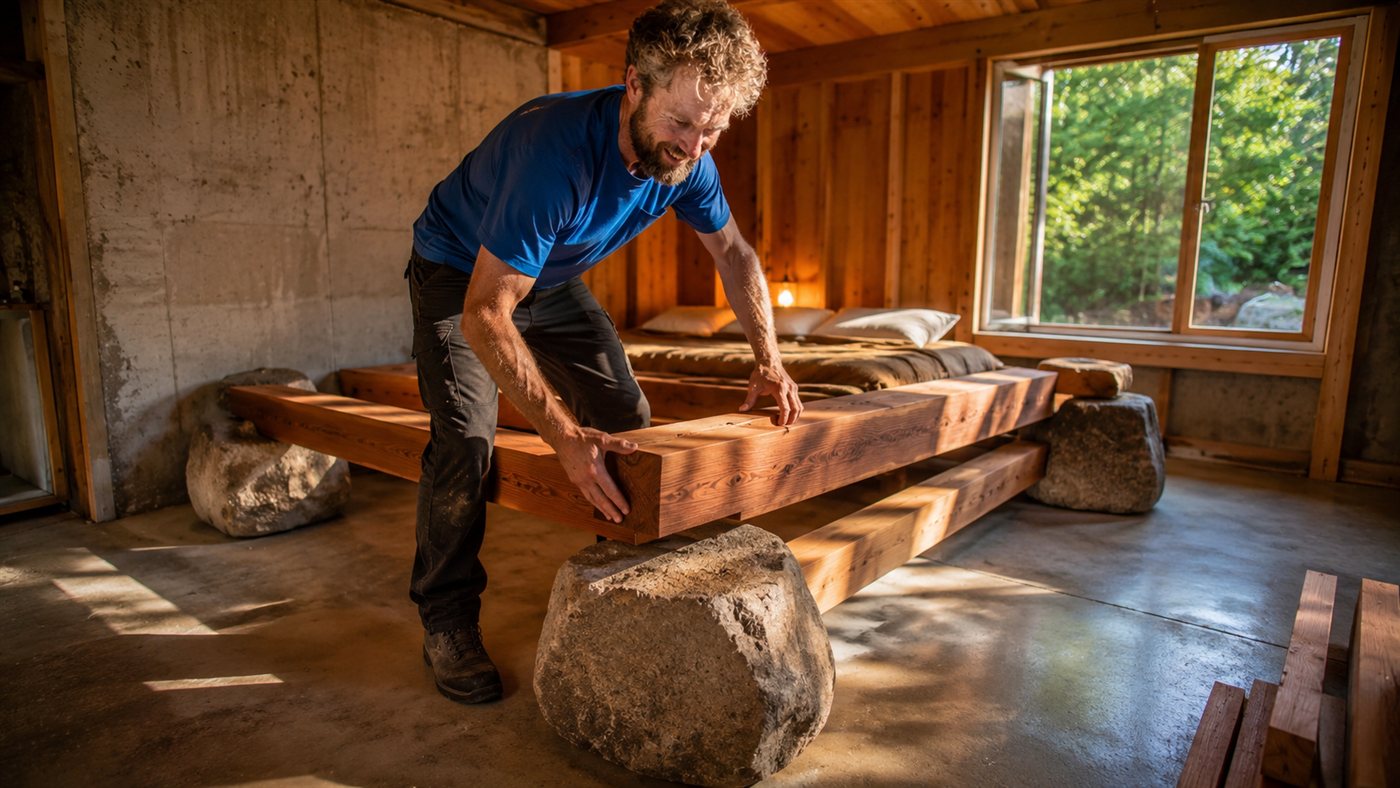
Man Builds Stone Bed with Granite Rocks and Hand-Sawn Cedar Beams, Home Extension Garners Over 437,000 Views on Bonus Bolts Channel

-
Brazilian Researcher Develops Color-Changing Roof Tile to Reduce Air Conditioning Use by Up to 15%
-
21-Year-Old Moves Back to Parents’ Home in Arizona, Finds New Private Apartment in Converted Garage as Families Tackle U.S. Housing Pressures




The process generates cracks, internal expansion, and progressive loss of structural capacity.
In many countries, coastal ports and bridges have an estimated lifespan of 50 to 100 years, requiring costly repairs or complete reconstructions. This maintenance cycle is one of the hidden costs of modern infrastructure, especially in regions with aggressive seas.
Where Romans Got It Right: Lime, Volcanic Ash, and Seawater
Romans did not use Portland cement. The key material was a mixture of quicklime, volcanic ash (pozzolana), and seawater. For decades, it was believed that this combination merely “withstood corrosion better.” Recent research showed something deeper: Roman concrete chemically evolves over time.
Unlike modern concrete, which tends to degrade progressively in saltwater, Roman concrete reacts with the environment and forms new minerals within its matrix, sealing microcracks and reinforcing the structure.
The Chemical Reaction That Strengthens Instead of Corroding
Microscopic and chemical analyses identified the formation of aluminoborite and phillipsite, rare minerals that arise when seawater slowly penetrates Roman concrete. These minerals grow in the pores and internal interfaces, creating a crystalline network that redistributes stresses and increases the cohesion of the material.
The process is slow, occurring over centuries, but produces an extraordinary effect: the longer Roman concrete remains submerged, the more stable it becomes. In modern concrete, seawater is an enemy. In Roman concrete, it acts as a structural transforming agent.
Evidence in the Field: Ports That Withstood Millennia
Structures like the Roman breakwaters in the Mediterranean remain recognizable and functionally stable after around 2,000 years of continuous exposure.
Meanwhile, ports built in the post-war period, especially between the 1950s and 1970s, have already gone through multiple repair cycles, with replacement of reinforcements, resin injections, and external reinforcements. The difference lies not only in age but in the chemical behavior of the material over time.
The Error of the 20th Century: Prioritizing Initial Strength
Portland cement revolutionized construction by enabling high strength in just a few days and standardized production. However, it was optimized for quick performance, not for long-term chemical interaction with aggressive environments.

In maritime works, this choice has proven problematic. The presence of steel, essential to reinforced concrete, introduces an unavoidable weak point when chlorides are present. In contrast, Roman concrete does not require metal reinforcements, eliminating the main trigger for structural corrosion.
What Modern Science Is Trying to Relearn
Since the studies were publicized, material laboratories in various countries have been investigating formulations inspired by Roman concrete, seeking to reduce carbon emissions and increase durability. The production of Portland cement accounts for about 8% of global CO₂ emissions.
Lime and volcanic pozzolana used by the Romans require less energy and produce a lower environmental impact. The current challenge is not to blindly copy the ancient recipe, but to adapt its chemical principles to modern structural demands, safety standards, and industrial scales.
Why Don’t We Use “Roman” Concrete Today?
There are real obstacles. Roman concrete does not achieve high initial strengths, making it difficult to meet accelerated schedules. Moreover, it relies on specific volcanic materials that are not always locally available.
Another critical point is the absence of reinforcements, which is incompatible with many contemporary projects requiring large spans and structural flexibility. Nonetheless, for maritime works, docks, breakwaters, and coastal foundations, hybrid solutions are beginning to gain traction in experimental research.
The Hidden Cost of Modern Infrastructure
The comparison between Roman and modern concrete exposes a structural problem of the 20th century: we build fast, but we rebuild too soon.
Ports, piers, and coastal bridges require recurrent investments that weigh on public budgets. In contrast, the Romans invested in infrastructure designed to last for centuries, even without knowing advanced mineral chemistry — simply observing materials and behavior over time.
A Lesson That Came from the Bottom of the Sea
The discovery does not romanticize the past nor demonize current engineering. It shows that extreme durability requires thinking in time frames longer than a generation. By revealing that an ancient material strengthens precisely in the environment that destroys modern concrete, science exposes an uncomfortable yet powerful paradox: the latest solution is not always the smartest for the long term.
The studies from UC Berkeley and the Lawrence Berkeley Lab are already influencing debates on resilient coastal infrastructure, emission reduction, and new low-carbon cements. The great Roman legacy is not only architectural. It is conceptual: to build to last centuries, not just to inaugurate quickly. In a world pressured by climate change, more aggressive seas, and limited budgets, this may be one of the most valuable lessons ever recovered from antiquity.