Portuguese
  Spanish


Crisis initiated at the end of February raised oil, strengthened the dollar, and exposed why some currencies fall while others gain strength.
The war involving USA, Israel, and Iran hit global markets and placed exchange rates at the center of economic concerns.
The conflict began at the end of February and affected not only the Middle East but also commercial transport, oil, inflation, and investments.
The disruption of routes linked to the Strait of Hormuz raised the price of oil and increased fears about further impacts on global costs.
-
Brazil’s BNDES Funded Metro and Steel Plant Projects in Venezuela with Brazilian Support

-
Abandoned Building in Brazil to Become Biotechnology Unit with $10 Million Investment, Bridging Science, Industry, and Public Health
-
Company Offering “Stones to Diamonds” Scheme Sells Ruined Italian Homes to Brazilians for 1 Euro, Disappears with Promised Renovations, Leaving Buyers in Debt to Italian Tax Authorities Until 2028 Without Property

-
Plastic Packaging Drives Santa Catarina Industry to 230% Growth, Aiming for R$ 500 Million by 2030 Amid Sector Crisis, with New Gearless Line Expanding in Southern Brazil to Compete in South America

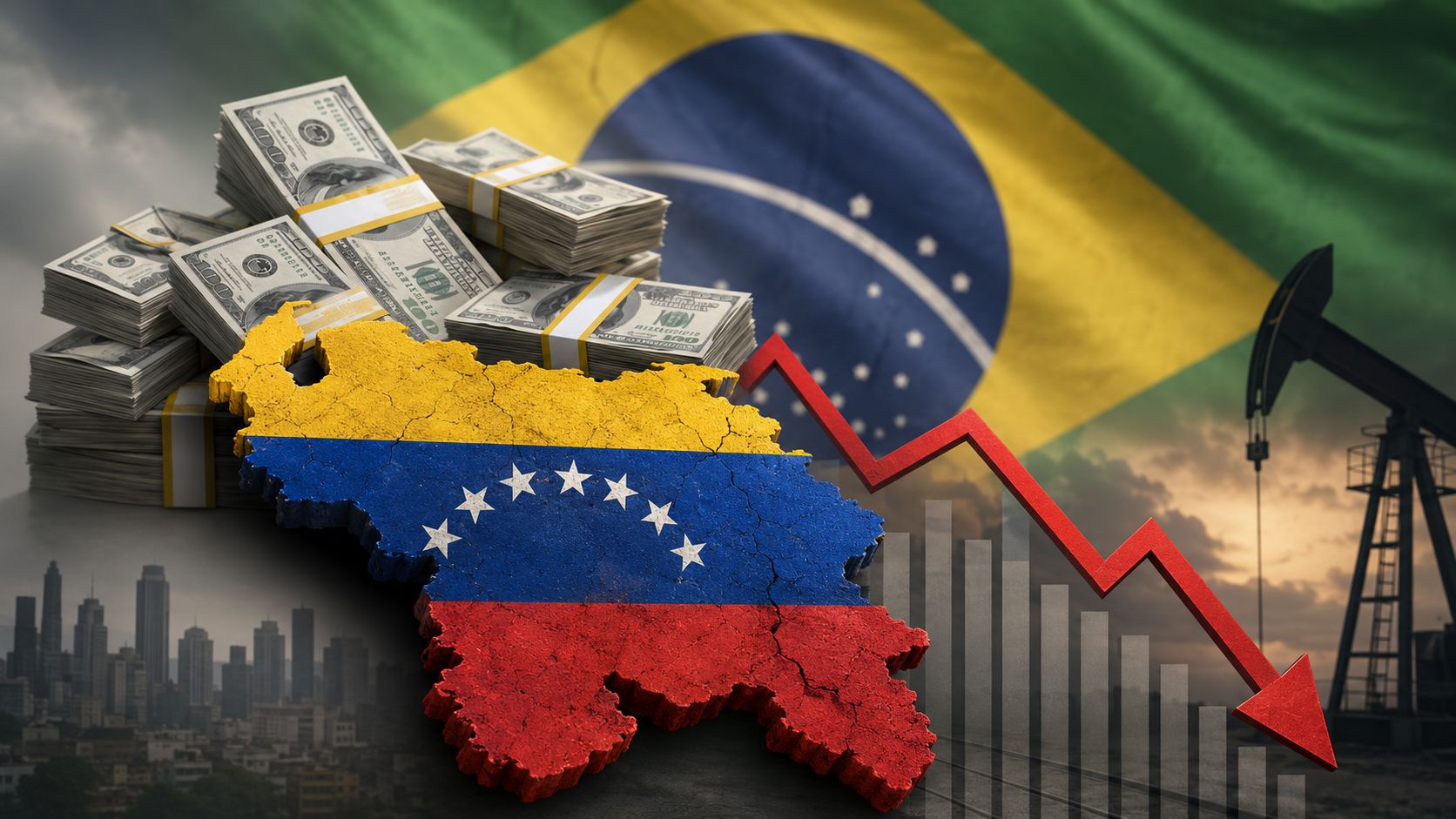


In this scenario, investors sought protection in the American dollar, seen as a safe haven in times of uncertainty.
This movement affected several local currencies. Some lost value, others became more volatile, and others managed to appreciate.
Currencies of importing countries suffer more pressure
Countries that import a large part of their energy were the most pressured by the rise in oil prices.
India, Indonesia, Philippines, Thailand, and Egypt faced increased fuel prices, currency shortages, and greater exchange rate pressure.
The migration of investors to the dollar reduced the demand for local currencies.
As a result, these currencies lost value and made it more expensive to pay debts issued in dollars.
Oil, fertilizers, plastics, and other products priced in dollars also became more expensive.
This effect reaches the consumer through energy, food, and basic everyday items.
Indian rupee falls and central banks try to react
In India, the rupee fell about 5% against the dollar since the start of the war.
The Indian currency was already weakened before the conflict, but the rise in oil prices accelerated this trend.
Faced with the pressure, some central banks raised interest rates and sold dollar reserves to support their currencies.
The Bank of Indonesia sold dollars and bought Indonesian rupiahs to increase demand for the local currency.
This strategy can contain part of the devaluation, but it also makes loans, financing, and debts more expensive.
Brazil gains partial relief, but still faces risks
Another group of currencies had more volatile behavior, with strong fluctuations in opposite directions.
South Africa, Colombia, Chile, and Mexico entered this group by reacting quickly to the global market mood.
In moments of fear, investors seek the dollar.
The rise in commodities, on the other hand, can help these currencies recover some of the losses.
Energy exporters, such as Brazil and Malaysia, received partial support from the rise in oil prices.
In April, Goldman Sachs and Bank of America highlighted the demand for Brazilian government bonds and local stocks.
Goldman Sachs also pointed to Brazil as its top choice among emerging markets.
Inflation and political uncertainty still weigh on the real
Despite this support, Brazil still faces significant risks.
According to Martín Castellano from the Institute of International Finance, more expensive energy could raise Brazilian inflation.
This scenario could delay interest rate cuts.
Brazil also imports refined fuels, such as gasoline and diesel.
Therefore, the international rise can pressure internal costs and affect consumers.
Economist Luiza Pinese from XP pointed out that political uncertainty before the October presidential election could increase the risk premium in exchange rates.
Yuan and ruble resist with controls and energy
Some currencies remained more resilient during the conflict.
The Chinese yuan remained relatively stable due to capital controls and political interventions.
These measures reduce sharp fluctuations and allow greater control over the exchange rate.
The Russian ruble also performed strongly against the dollar since the beginning of the war.
The Russian currency was supported by high energy revenues and by rules requiring exporters to convert foreign earnings into rubles.
Developed economies also feel the shock
Among developed economies, the American dollar and the Swiss franc rose at the start of the crisis.
The Norwegian krone also gained strength with the rise in crude oil.
The Japanese yen, however, lost strength.
This decline occurred because Japan heavily depends on energy imports.
The Canadian and Australian dollars benefited from commodities such as oil, gas, metals, iron ore, and coal.
Even so, concerns about global growth and trade tensions limited these gains.
Weaker dollar could relieve emerging markets
Economists say the dollar lost strength after the initial shock caused by the attacks on Iran.
According to AllianceBernstein, a weaker dollar usually improves monetary conditions in developing countries.
This movement could open space for interest rate cuts, reduce risk aversion, and favor emerging markets.
However, the IMF warned in April that the continuation of the war could push the global economy into an adverse scenario.
In this scenario, global growth would fall to 2.5%, while inflation would rise to 5.4%.
In a more severe projection, growth could fall to 2%, with inflation above 6%.
What could happen now?
The war in Iran showed how a regional conflict can affect currencies, oil, inflation, and investments in various parts of the world.
Energy-importing countries tend to suffer more pressure.
Commodity exporters may gain some relief with higher prices.
Even so, the final effect depends on the dollar, oil, interest rates, and investor confidence.
Until the next IMF review, scheduled for July, the exchange rate should remain at the center of economic decisions.
What weighs more for Brazil in this scenario: the strength of the dollar, the rise in oil prices, or the risk of inflation?